Uncategorized

  • HoloDecon

    ยท

    HoloDecon is an experience situated at the intersection of technology, dreams, and the Buddhist philosophy of impermanence. This reality-bending installation is based on the idea that technology can be used to deconstruct our perception of reality and transport us to a dreamlike dimension where reality dissolves into a world of luminous pixels by observing the impermanence of objects.

    In Buddhist philosophy, impermanence is a fundamental concept that refers to the changing nature of all things. Everything that exists, including our own thoughts and emotions, is in constant flux and transformation. Buddhist meditation seeks to train the mind to be aware of impermanence and to accept it as part of the nature of things.

    HoloDecon is an invitation to explore the impermanence of reality through technology. By deconstructing our visual and auditory perception, it invites us to question the solidity of reality and immerse ourselves in a world of constant change and transformation. Every day objects become abstract and forms fade into a sea of pixels. “Holodecon” is a term that combines “holos” and “deconstruction,” referring to a device of interfered perception that allows the observation of three-dimensional environments using obsolete technology. This technology creates a hologram-like appearance that can be perceived by the user.

    The experience offered by Holodecon is unique, as it uses obsolete technology, creating a kind of “charm” that takes us back to the past and makes us question the nature of reality and how it is constructed through our perceptions and experiences.

    Furthermore, the concept of deconstruction in Holodecon is related to the idea of dismantling and rebuilding the elements that make up our perception of reality. By using obsolete technology to create the appearance of holograms, we are deconstructing the notion that modern technology is the only one capable of creating augmented reality experiences, in this case, a transgression of reality.

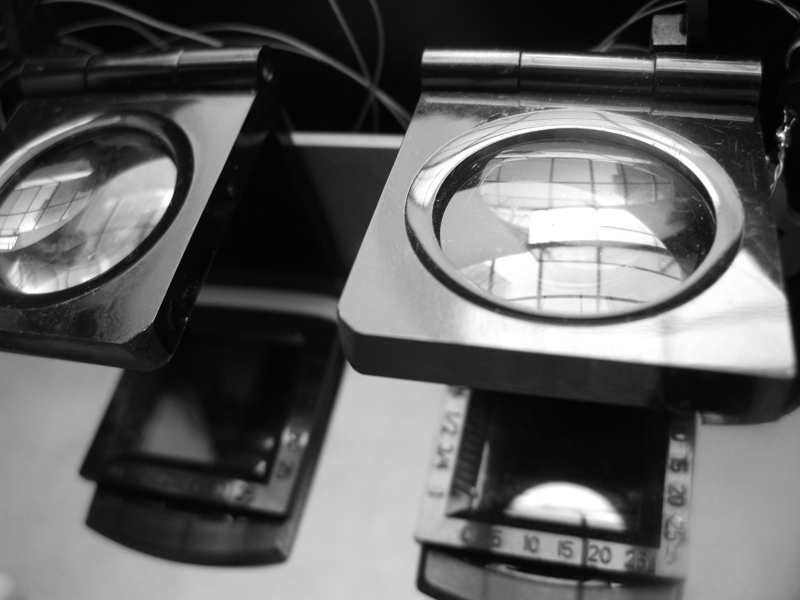
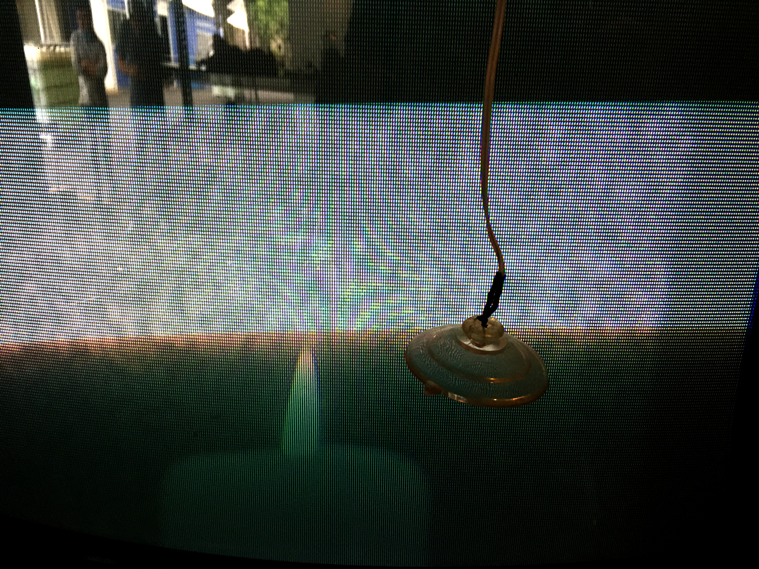
    The speculation for this research began one day prior to a meditation retreat. I was using the camera of my cell phone (prior to smartphones) and attaching a magnifying lens to the screen. The phone had a very low-quality camera. I was observing a small ficus tree and the screen resolution allowed me to see some dimensioned pixels, a matrix of light.

    It is recognized how the use of technology influences the content of our dreams. Before cinema, dreams were linear; after cinema, we dream about framing, camera angles, and movements. During the Buddhist retreat, impermanence was one of the main factors of the study. We had long contemplative walks in nature, attending to the transitory states of existence. I spent long moments observing a bush with flowers growing, some with fruit emerging, mature and rotting, and others with already dry flowers.

    During the last meditation session, I started a hypnagogic process that I entered lucidly. I began to observe rhizomatic branches as if with a macro vision with a high depth of field. The distance and proximity were completely in focus, which made me realize that I was in a dream and lucid in it. Questioning the sharpness of the image and constant focus made me doubt that reality. At first, I only observed the plants on a black background, but when I became lucid, I began to observe green leaves, like those of a vine. I was inside a maze-like vineyard. I began to observe grape branches hanging from the leafy ceiling. These were replaced by exotic flowers of very vivid colors, some dried flowers, and others that seemed to be made of plastic. This thought led me to observe trinkets, objects of all kinds trying to overcome entropy. The intensity of the colors and shapes was very special. I progressed through the maze and everything started to become very white until all forms disappeared and I was in a void of the purest white. I felt someone put a white flower in my hand, and as I closed it, it dissolved into a fine powder that dripped from my hand. At that moment, the bell rang to signal the end of the meditation, and I realized that I had closed my hand. I lay down on my side in complete fulfillment.
    Upon returning to my studio, I began developing HoloDecon based on this experience. The experimentation I had done with the camera on my phone prior to the retreat was what spontaneously triggered the dream experience during hypnagogia. A significant aspect of my artistic research is the perceptual relationship between dream, concrete, and digital spaces. I began to speculate about how technology had initiated an immersive experience during my hypnagogic state, and whether it was possible to share this experience using technology.

    installation

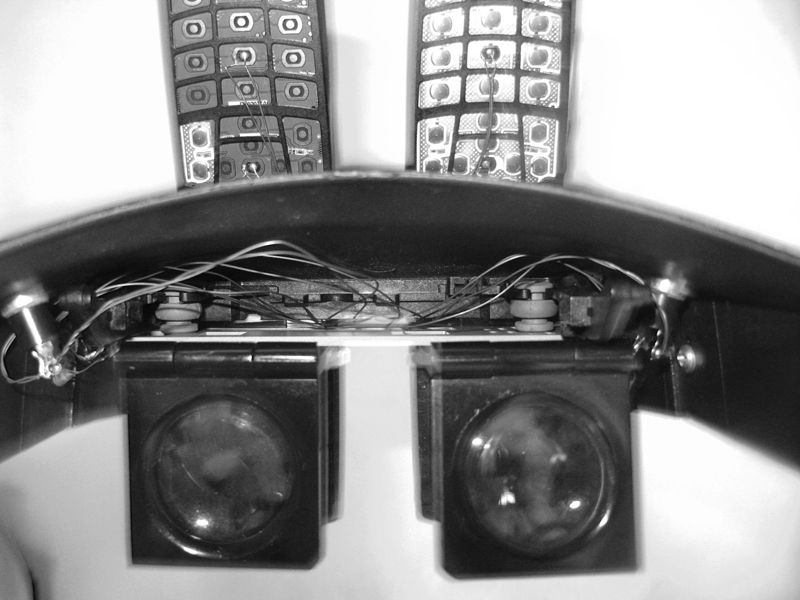
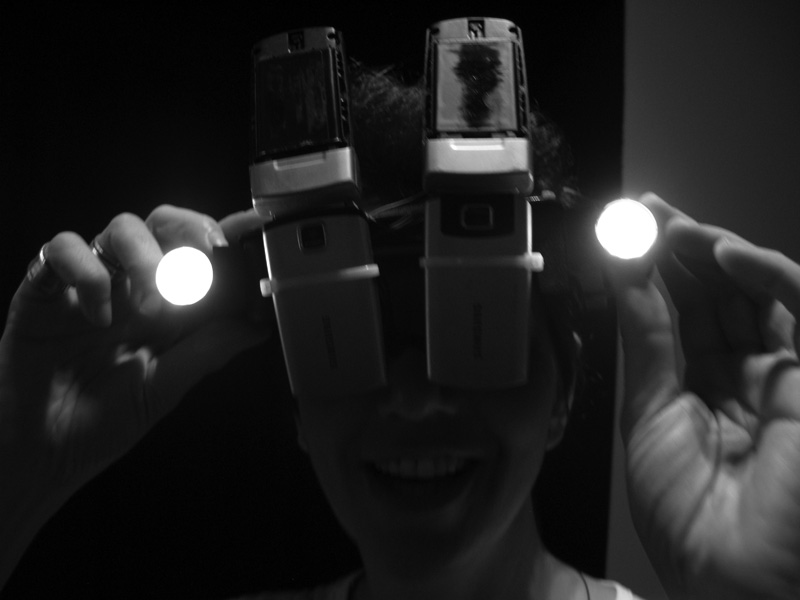
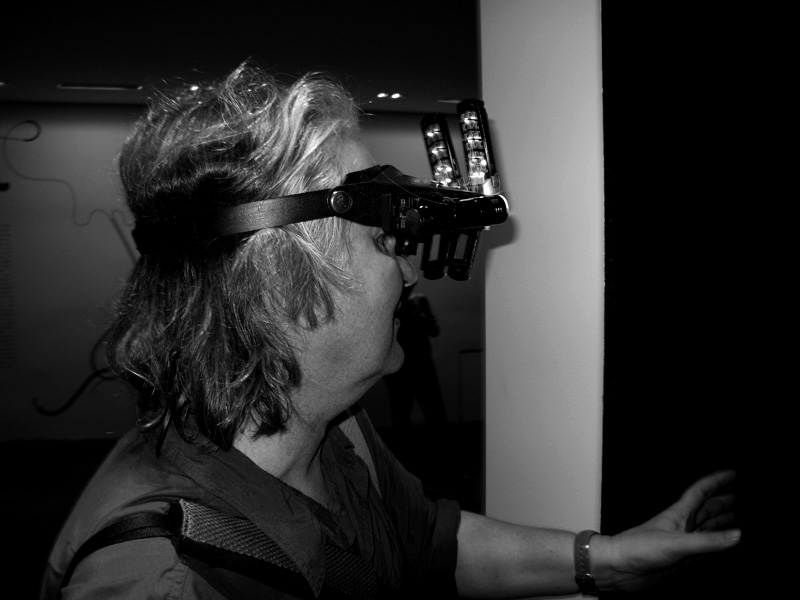
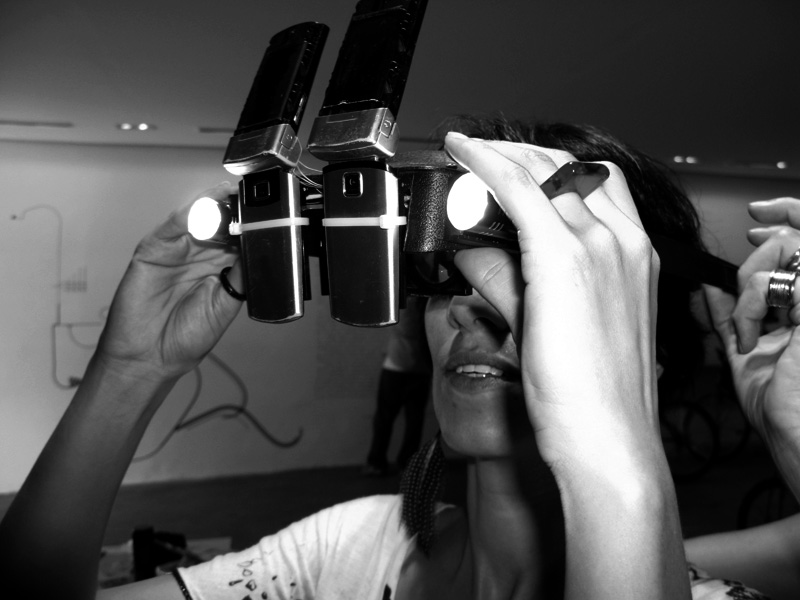
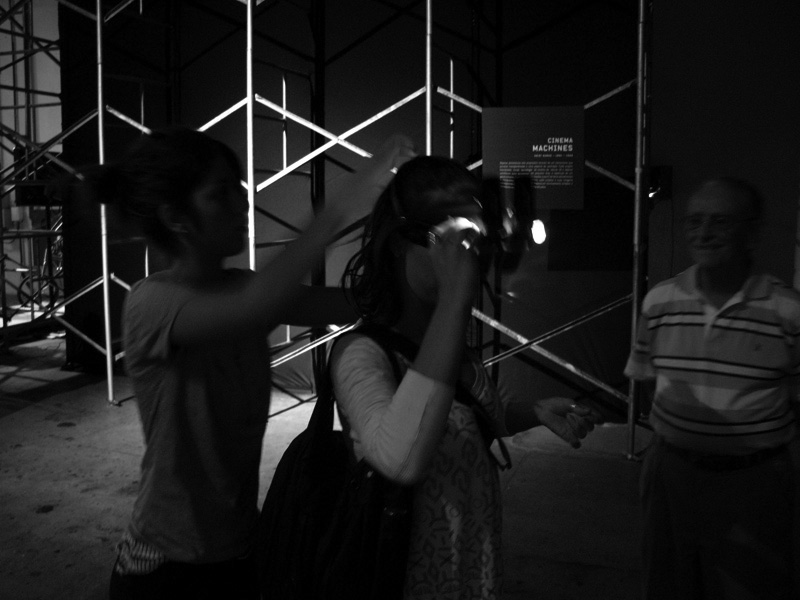
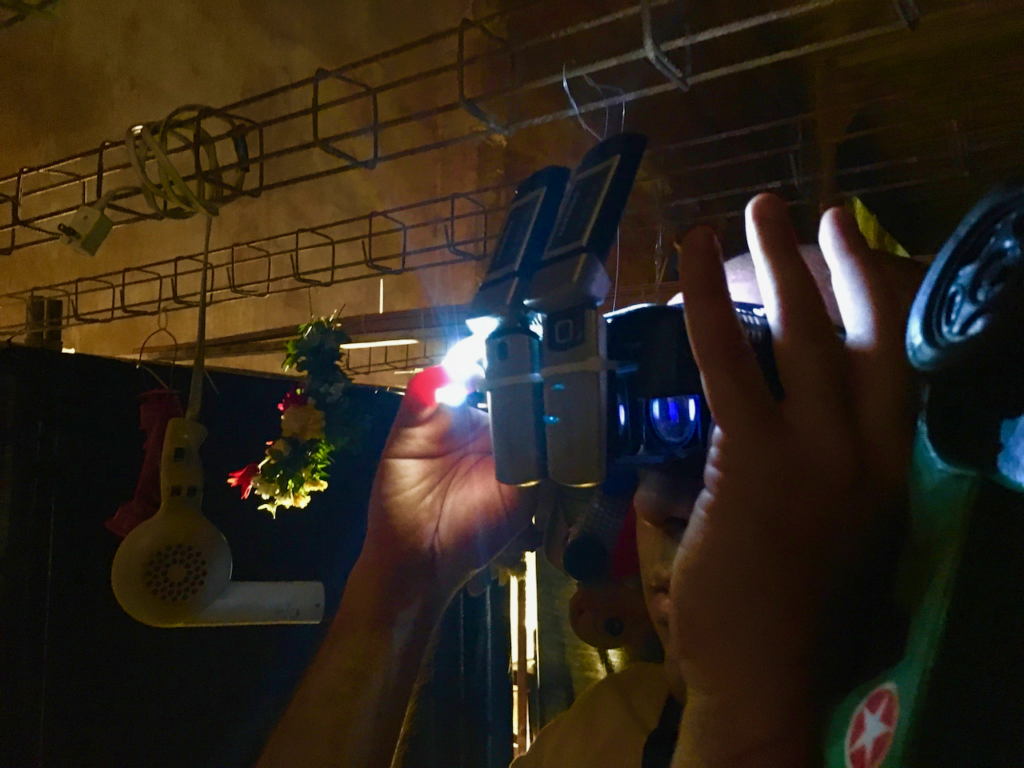
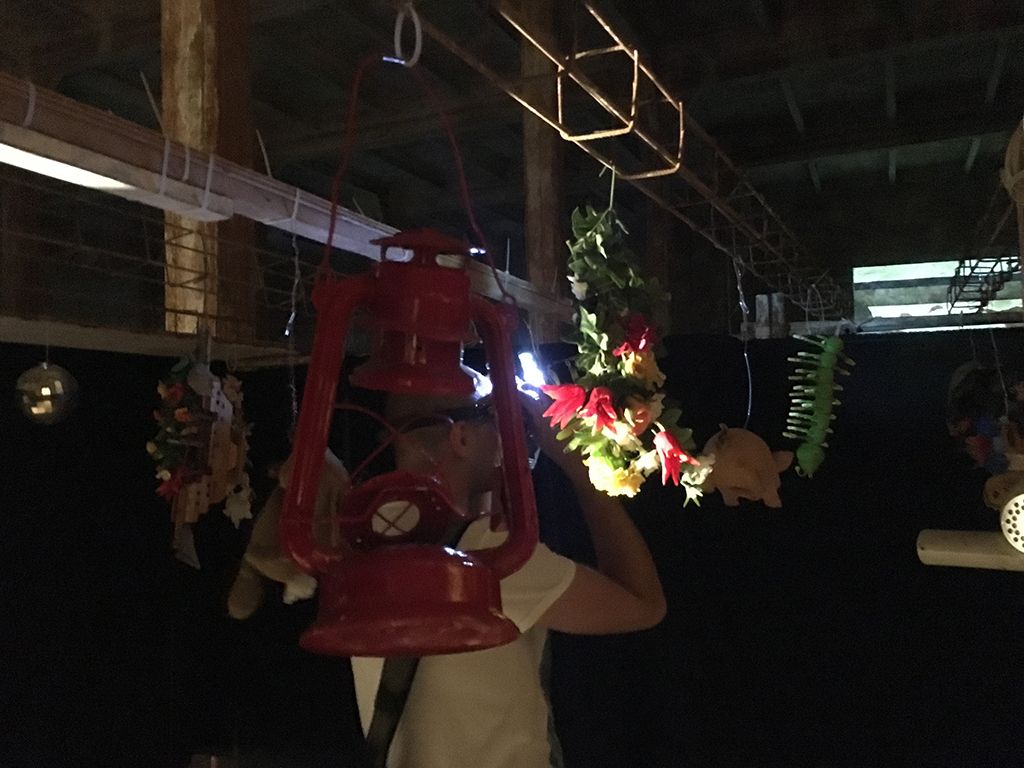
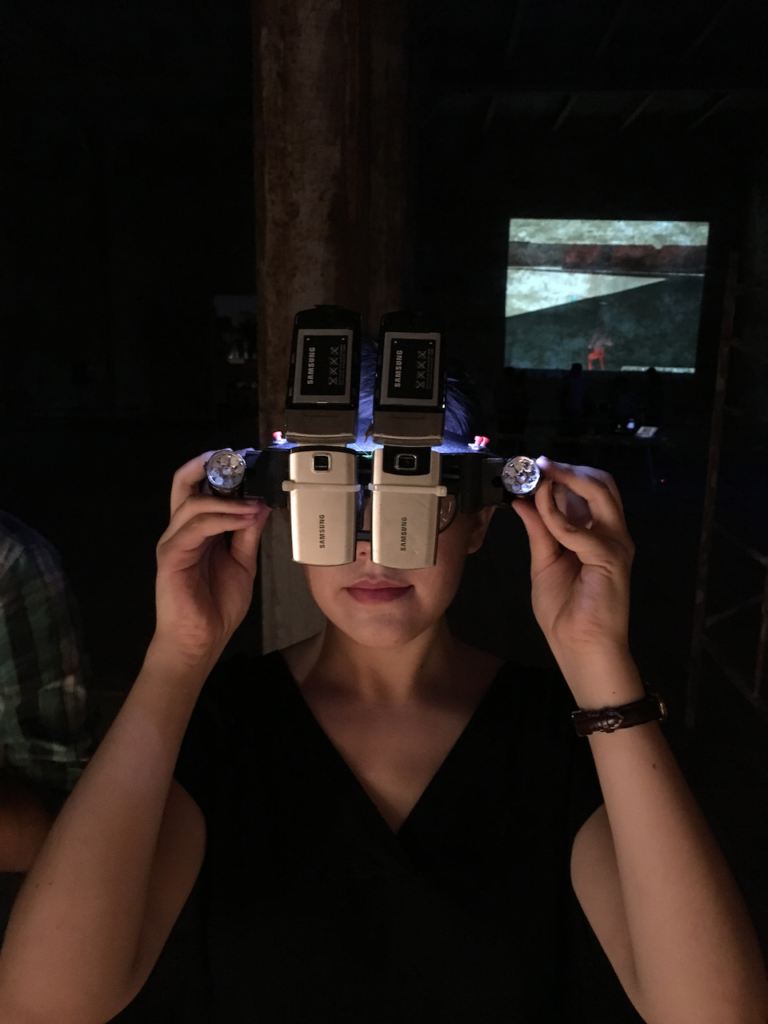
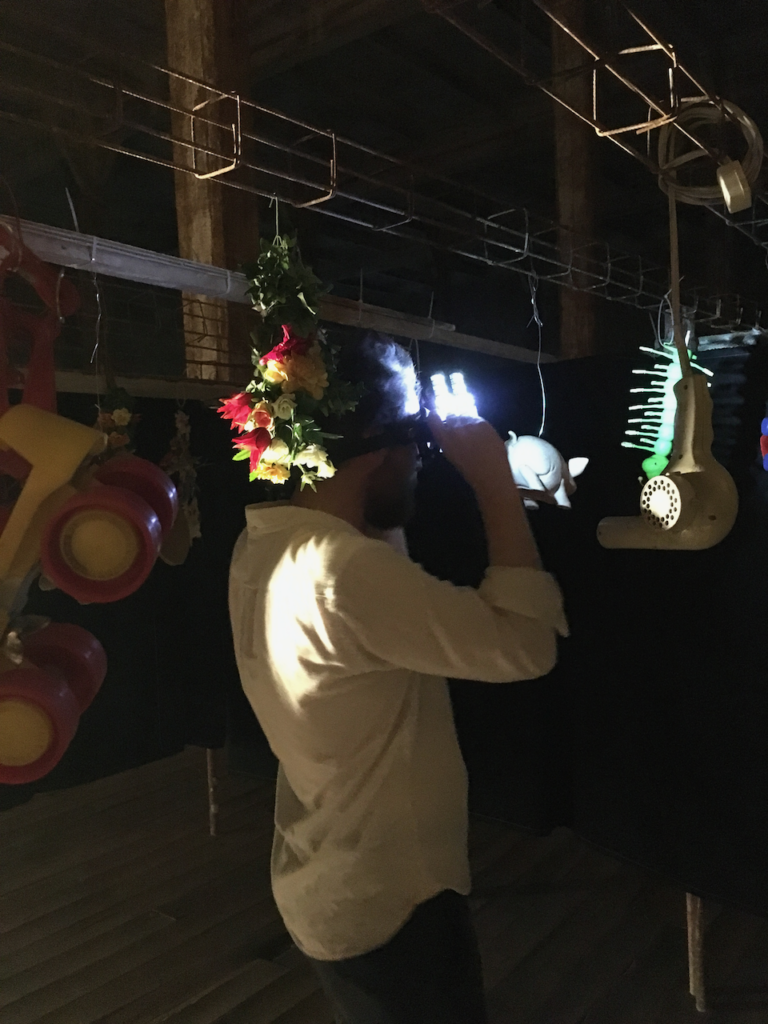
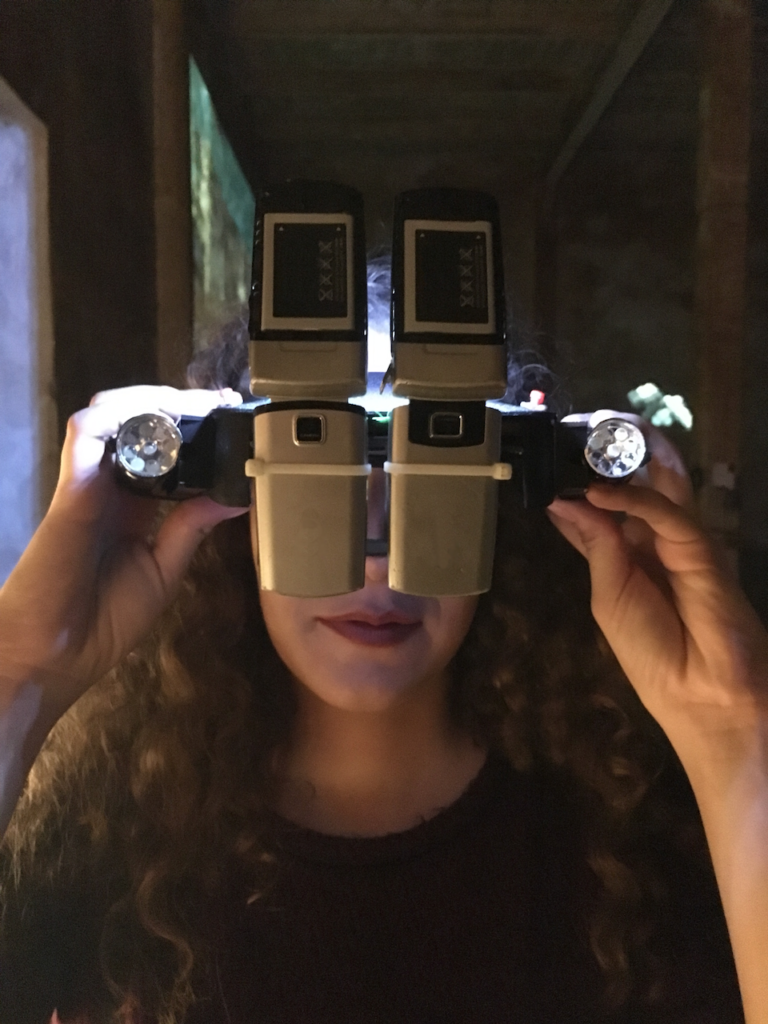
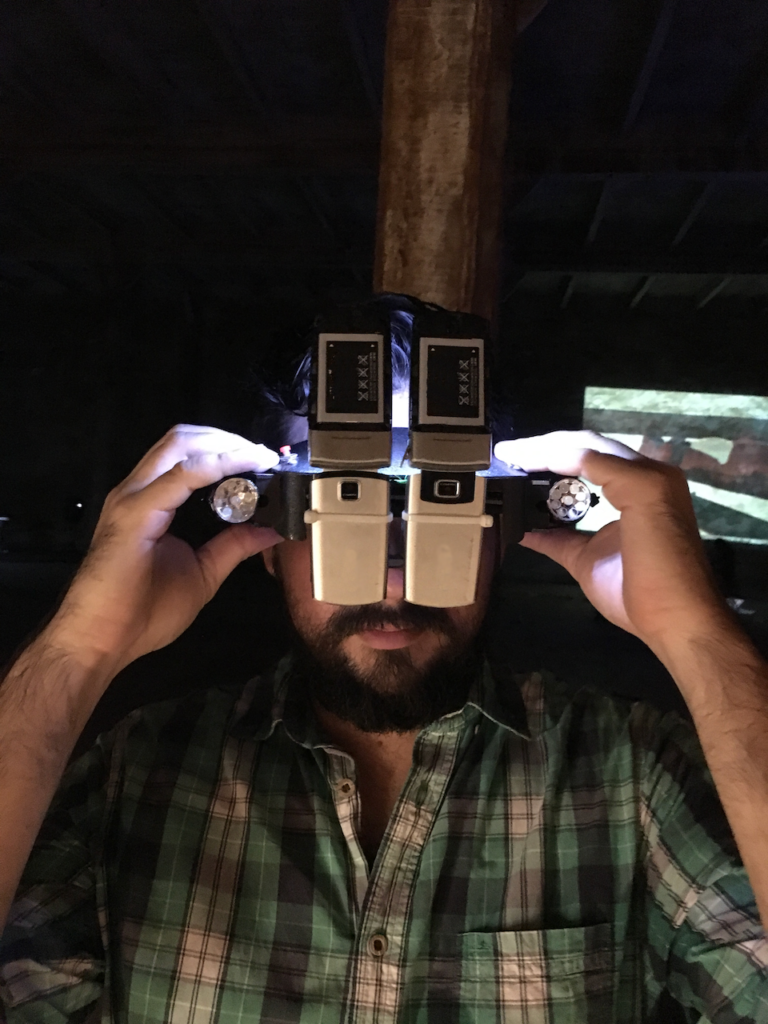
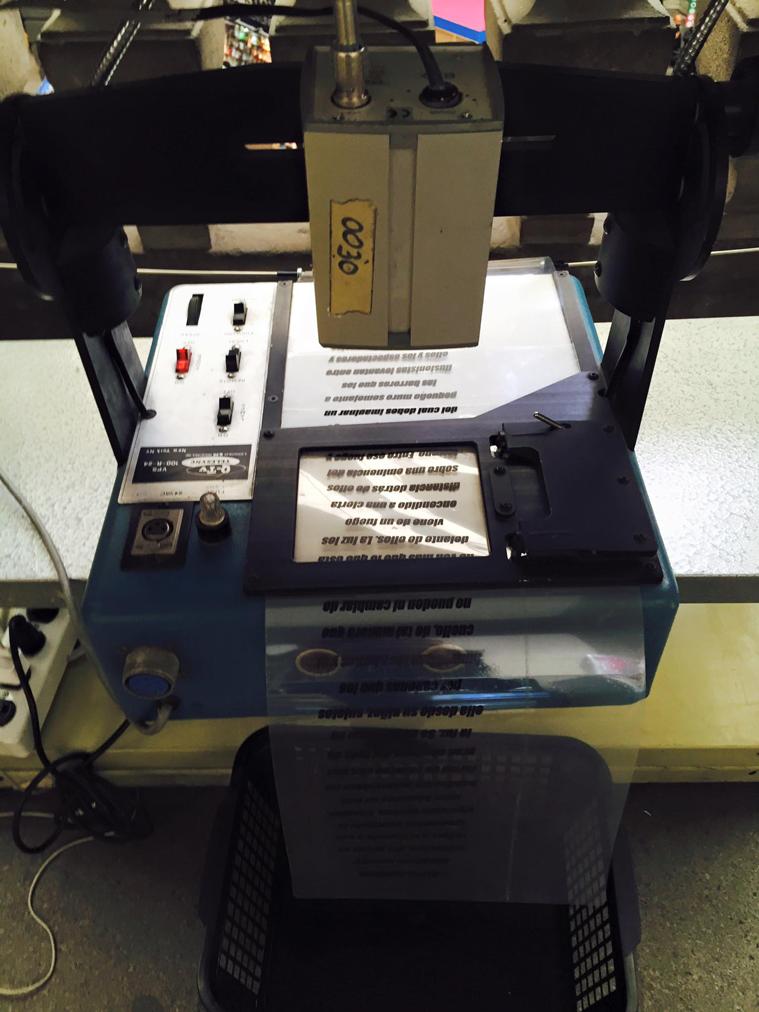
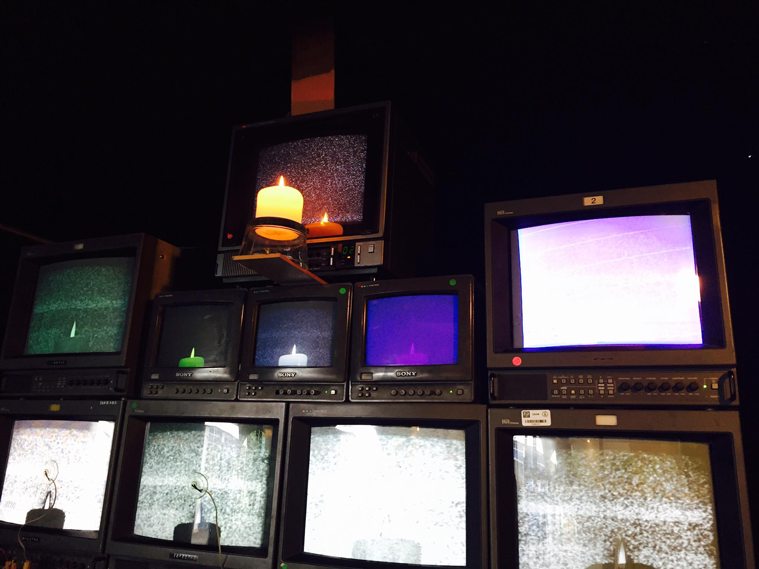
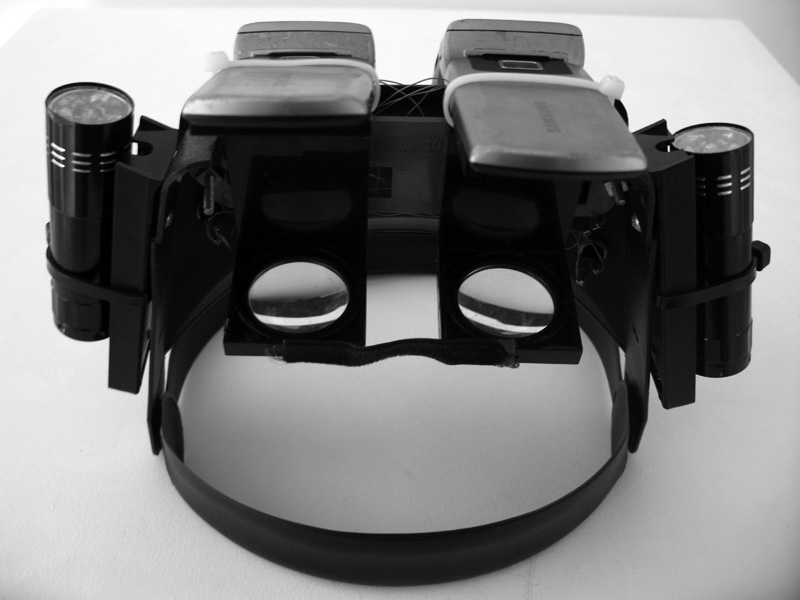
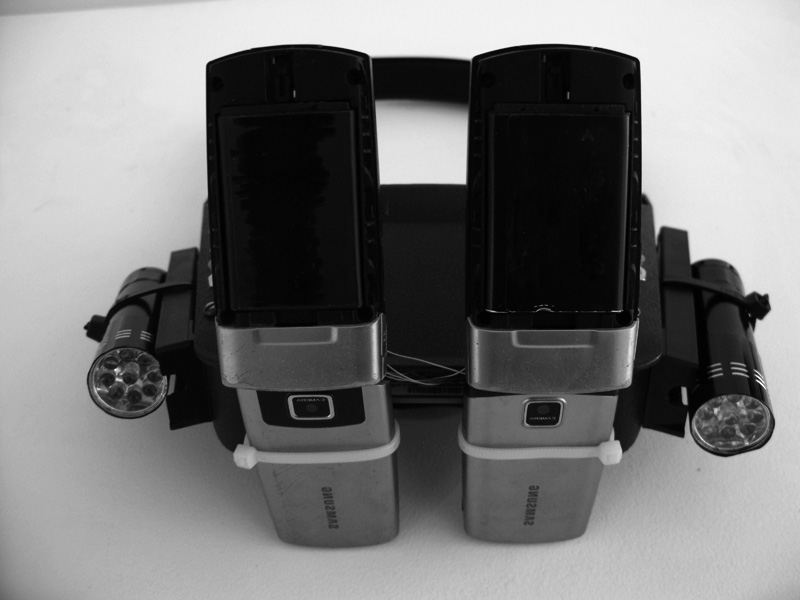
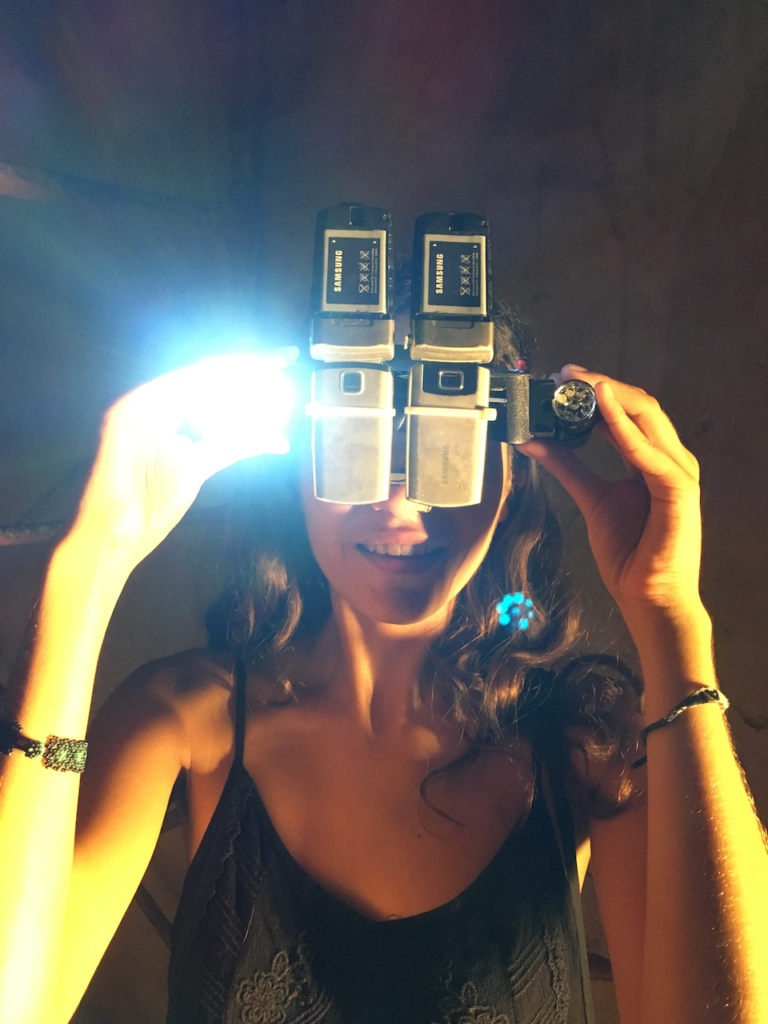
    Users wear a pair of lenses to explore a room. These lenses are made from two hacked Samsung phones. Using the phone camera, a line counter lens was placed in front of the tiny screen, which has very low resolution. As the images are independent for each eye, the mind reconstructs a three-dimensional image. When viewed up close, the image is an enlarged array of luminous pixels that appear to be a hologram of sorts. The processing speed of these phone cameras is very slow, producing a scanning effect with movement. Users attempt to understand this new reality. The room is filled with various objects hanging from the ceiling, pots with live plants, freshly cut flowers, dried flowers, plastic flowers, and a variety of curious objects obtained from flea markets related to impermanence. The room is dark, and the lenses have a lamp on each side. The user experience is immersive, as they explore the space and try to identify and recognize these objects. Pressing a button on the helmet activates a series of filters that make the experience more abstract.

    Users modify the sound environment by moving around the room using an ultrasonic sensor. The sound piece is a collaboration with Manrico Montero.

    During the retreat, I experimented with contemplative meditation using sound. I brought a selection of soundtracks produced by Manrico for his label Mandorla. It was a complementary part of the process that led me to that perceptual state.

    inauguration 2009 1/4 un-cuarto

    Science fiction literature has been one of the first transdisciplinary artistic processes to explore the relationship between technology, science, and speculation about reality. Through books, pages, and words that fade away, the narrative gives us access to imaginary and speculative realities, a reality that occurs in the author’s dream world, materializing in concrete space in the form of a book, activating the reader’s imagination to explore “virtual” worlds.

    Virtuality in dreams and imagination refers to the ability to create and experience fictional or imaginary realities in our minds. It is constructed through complex cognitive processes involving perception, memory, attention, and creativity.

    In this sense, several science fiction authors have speculated about the possibility of immersion in simulated realities, exploring their possible reaches and problems. The simulation of reality has gone from being a speculative narrative to current experiences that use complex computing systems and visualization devices to achieve increasingly immersive experiences.

    The lucidity of perception is a topic that has been explored by various philosophical and spiritual traditions. In Buddhism, for example, we are taught that ignorance and attachment are the primary causes of our suffering. We cling to our perceptions and beliefs as if they were absolute truths, which leads us to confusion and deception. Therefore, meditation and contemplation are practices that help us awaken to reality and see things as they truly are.

    In our everyday lives, we are often distracted and disconnected from reality. Our minds are preoccupied with thoughts, worries, fears, and desires, which prevent us from perceiving reality clearly and objectively. However, the experience of HoloDecon invites us to connect with reality in a deeper and more multidimensional way.

    This installation allows us to experience three different perceptual states: the dreamlike, the concrete, and the digital. The dreamlike experience refers to the world of dreams, where our minds can be more creative and symbolic. The concrete state refers to the physical and material world around us, with objects we can see, touch, and feel. Finally, the digital state refers to the world of technology and virtual reality, where we can immerse ourselves in artificial yet convincing environments.

    Through this experience, we can learn to perceive reality in a more complete and profound way, connecting these three perceptual states and experiencing a richer and more meaningful reality. Furthermore, by using immersive technology, the experience becomes more intense and visceral, allowing us to fully immerse ourselves in the experience and connect with reality in a deeper way.

    In physical reality, the present is presented to us as a dynamic stage in which everything constantly changes, in which time flows, and things transform before our eyes. It is a world of textures, smells, sounds, and flavors that blend in a symphony of sensations that connect us with life itself.

    In the virtual world, the present manifests itself on the screen, in interaction with technology, and in the immersion in simulated realities that transport us to simulated worlds. It is an increasingly present experience in our daily life, in which we can create and experience fictional realities that allow us to explore new ways of being and existing in the world.

    In dreams, the present becomes an oneiric universe in which the mind is freed from the constraints of physical reality and enters into worlds of fantasy and imagination. It is an experience in which lucidity allows us to take control of our dreams and create realities that transport us to unimaginable places.

    In all these states of perception, lucidity is the key factor to awaken to reality, to truly be present and experience life to its fullest. It is a call to live each moment with intensity, to be surprised by the beauty of the world around us, and to create new ways of being and existing in the here and now.

    Bruce Sterling

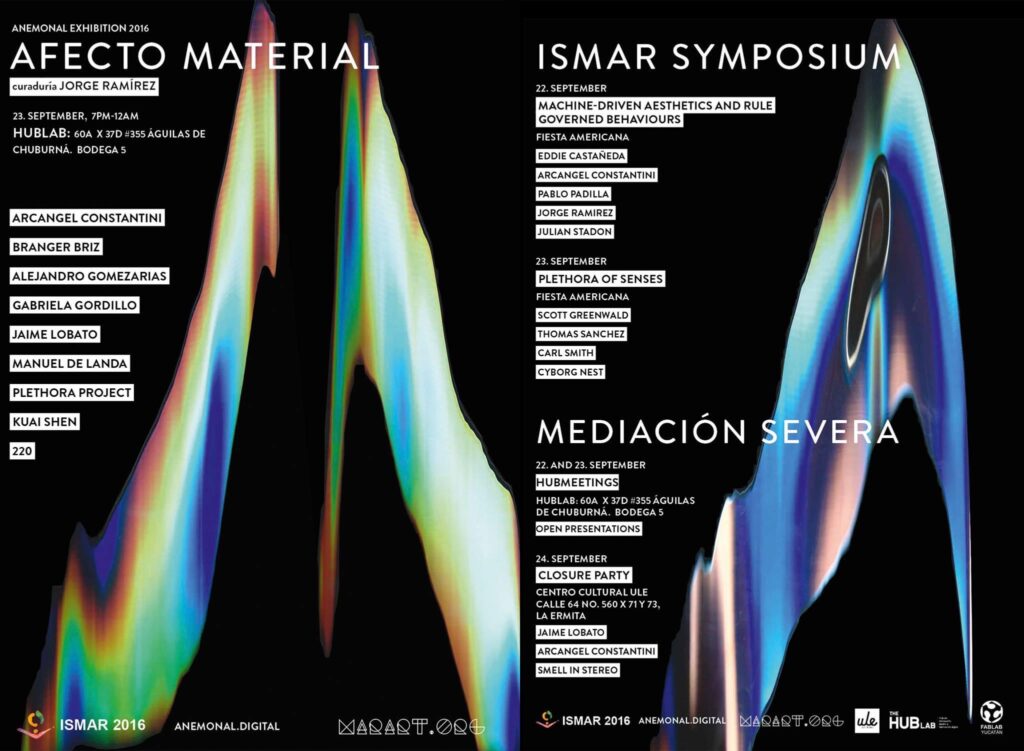
    Afecto Material Exhibition 2016
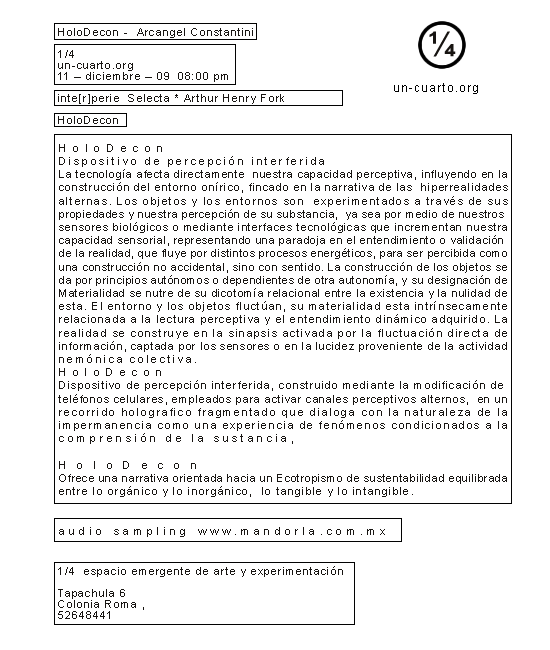
    Technology has a significant impact on our perceptual ability, which influences the construction of our dream world. Our perception of objects and environments is based on the experience of their properties, either through our biological sensors or technological interfaces that enhance our sensory ability. This situation presents a paradox in understanding and validating reality, which flows through different energetic processes but is perceived as a non-accidental construction within a context of chaotic order with a beginning and an end.

    The construction of objects depends on autonomous or dependent principles of other autonomies, and their designation of materiality is nourished by their relational dichotomy between existence and nullity. The environment and objects are dynamic and fluctuate, and their materiality is intimately related to our perception and understanding of the world around us.

    Reality is constructed through synapses activated by the direct fluctuation of information captured by our sensors or by the lucidity coming from collective mnemonic activity. In general, our perceptual capacity is affected by technology, leading us to question the nature of reality and how we construct it through our perceptions and experiences.

  • Sonoluminimente

    ยท

    Sonoluminimente

    Sonoluminescence is a complex phenomenon that is still not fully understood, so there is no single and definitive hypothesis that can be considered the most accurate. However, there are several theories that have been proposed to explain this phenomenon, such as the cavitation hypothesis, the Casimir effect theory, and the quantum electrodynamics hypothesis.

    The cavitation hypothesis suggests that sonoluminescence occurs due to the violent collapse of a gas bubble in a liquid, which generates a large amount of heat and energy. The Casimir effect theory suggests that sonoluminescence is caused by the interaction of quantum vacuum fluctuations with sound-excited water molecules, which generates virtual photons that become real.

    The hypothesis of quantum electrodynamics is based on the idea that sonoluminescence is caused by the excitation of electrons in water molecules, which then emit photons when they return to their original energy state. This theory also suggests that the quantum vacuum plays an important role in sonoluminescence, as it can generate pairs of virtual particles that interact with the excited electrons.

    These physics theories have in common the attempt to understand the Vacuum: a fundamental concept in physics that refers to the state of total absence of matter and energy in a given space. In classical physics theory, the vacuum was considered to be a state in which there was nothing at all. However, in modern physics, it has been discovered that the vacuum is not really empty, but is filled with quantum fluctuations that generate virtual particles and energy fields. In fact, it is believed that the quantum vacuum is the source of dark energy that drives the accelerated expansion of the universe.

    Each subatomic interaction consists of the annihilation of the original particle and the creation of new subatomic particles. The subatomic world is a continuous dance of creation and annihilation, mass transforming into energy and energy transforming into mass. Transient forms appear and disappear from existence, creating an infinitely and constantly new reality. – Sogyal Rinpoche

    Humanity has begun to explore consciousness processes through meditative and mindfulness methods, leading to speculative hypotheses about the existence and perception of reality. Eastern mystics have observed the constant presence of emptiness and impermanence when contemplating consciousness and nature, seeing the universe as energies and fluctuations that constitute an illusory, transient, and non-dual reality.

    In Buddhist philosophy, ลšลซnyatฤ is the emptiness that constitutes the ultimate reality. Sunyata is not seen as the negation of reality, but rather as the undifferentiated source from which all apparent entities, distinctions, and dualities arise. Emptiness teaches the lack of substantiality or independence of things, and also speaks of impermanence, of how everything is in constant transformation and change.

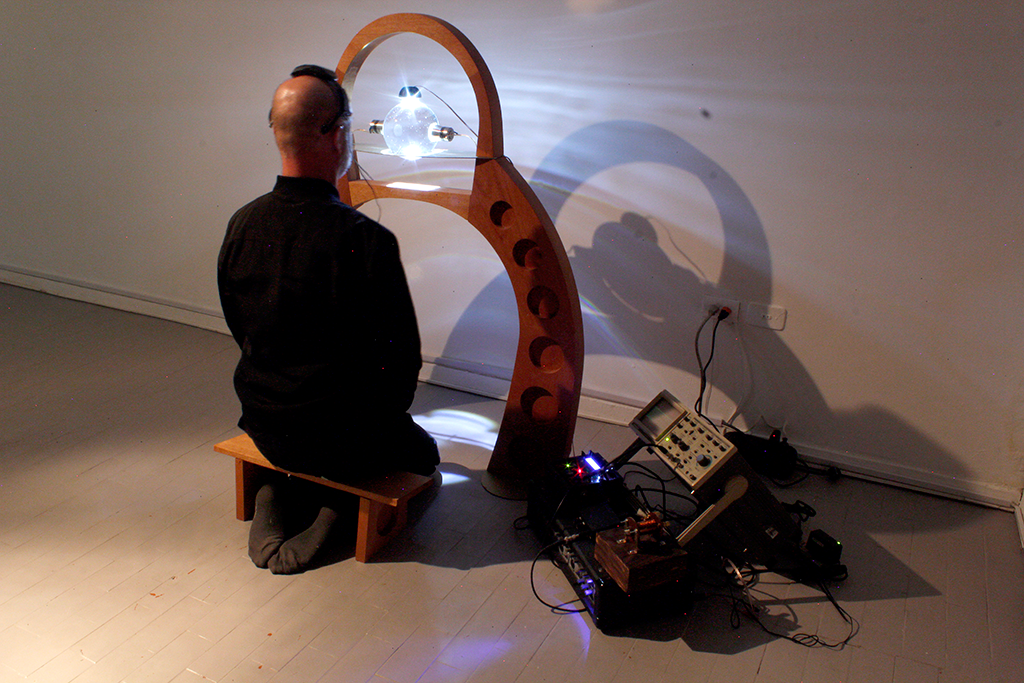
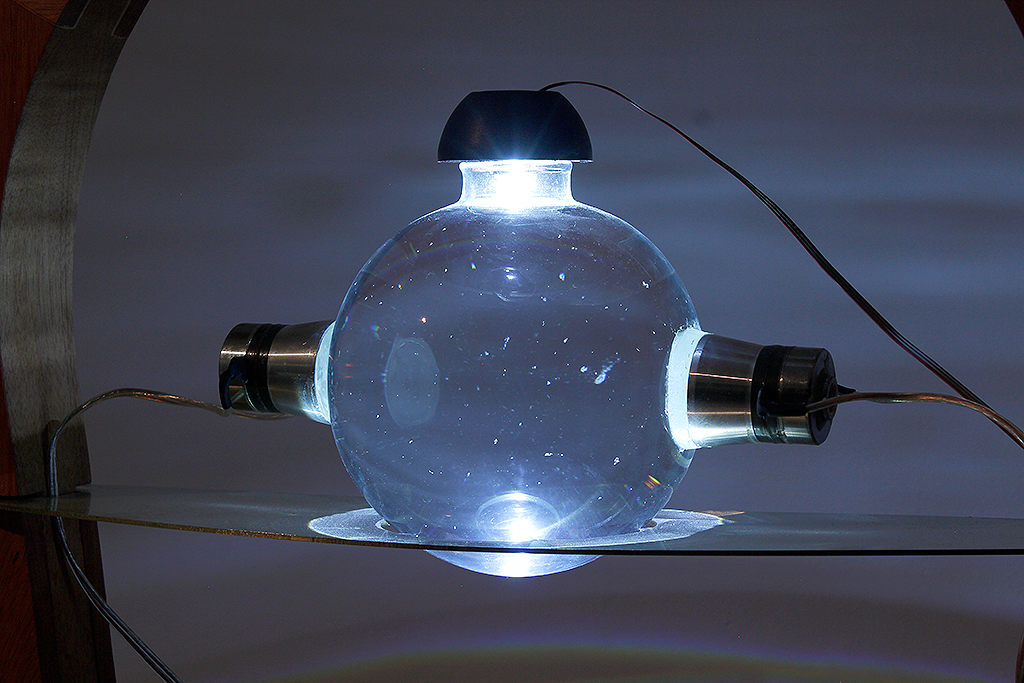
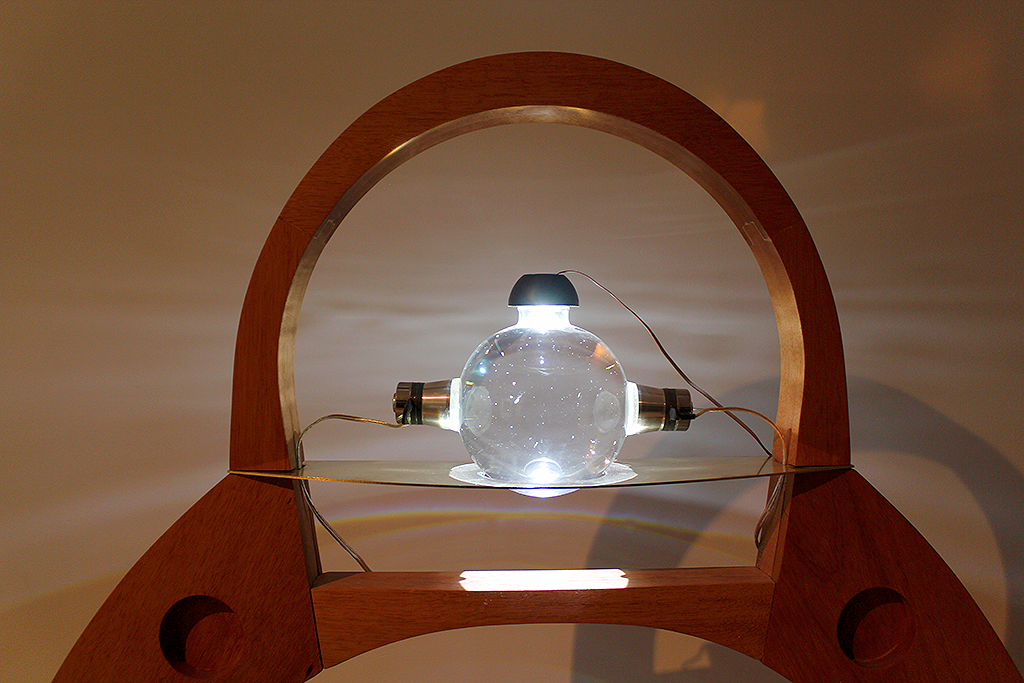
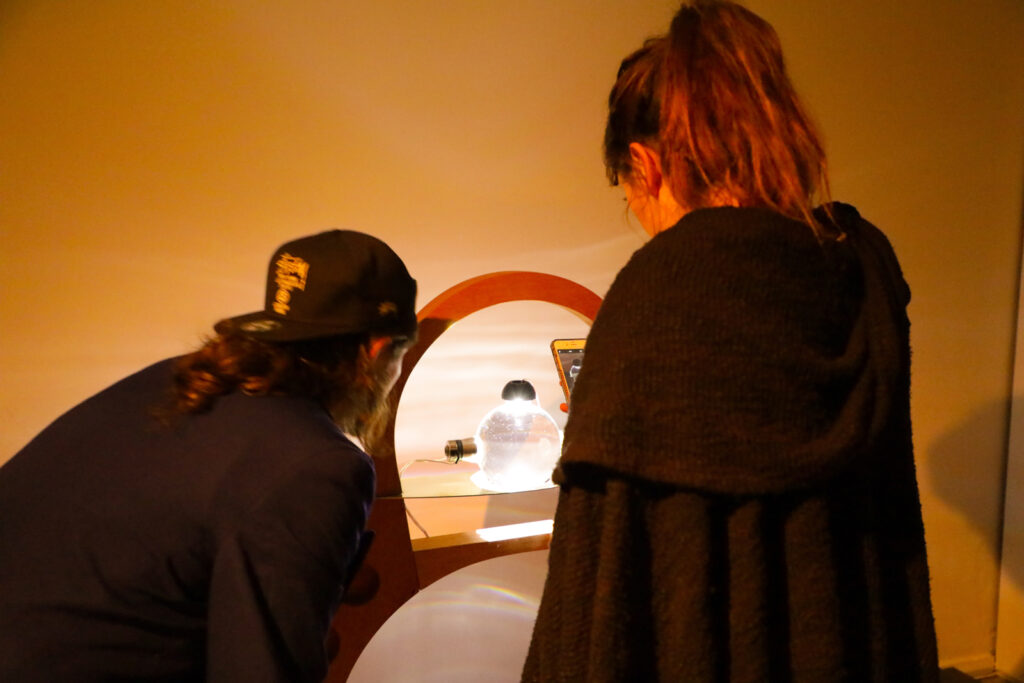
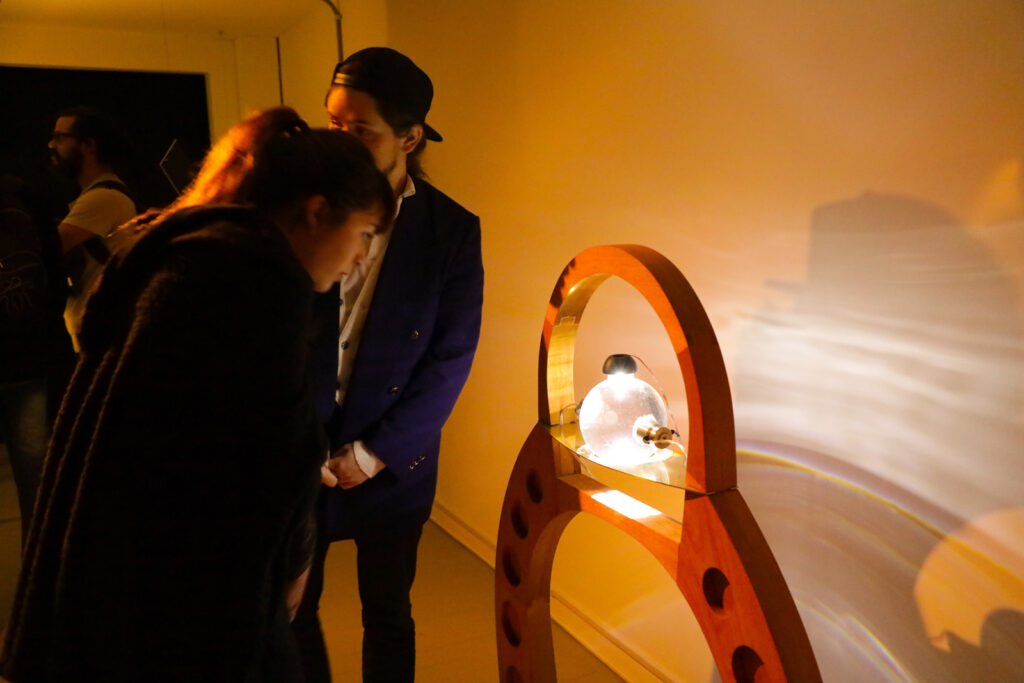
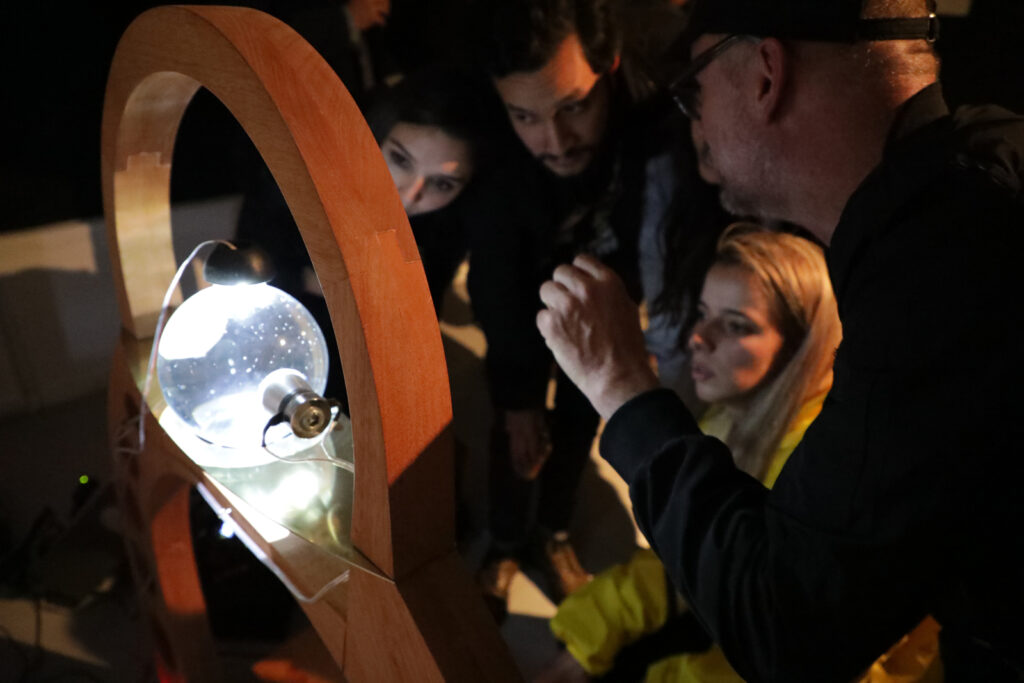
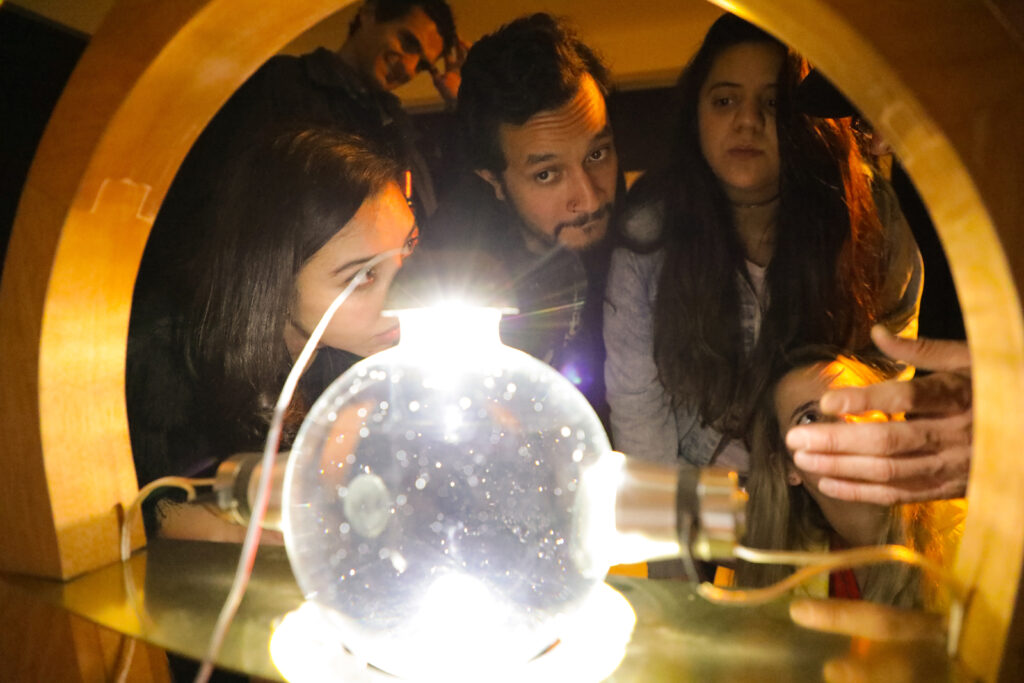
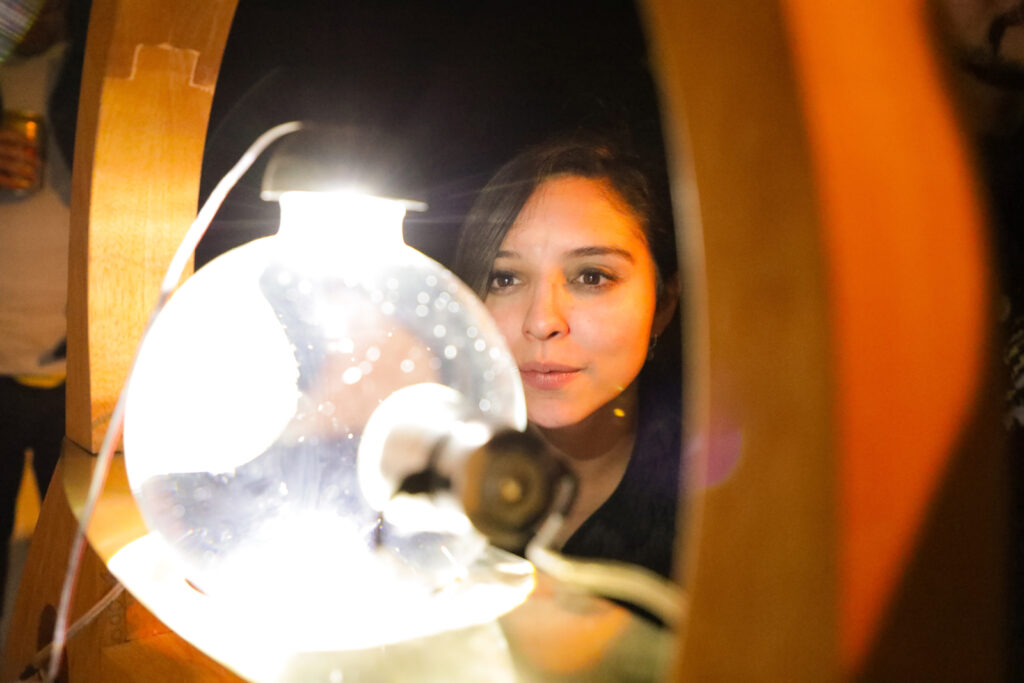
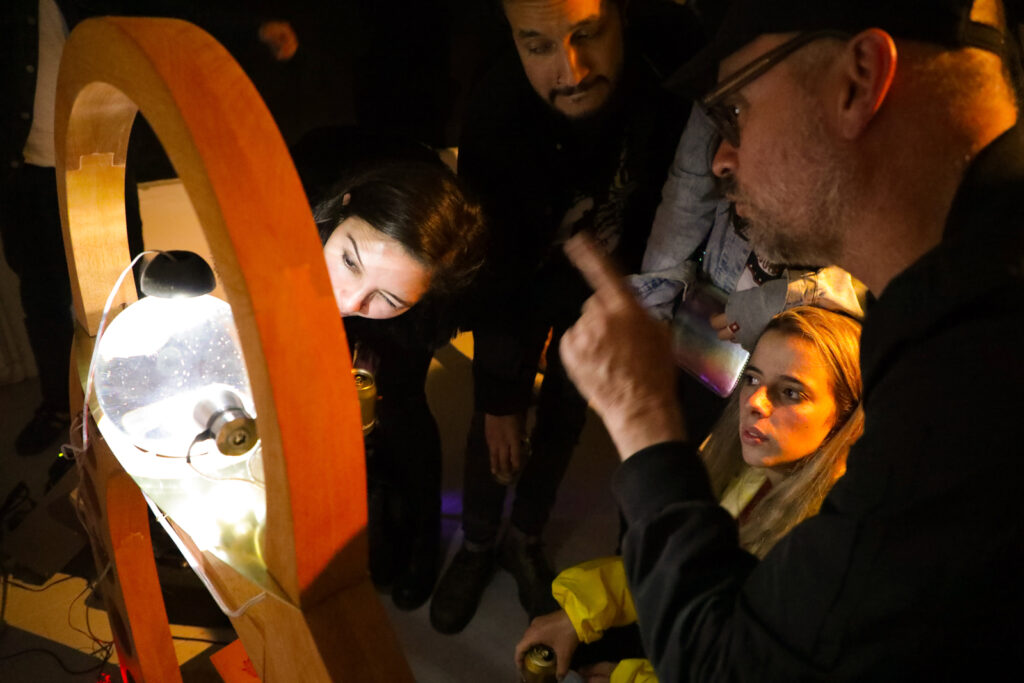
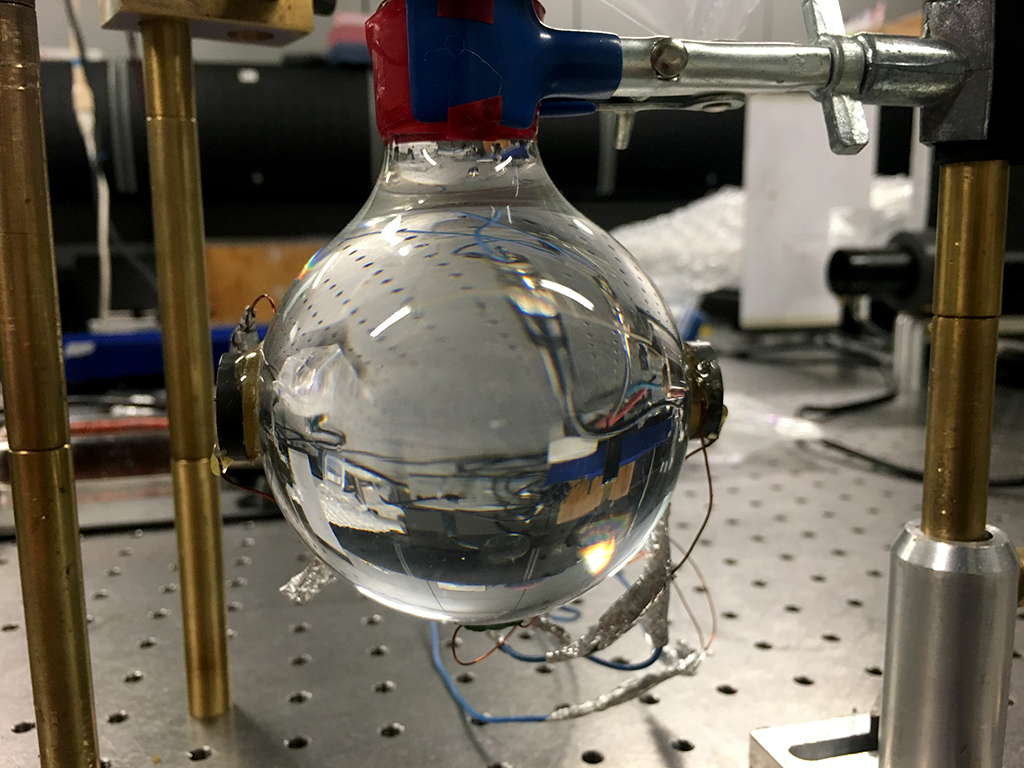
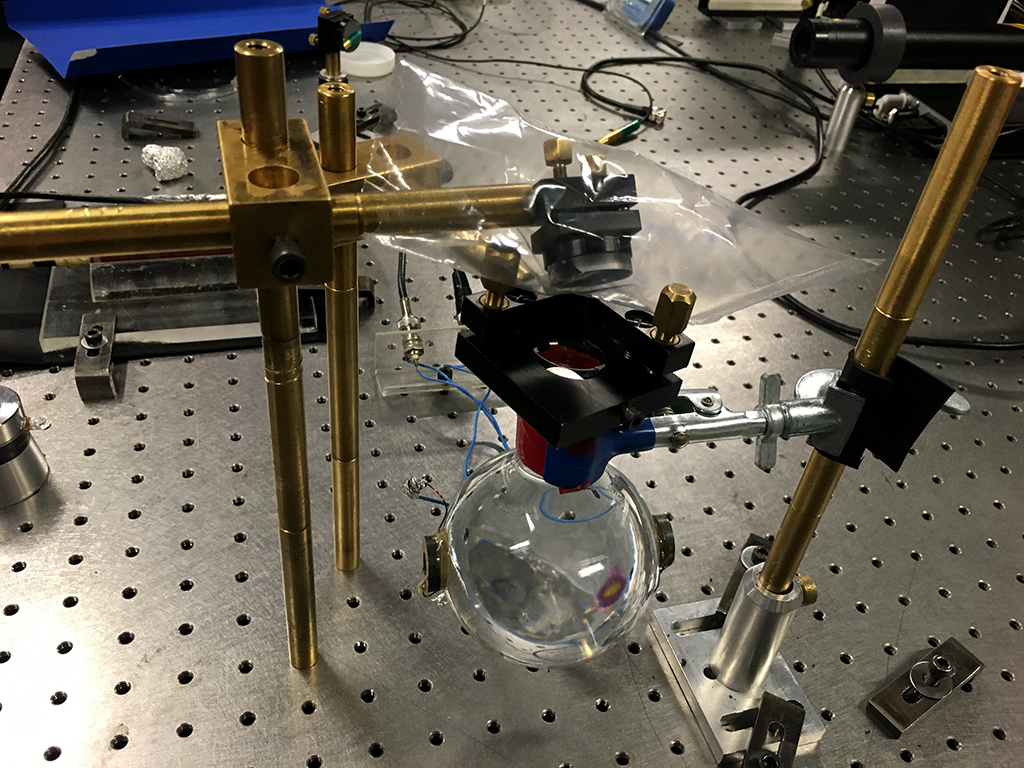
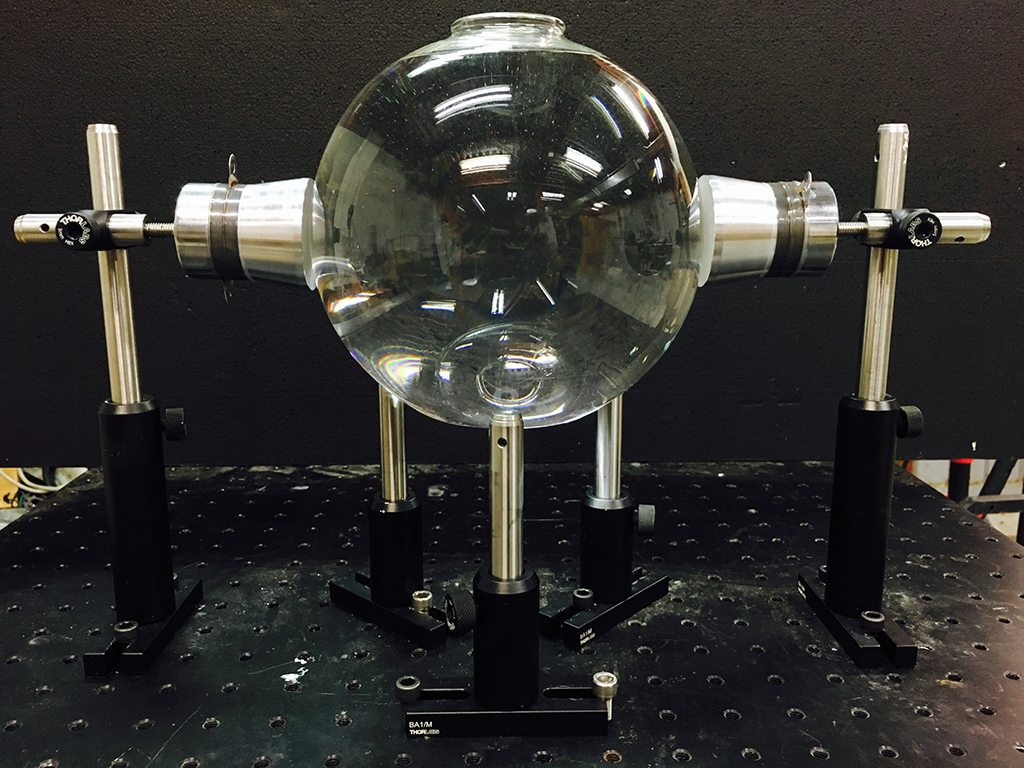
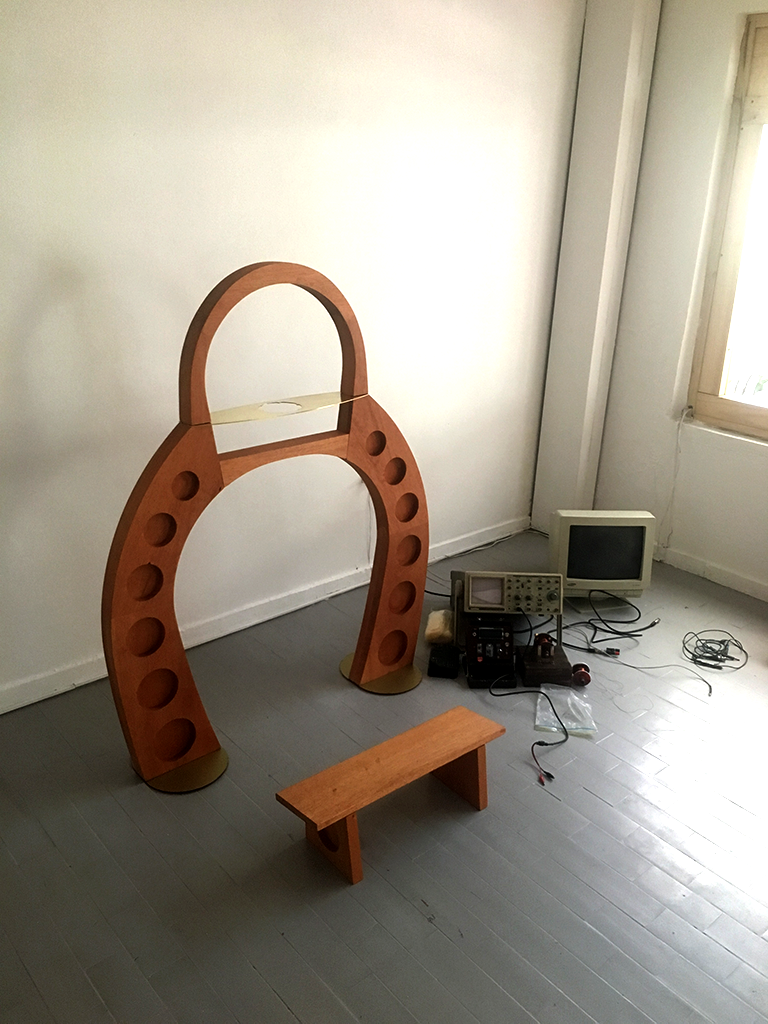
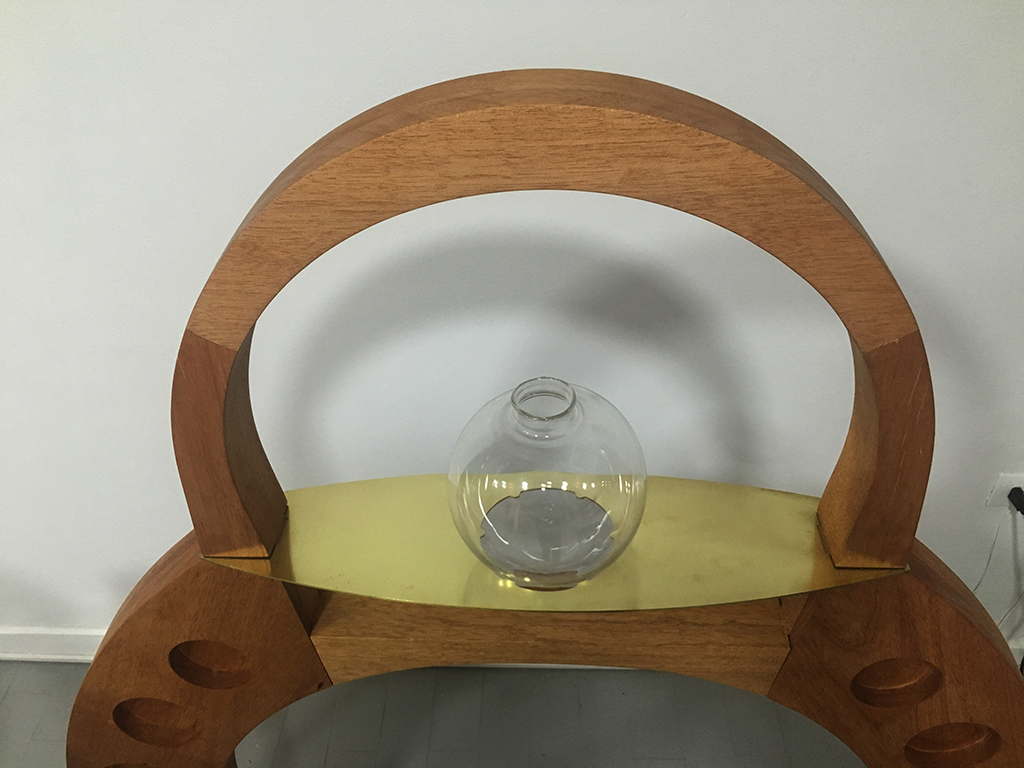
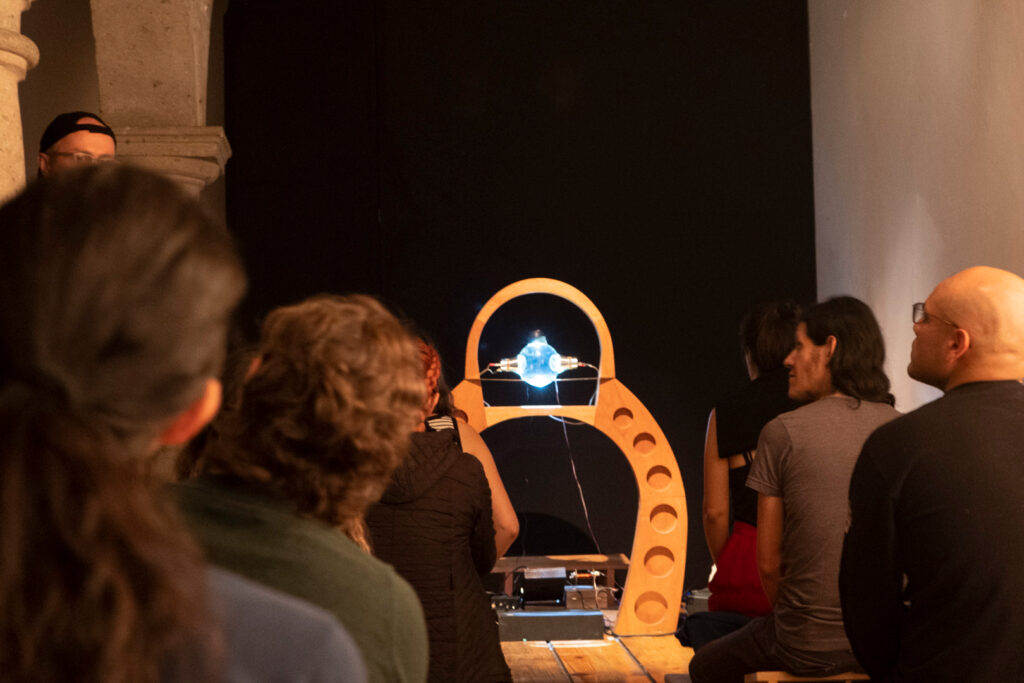
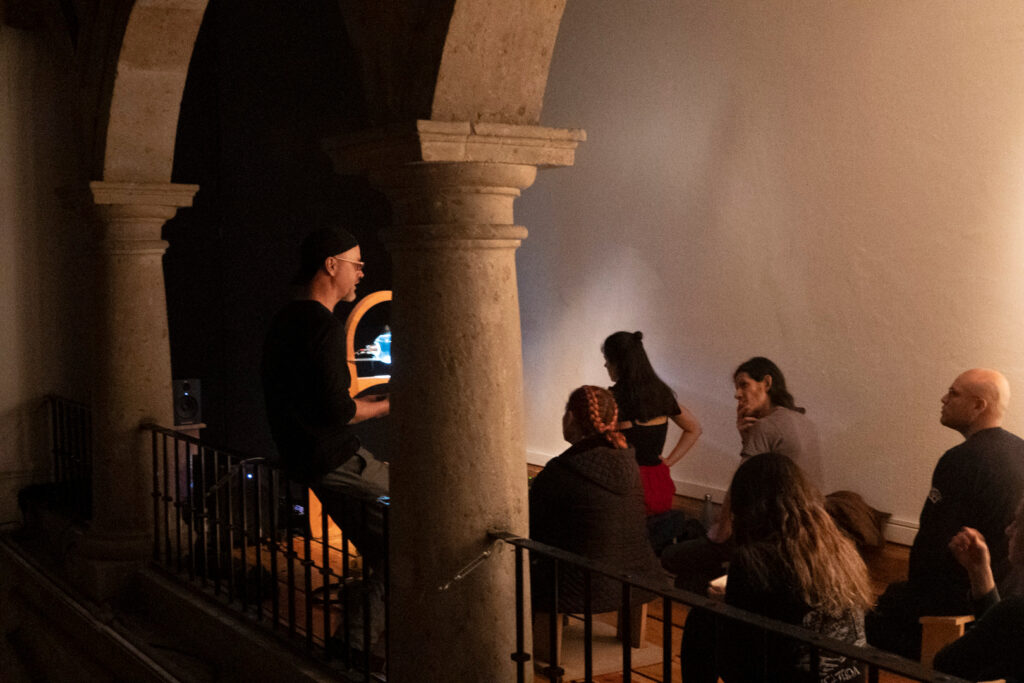
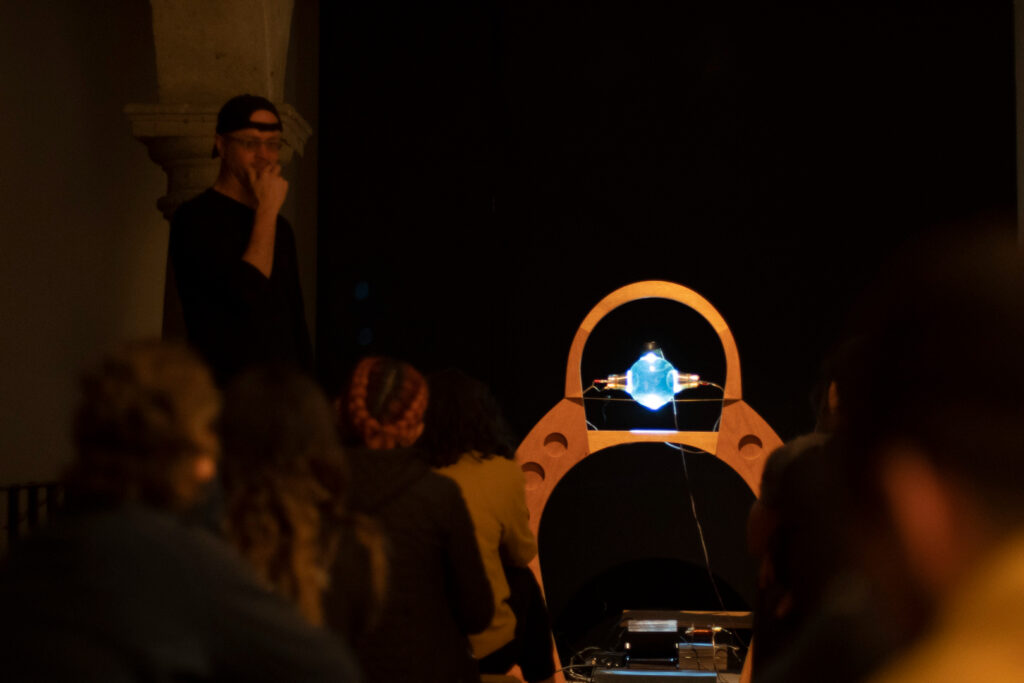
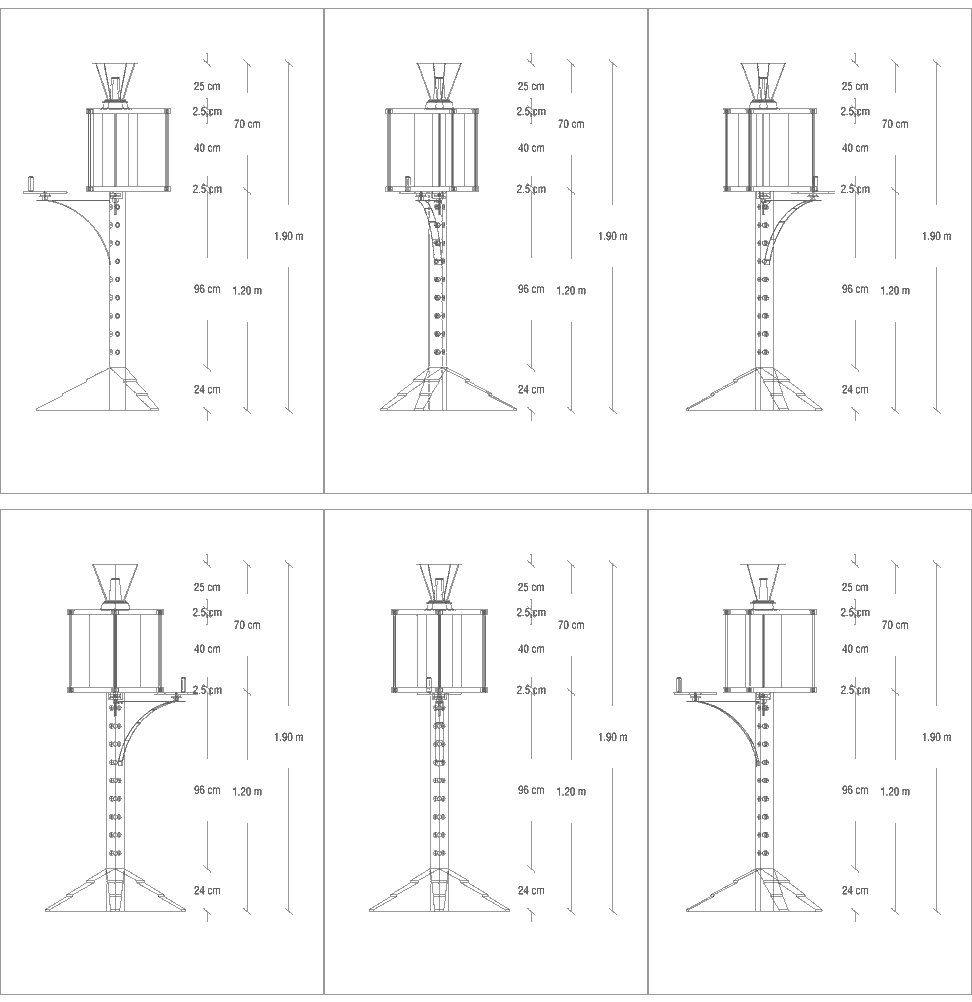
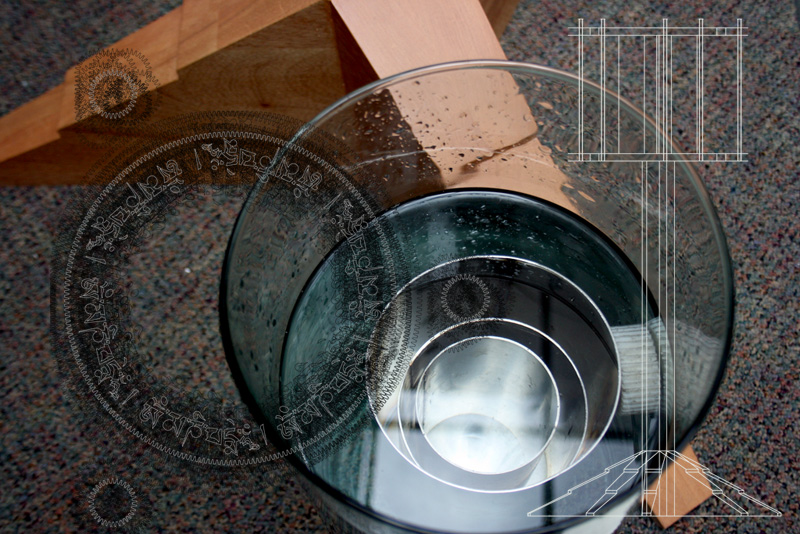
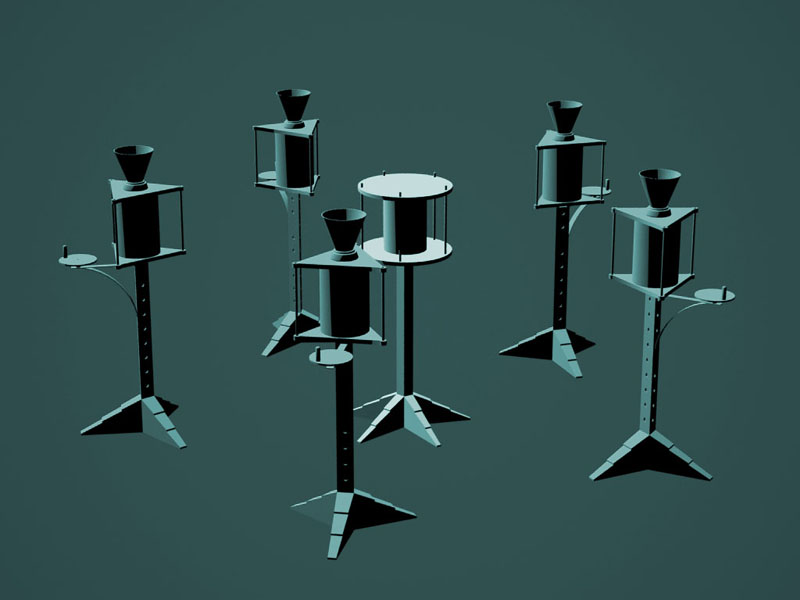
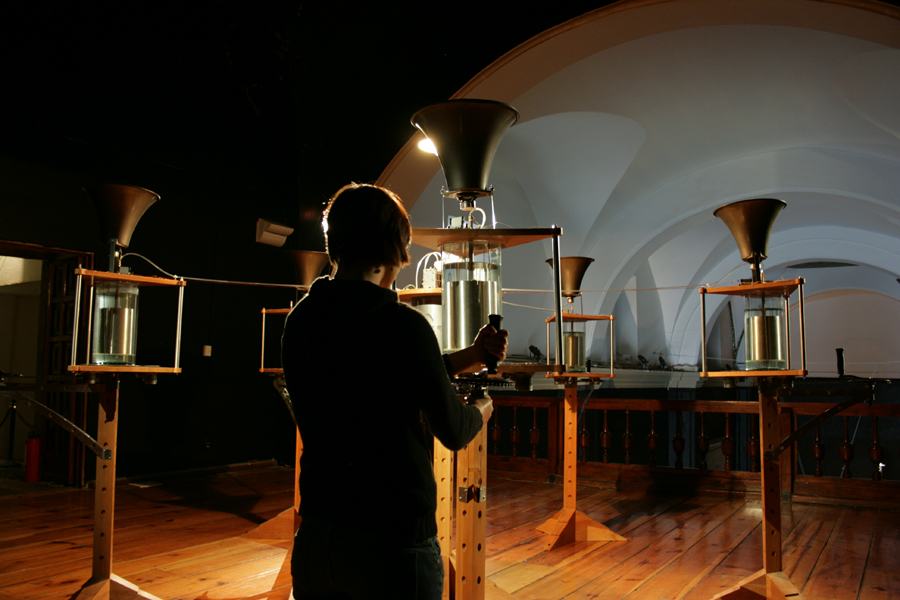
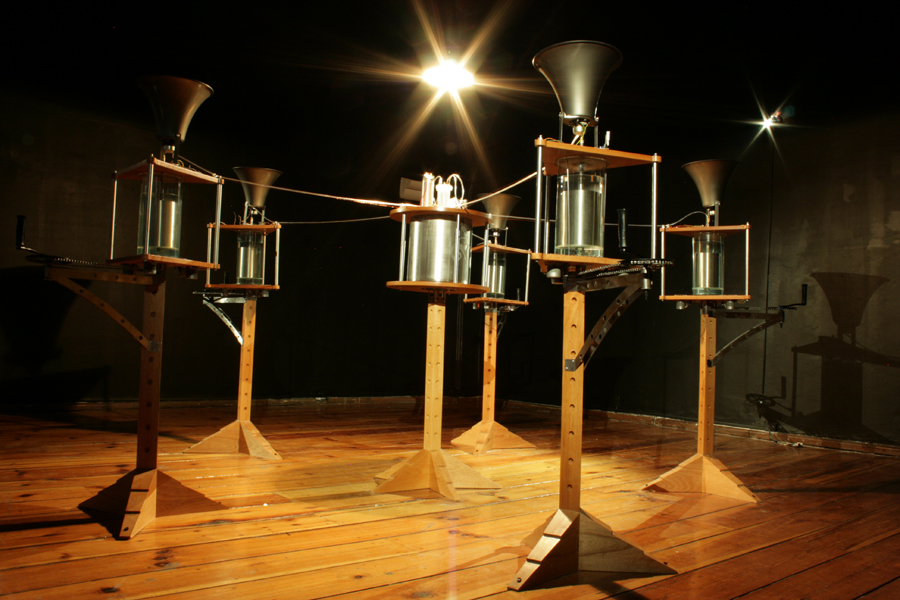
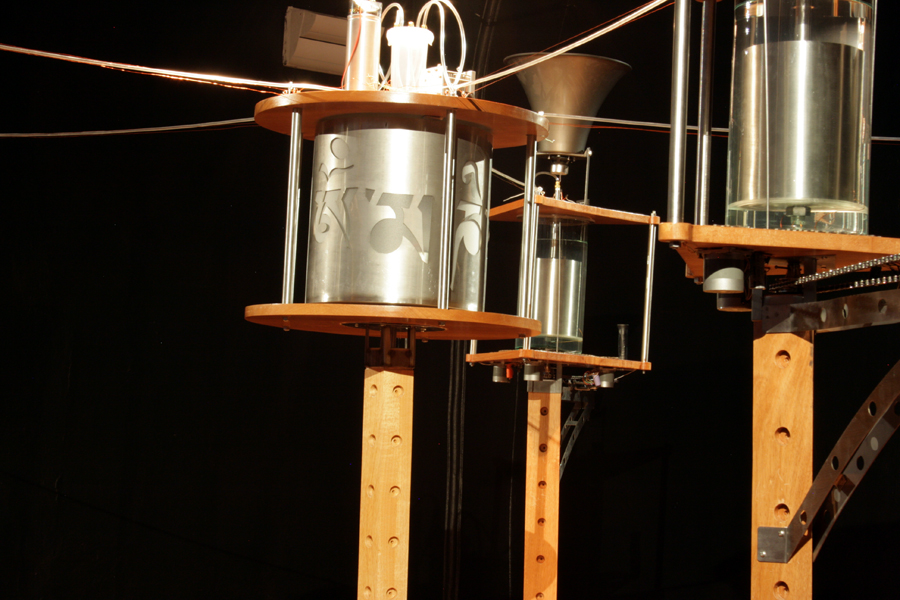
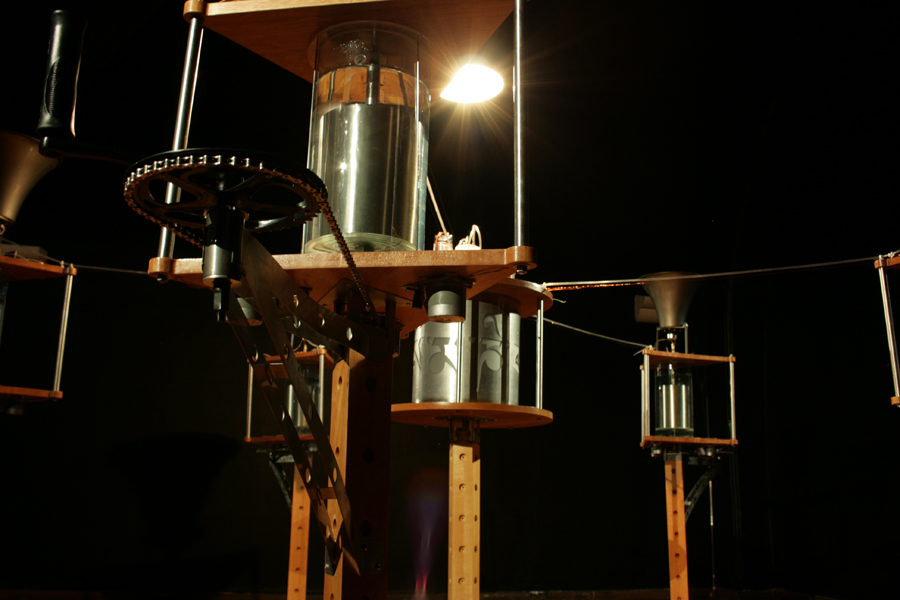
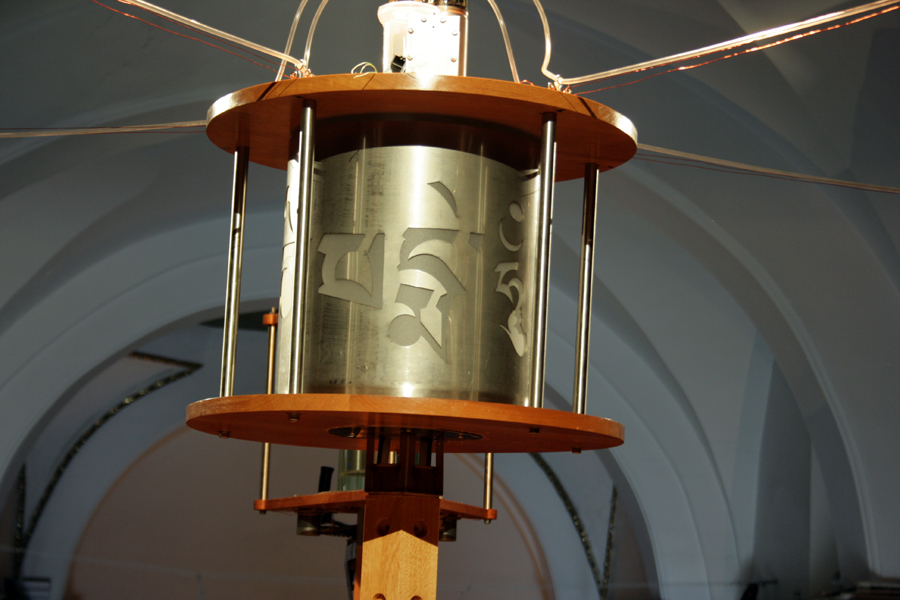
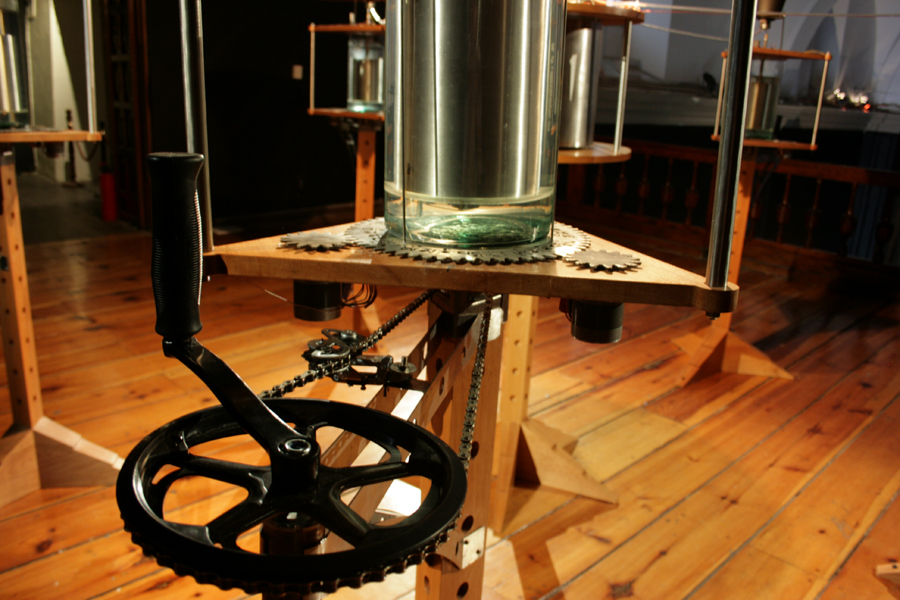
    The practice of Sonoluminiment focuses on meditation on the nature of reality, specifically on impermanence and emptiness. The construction of the mantric artifact involves replicating the multiple bubble sonoluminescence experiment using electronic components and a wooden structure that represents a portal, alluding to the bardos.

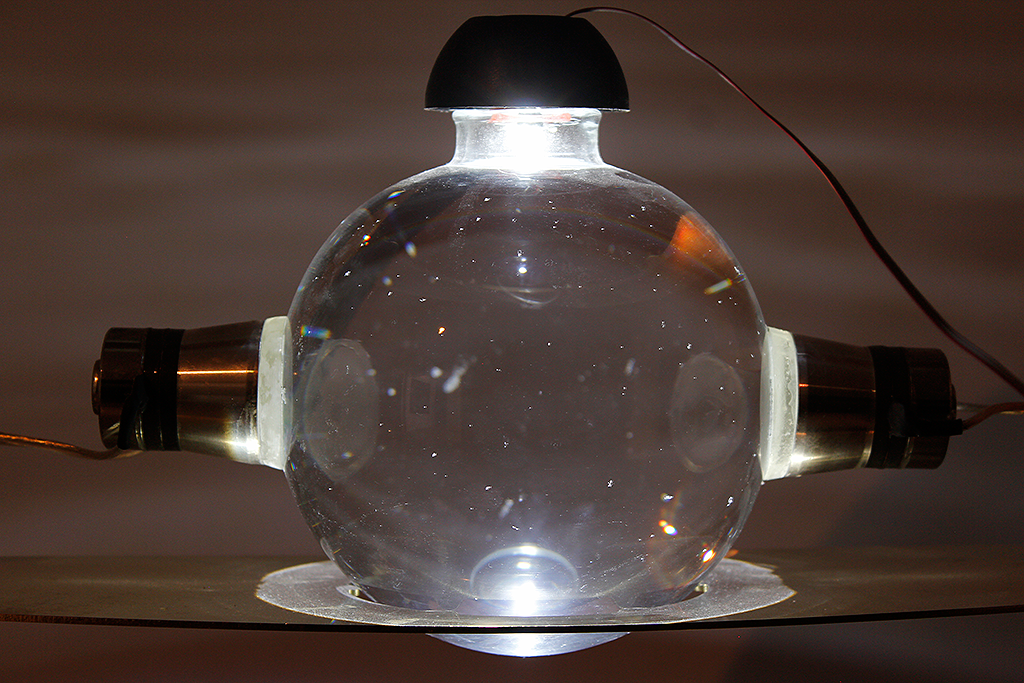
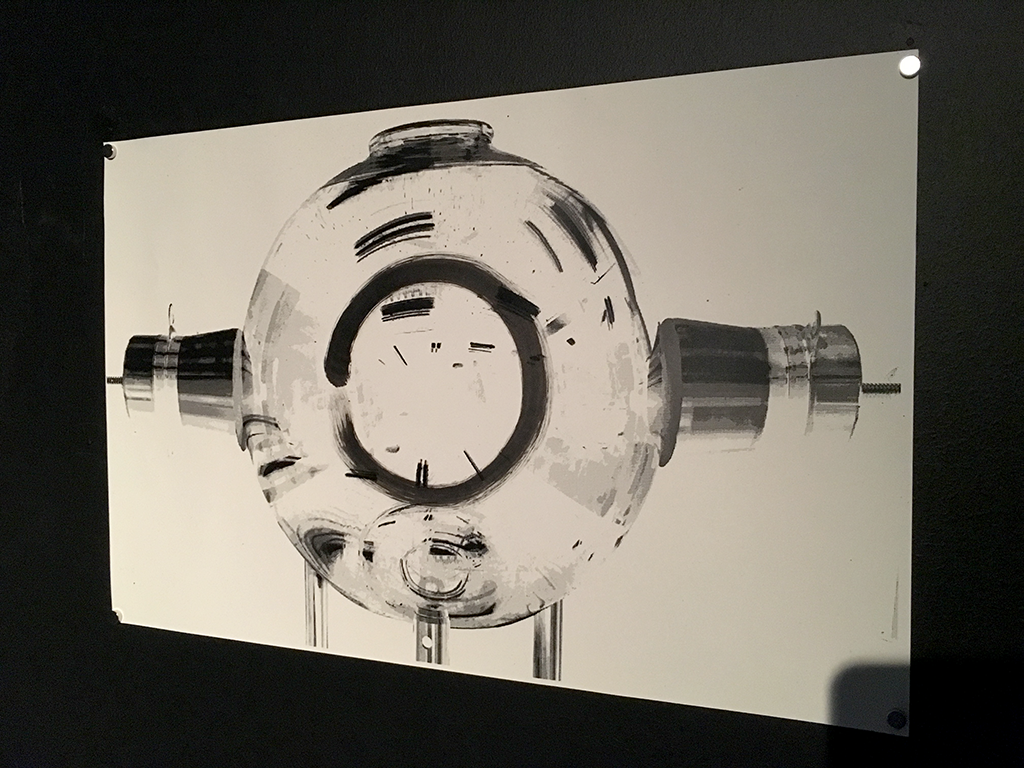
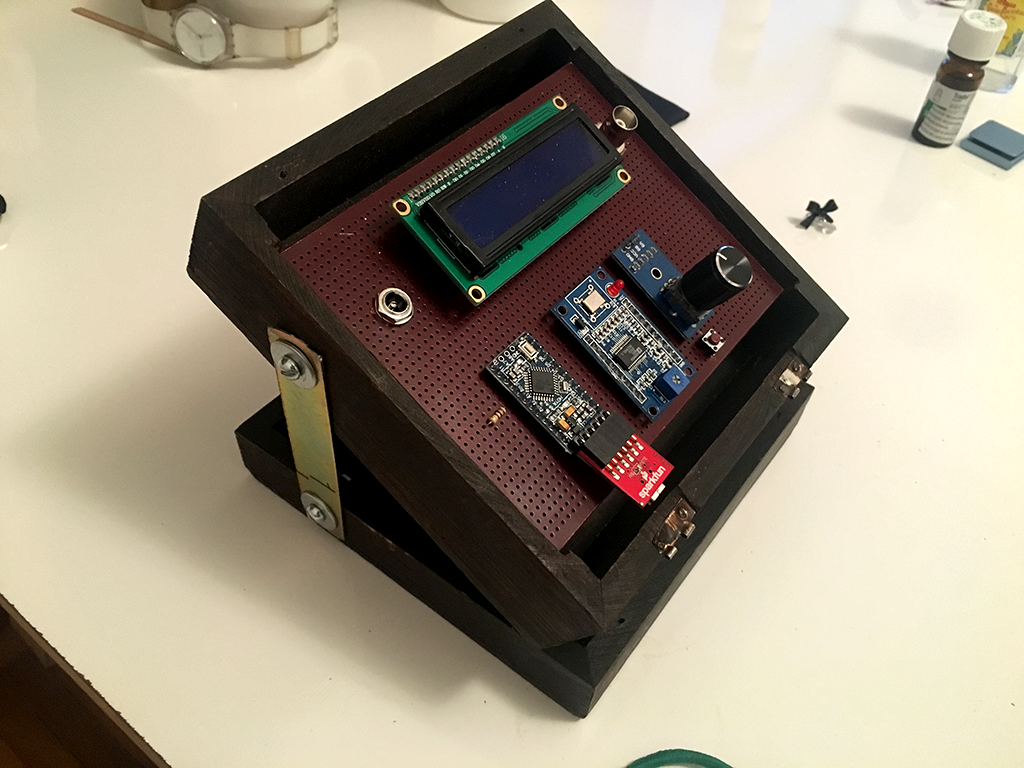
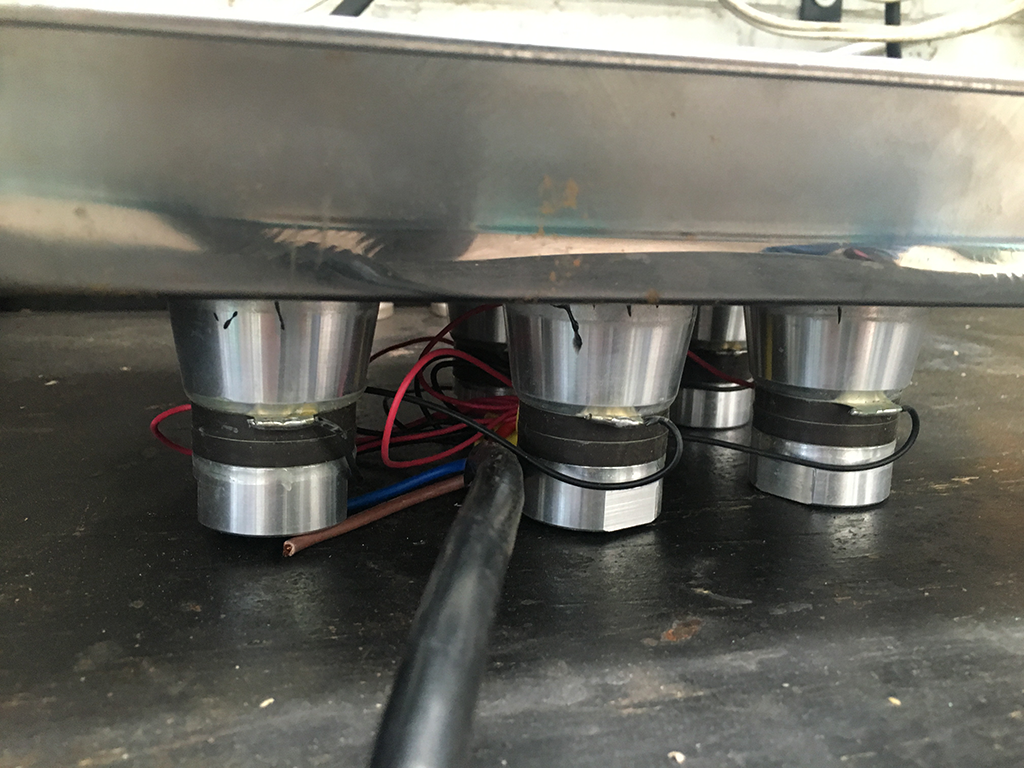
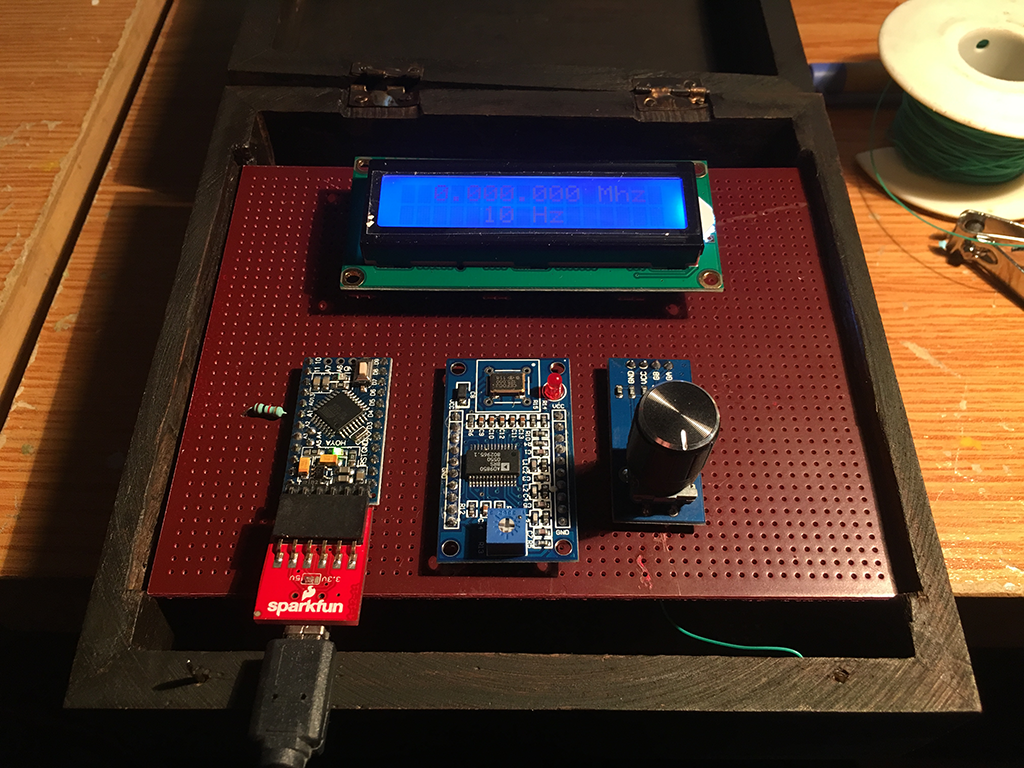
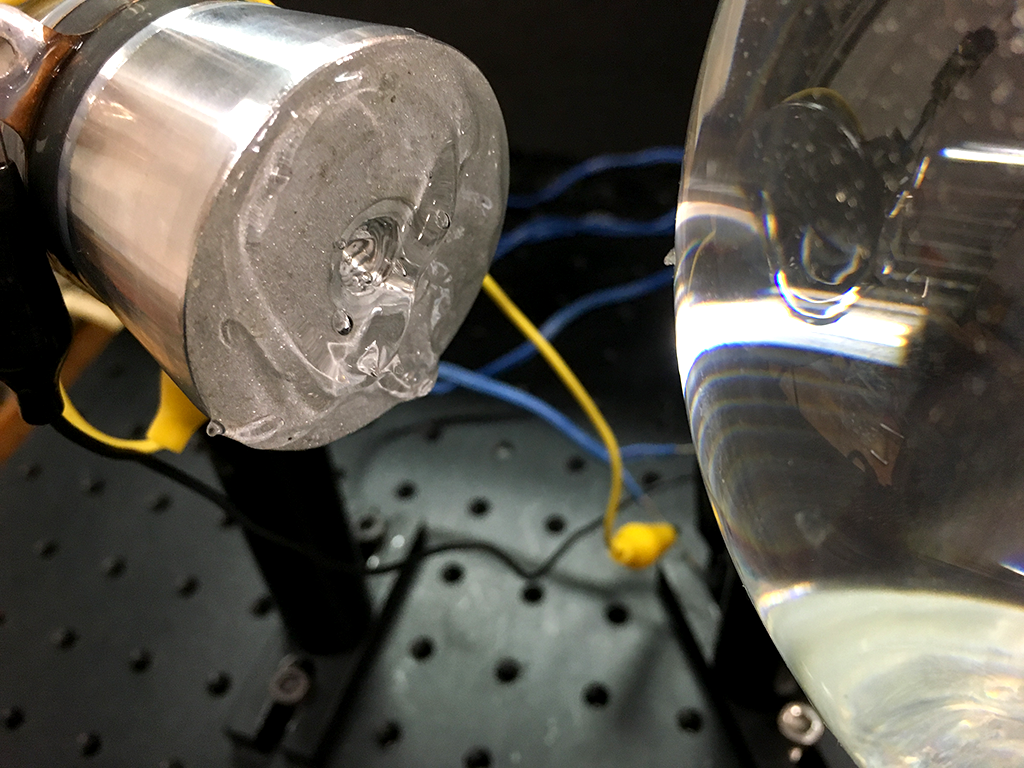
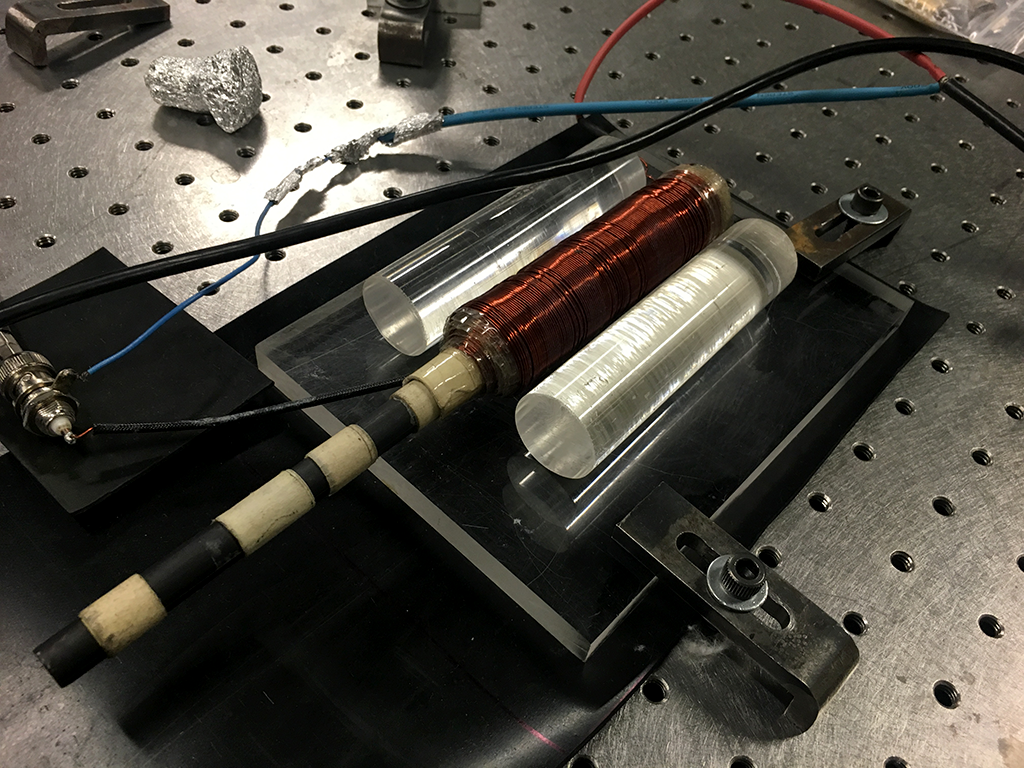
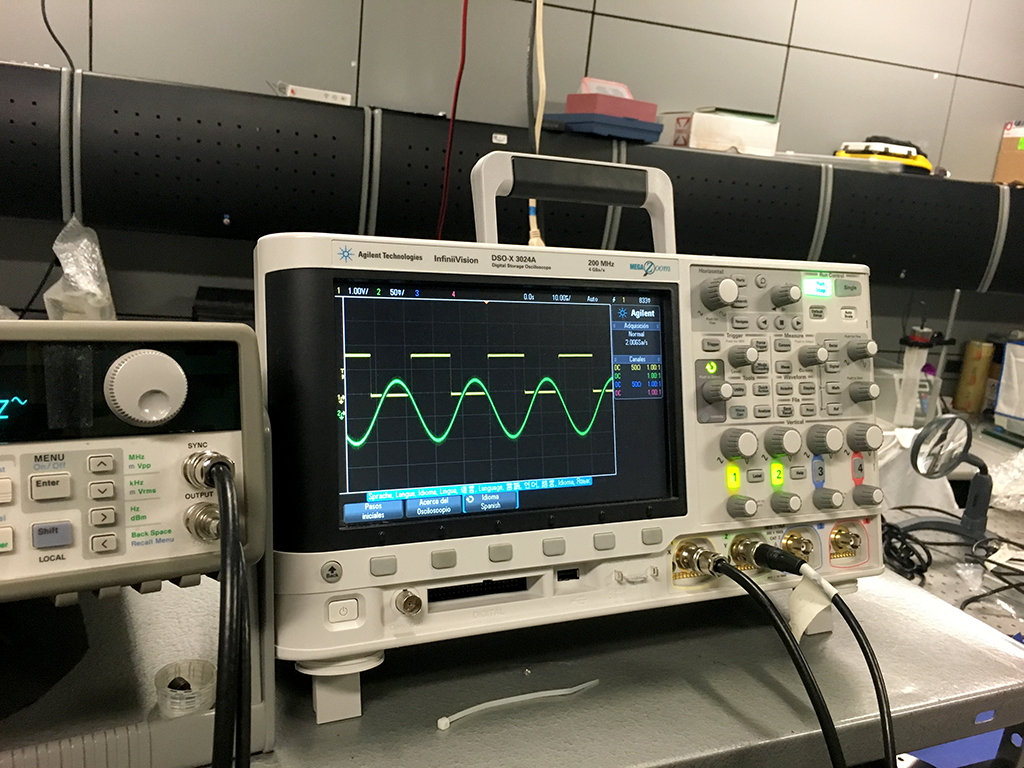
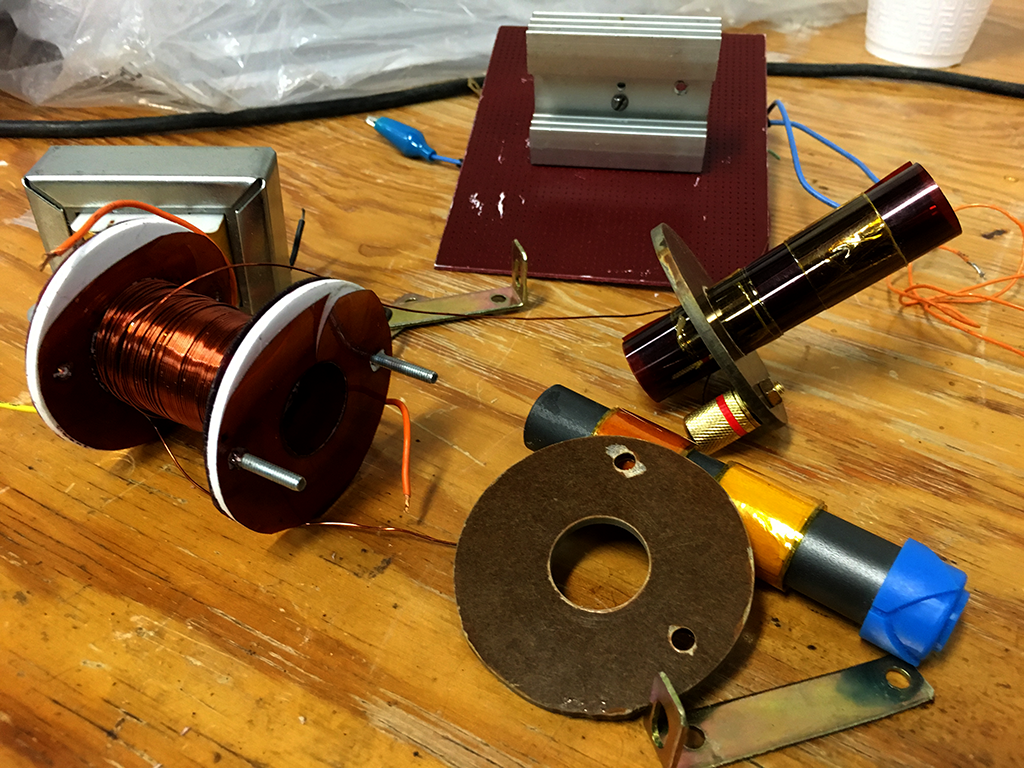
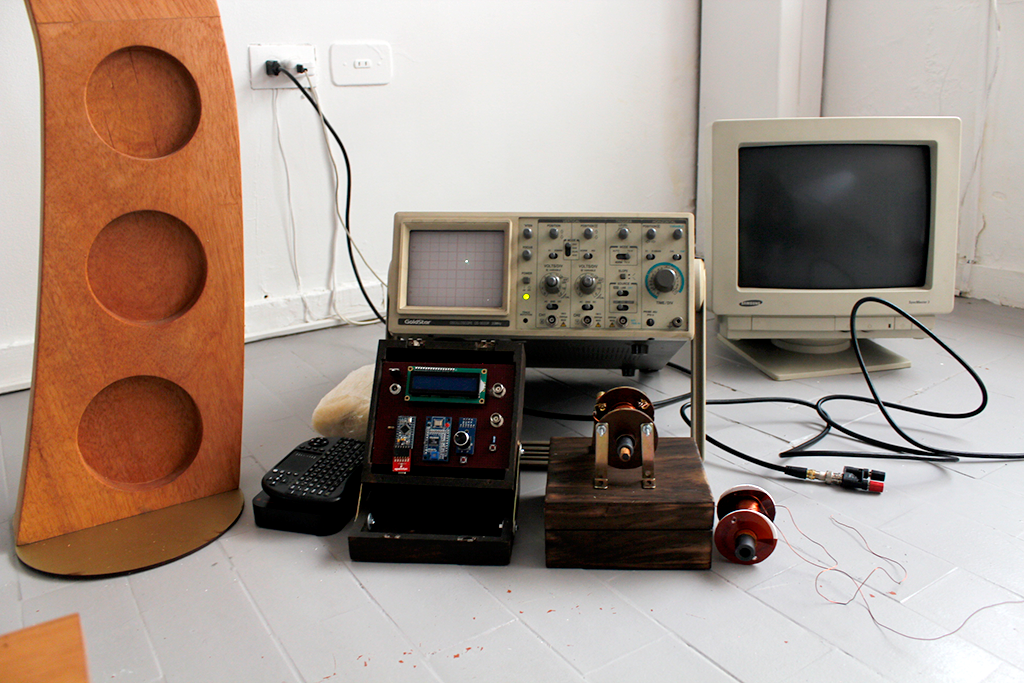
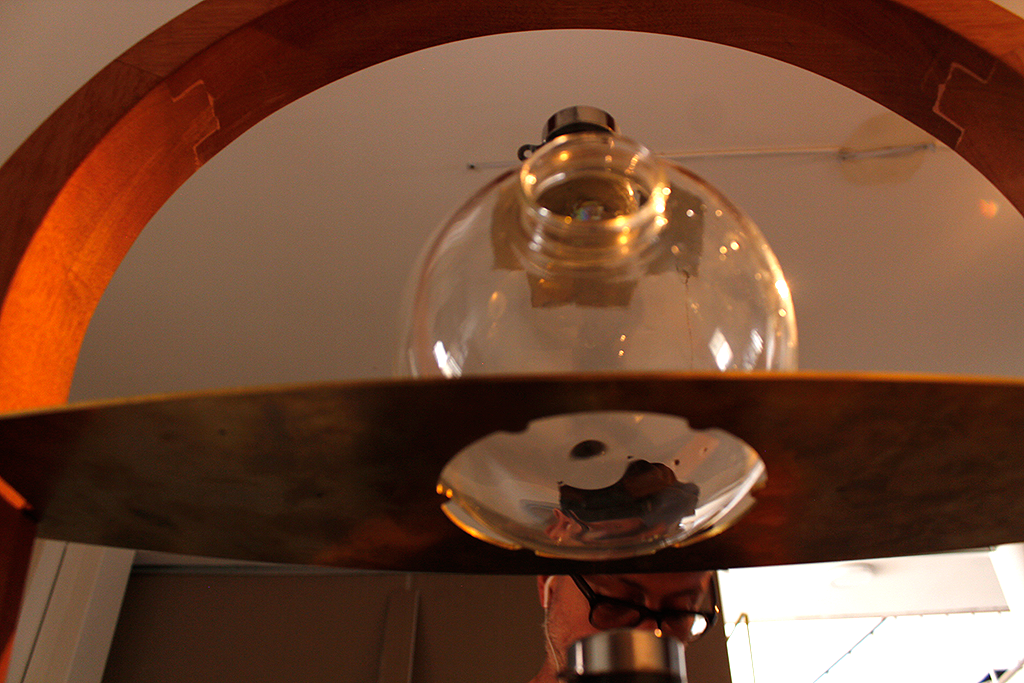
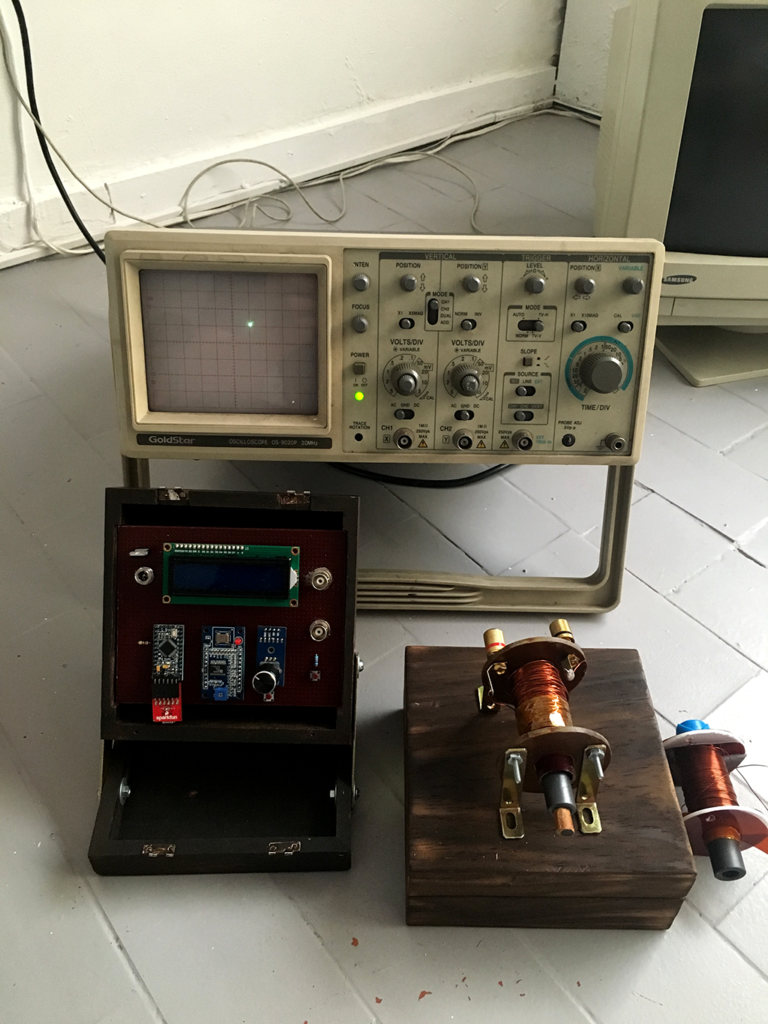
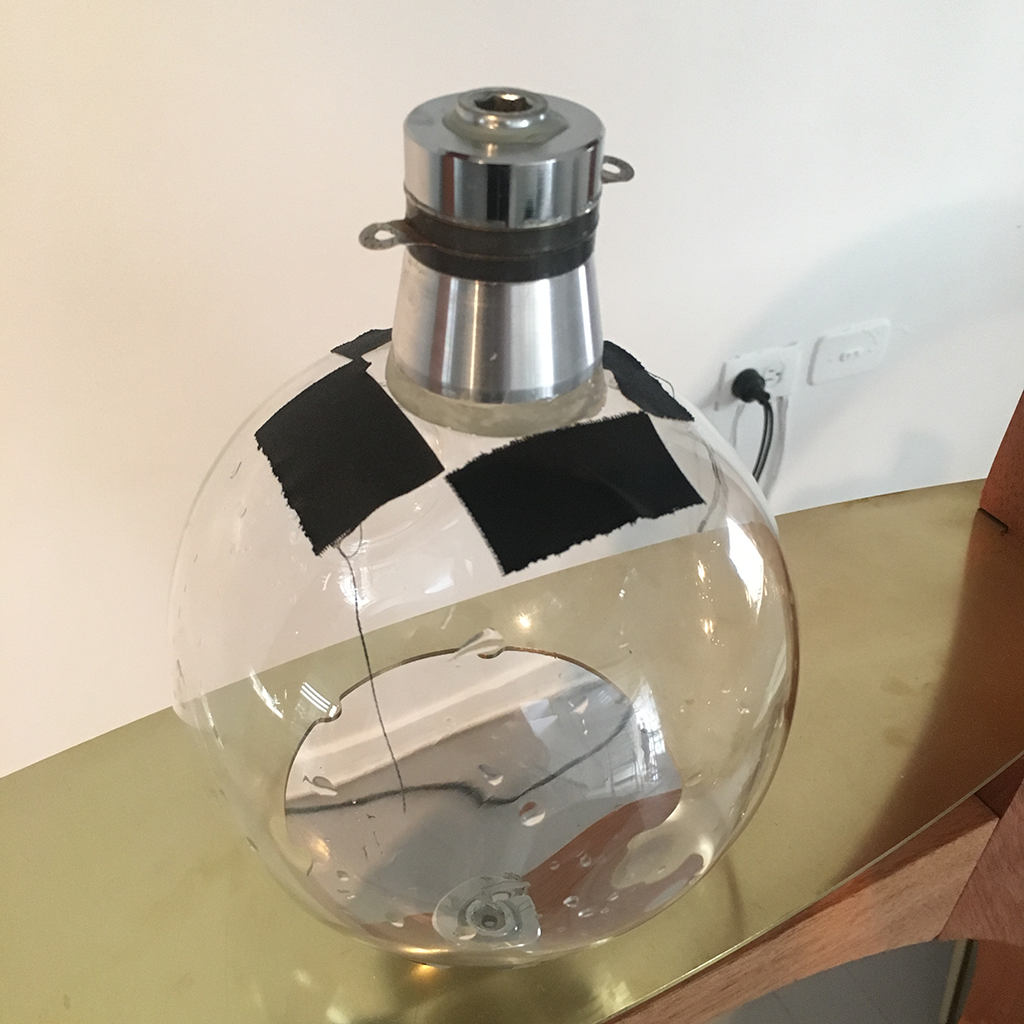
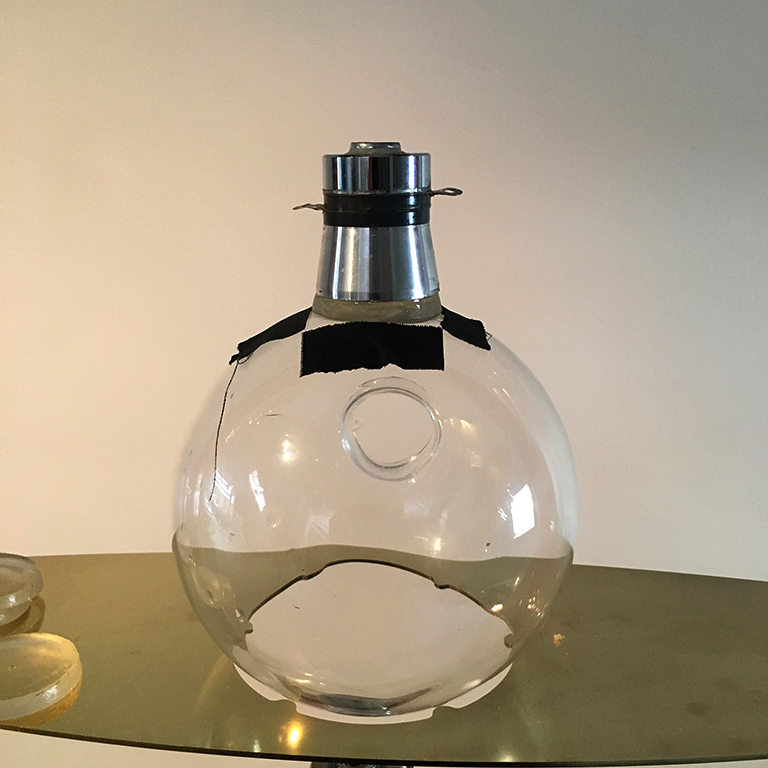
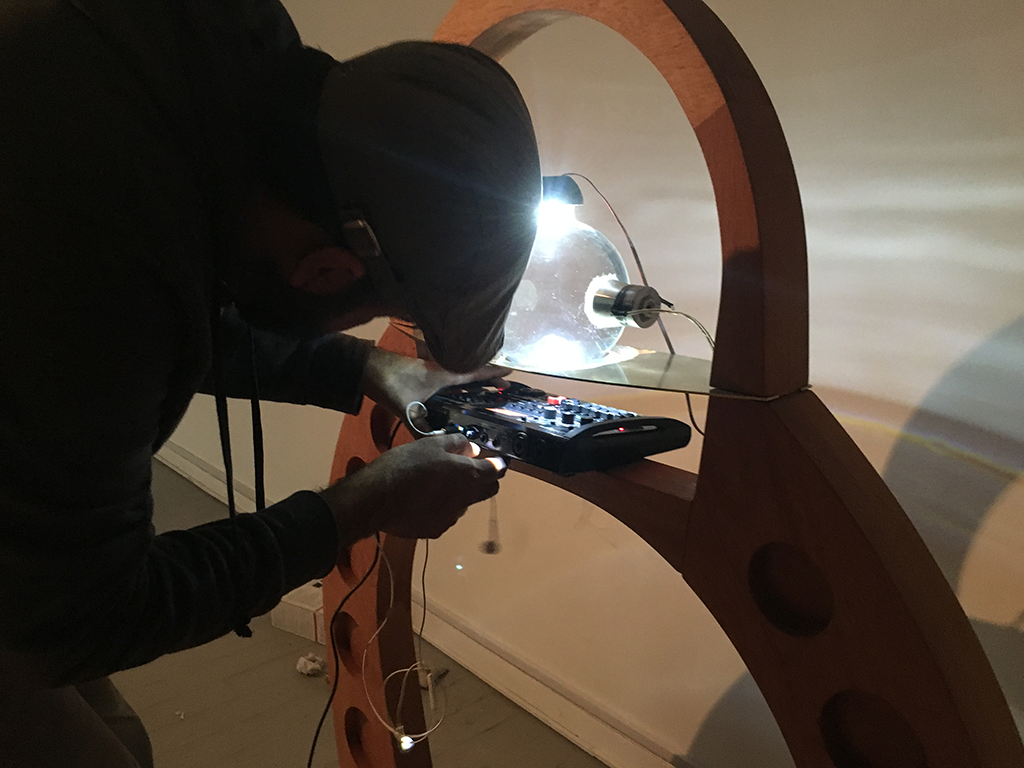
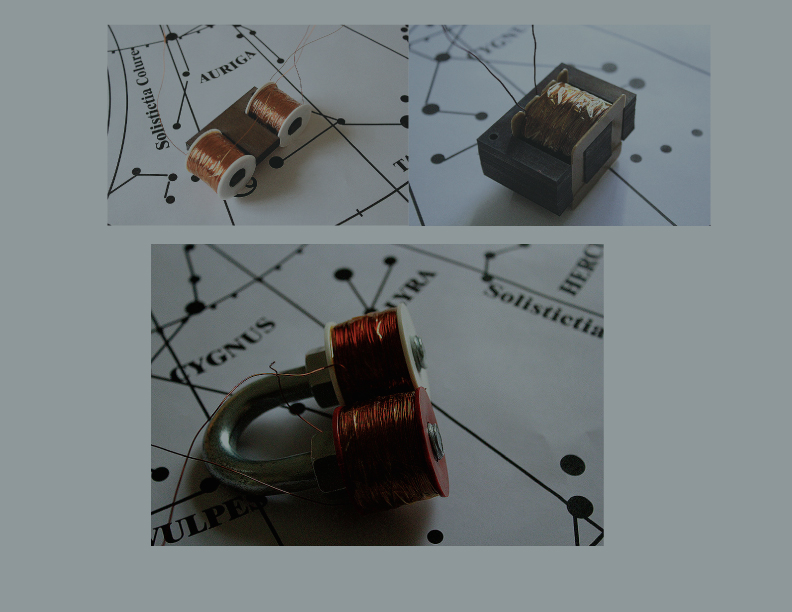
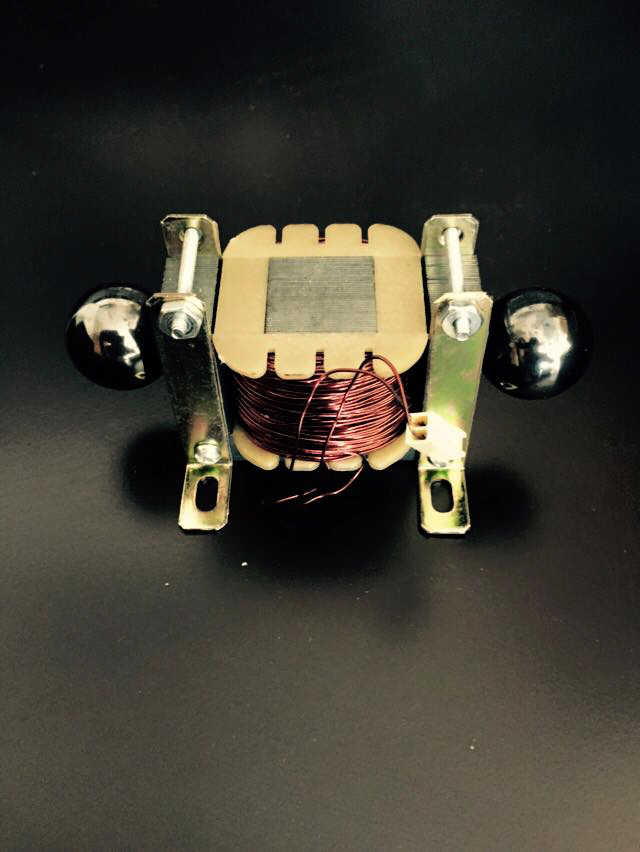
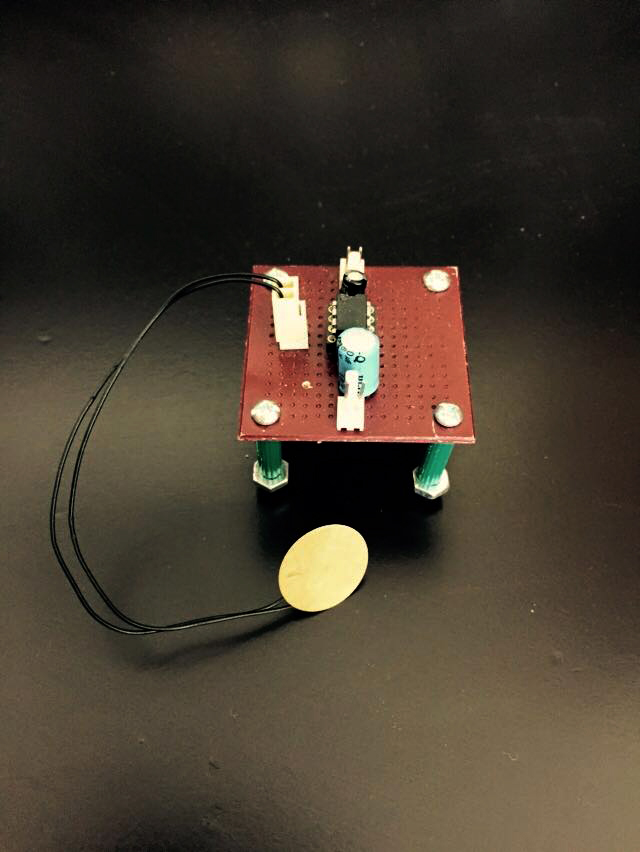
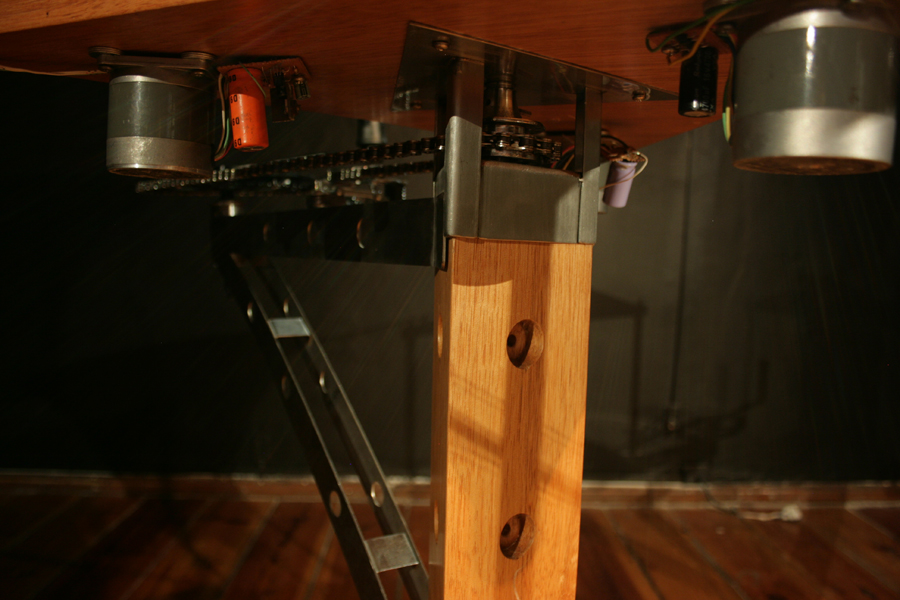
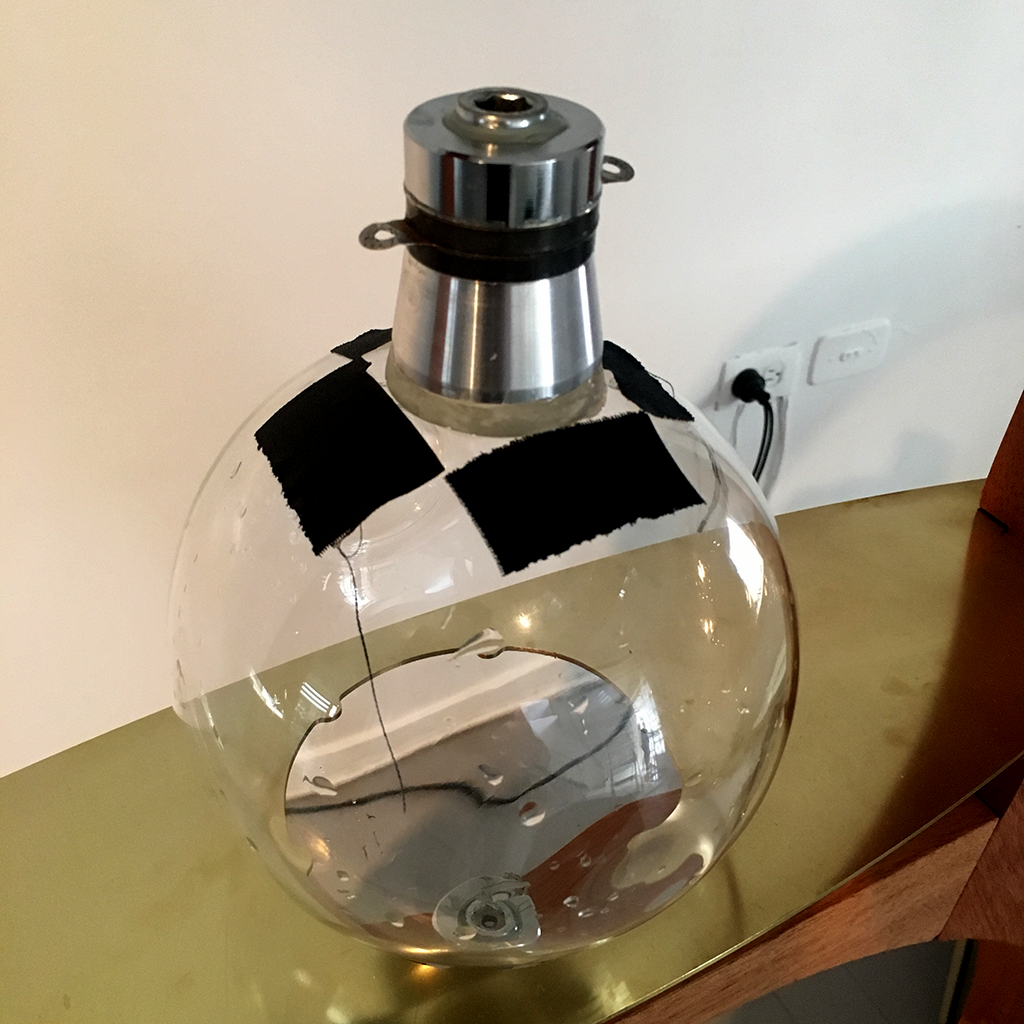
    The electronic circuit consists of a frequency generator, a sound amplification system, a borosilicate flask with two high-frequency piezoelectric elements, and a wound inductor to amplify the electrical signal from the generator. The wooden structure holds the flask at eye level, and a meditation bench is used for sitting.

    To measure the meditative state, a headband is used to measure the brainwave frequencies of attention, which allows for controlling the frequencies emitted to the system. Unlike the single-bubble experiment in the laboratory, which requires very special conditions, Sonoluminimente uses multiple bubbles, which generates a special and hypnotic cavitation sound.

    Upon entering meditation, attention is focused on the formation of the bubbles, observing the tiny micro-dot of light and emptiness that forms inside them. This practice seeks to bring understanding that all things are empty of intrinsic and independent existence, and that everything is interconnected and conditioned by everything else.

    The phenomenological manifestations of mystical emptiness, like subatomic particles, are not static and permanent, but dynamic and transitory, appearing and vanishing in an incessant dance of movement and energy. Just like the subatomic world of physics, the world of Eastern mysticism is a world of samsara, of a continuous birth and death. As transient manifestations of emptiness, the things of this world do not possess a fundamental identity. This is particularly accentuated in Buddhist philosophy, which denies the existence of any material substance and also maintains that the idea of a permanent “self” that goes through successive experiences is an illusion. Buddhists have often compared this illusion of a material substance and an individual “self” with the phenomenon of a water wave, in which the up and down movement of water particles makes us think that a “part” of the water moves on the surface. It is interesting to see that physics has employed the same analogy in the context of field theory to point out the illusion of a material substance created by moving particles. Thus, Hermann Weyl writes: According to the field theory of matter, a material particle such as an electron is simply a small region of the field within which the strength of the field assumes enormously high values, indicating that a comparatively very large amount of energy is concentrated in a very small space. Such a knot of energy, which is by no means clearly delineated against the rest of the field, propagates through empty space like a wave of water on the surface of a lake; there is no substance of which it can be said that the electron is composed at all times.

    FRITJOF CAPRA

    Endล”

    is a Japanese term that refers to the interdependence or mutual coexistence of all things. In Buddhist philosophy, this idea is related to the concept of emptiness, which refers to the lack of an intrinsic and autonomous existence of all things.

    The notion of endล suggests that all things are interconnected and mutually influence each other. This is reflected in the Buddhist teaching of dependent origination, which holds that all phenomena arise in dependence on other phenomena. In other words, things do not have an independent existence, but are interconnected and conditioned by everything else.

    Emptiness in Buddhism refers to the lack of a fundamental and permanent identity of all things. Every phenomenon is transitory and dependent on other phenomena, which means that there is nothing that has an autonomous and independent existence. This idea is related to the notion of endล, as it suggests that everything is interconnected and that there is nothing that exists by itself.

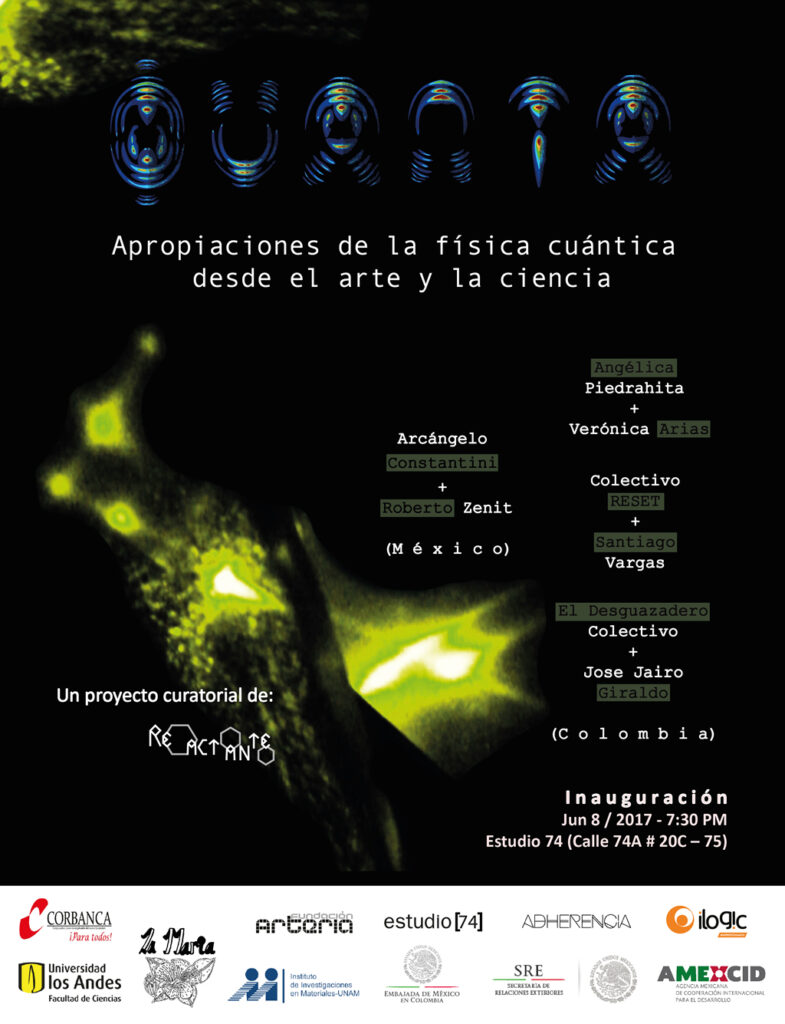
    • Arcangelo Constantini / Roberto Zenit ( cientifico)
    • Comisionada por el Colectivo reactante para la muestra Quanta
    • Apoyo , Santiago Itzcoatl, Diego Liedo, Mauricio Alvarez
    • Bernardo Palacios , Daniel Lara Ballesteros
    • Asesoria:  Dra Margarita Navarrete , Russ
    • Agradecimientos : Nathalie Regard, Adriana Casas, Centro Multimedia, Lina Pulido, Andres Stepanichtchev, Dr Juan hernandez Cordero, Dra, Rocio de la Torre
    • Artista en Residencia
    • Laboratorio de Reologia
    • Instituto de Investigaciones Materiales
    • UNAM
    • comisionada por 
    • Reactante 
    • Bogotรก Colombia 2017

    Iinaguration Bogota

    production Art in residence UNAM

    installation Bogota

    Modos De Oir , Laboratorio Arte Alameda

  • Biphonemo

    ยท

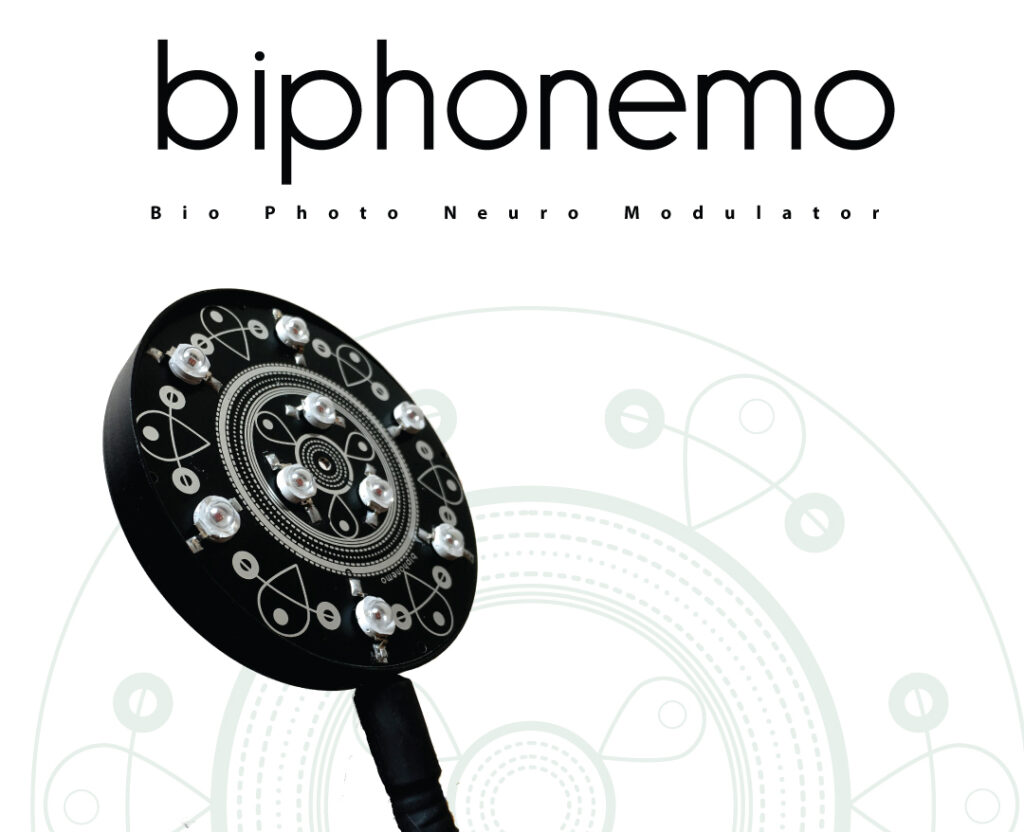
    ( Bio Photo Neuro Modulator )


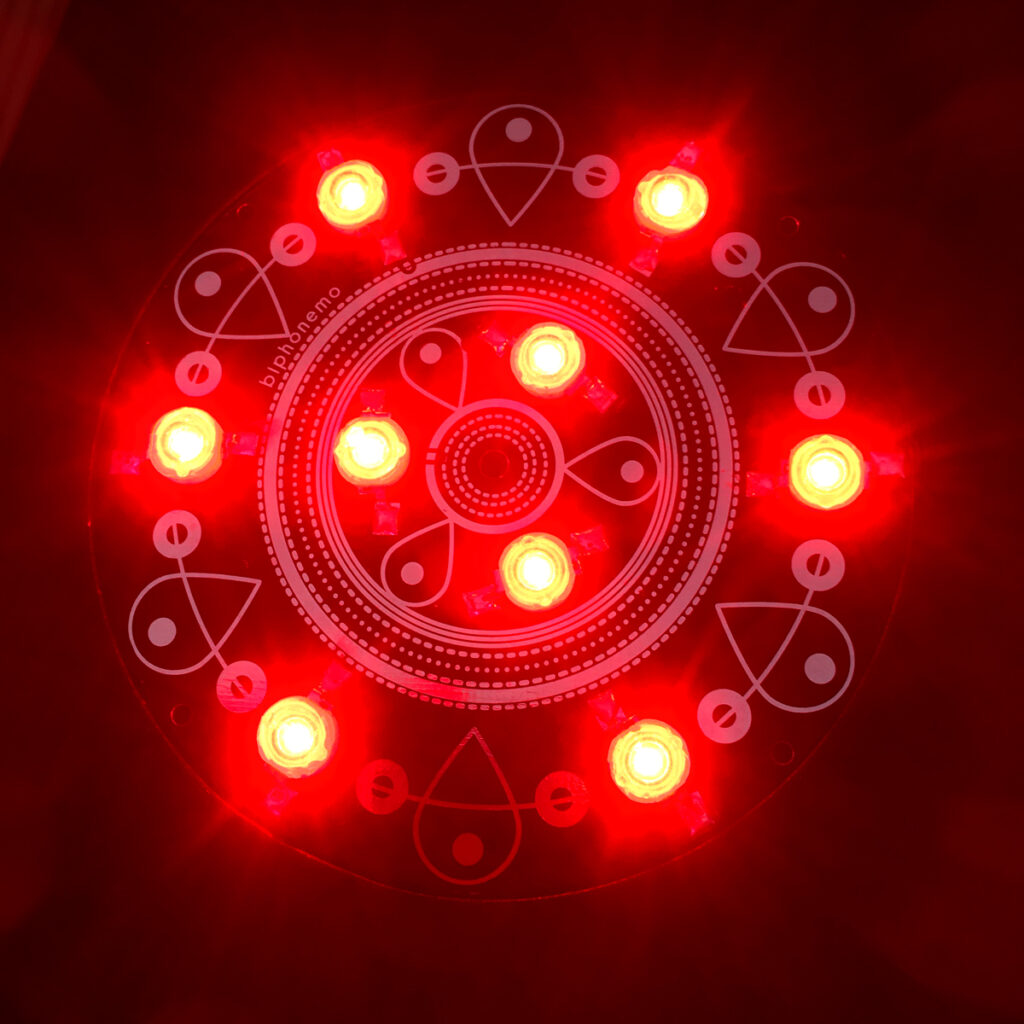
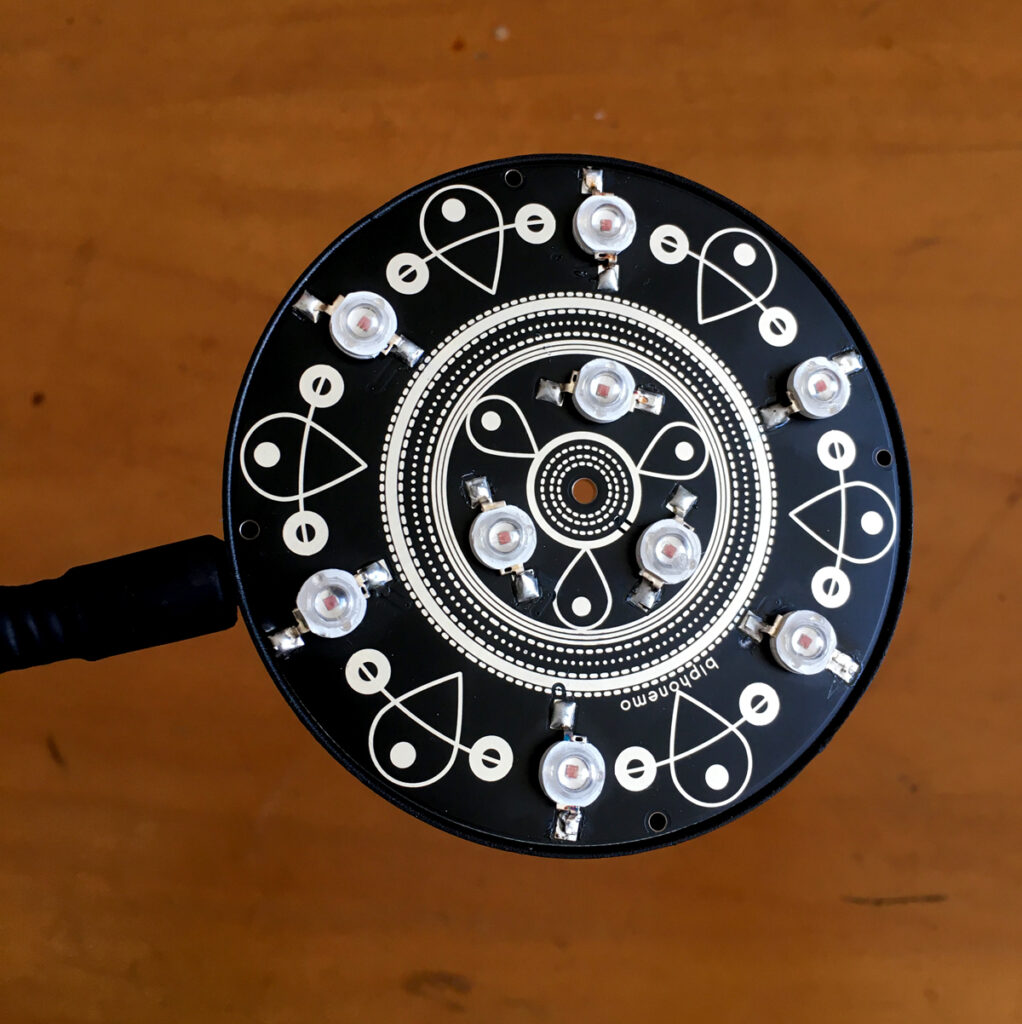
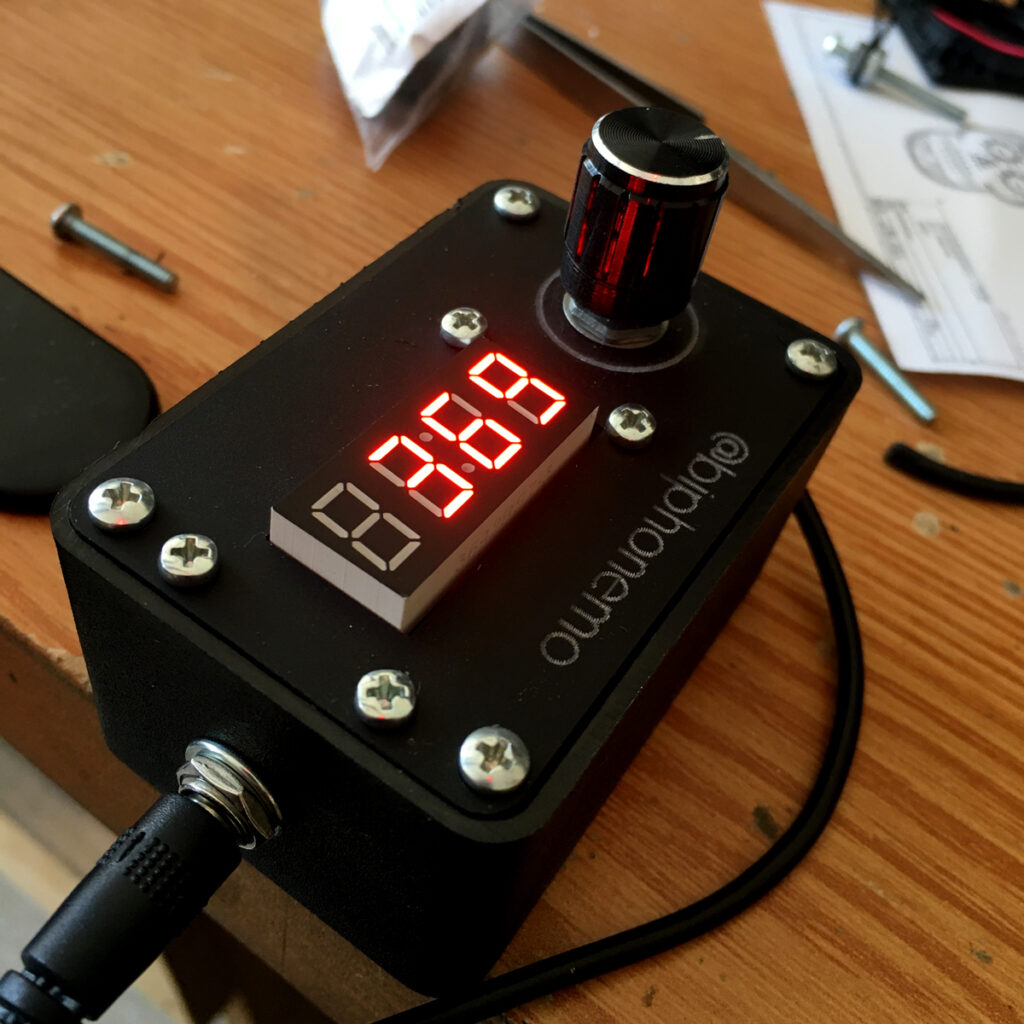
    The therapeutic light system of Biohack and Neurohack is an electronic device designed to provide red light therapy. This device is composed of a PCB board that contains an array of high-power red LEDs at 640 nm, a flexible arm, and a frequency generator circuit. This system uses both the benefits of the red light spectrum and the emission of specific frequencies through light.

    Red light has been studied for its therapeutic effects on the skin, tissues, and cells of the human body. In addition, red light can improve blood circulation and reduce inflammation. On the other hand, it is known that specific frequencies can affect neuronal activity and thus have positive effects on mental health.

    This system combines both technologies to provide comprehensive therapy. The device is designed to be flexible and easy to use, allowing the user to aim the red light at the desired area of the body. In addition, the frequency generator circuit allows for the emission of specific frequencies through light, which can help improve neuronal activity and, consequently, improve mental health.


    Red light therapy is an example of how technology can be used to improve human health and well-being. By harnessing a specific wavelength of light, red light therapy aims to obtain therapeutic benefits both clinically and cosmetically. This technique is based on the use of light-emitting diodes (LEDs) that emit red and infrared light, replicating the regenerative light spectrum present in natural sunlight.

    Nature has provided living beings with an inexhaustible source of energy and benefits in the light spectrum of the sun. Sunrise and sunset are moments when the sun emits red and infrared rays that are recognized for their regenerative and healing capabilities. Through LED technology, these benefits can be replicated and harnessed in red light therapy.

    Although red light therapy has been used for decades, it is only recently that over 5000 studies from private laboratories and universities have delved into the cellular process that occurs for the benefit of the body. This knowledge has allowed for a greater understanding of how red light therapy can be used to improve health and wellbeing in a variety of contexts.

    The fundamental principle of red light therapy, also known as photobiomodulation, is the stimulation of the mitochondria present in all cells of the body. These organelles are responsible for the production of energy in the form of the molecule called adenosine triphosphate (ATP). By exposing the mitochondria to red and infrared radiation, ATP production is promoted, which in turn allows cells to regenerate and repair damage. In other words, this therapy seeks to rejuvenate cells through the stimulation of their mitochondria.

    Although aging is a natural process that has intrigued philosophers and scientists for centuries, it has been identified that aging is associated with a decline in mitochondrial activity, resulting in a decrease in ATP production. Red light therapy, by stimulating the mitochondria and increasing ATP production, aims to counteract this natural aging process.

    It is important to note that red light therapy is a technique backed by scientific evidence and has been studied in various private laboratories and universities. Although the exact mechanism of photobiomodulation is still being investigated, the results obtained so far suggest that this therapy can have a significant impact on human health and well-being.

    Red light, as mentioned earlier, has the ability to penetrate deeply into the skin and activate a series of cellular processes that lead to energy production and tissue regeneration. The energy produced through photobiomodulation activates the synthesis of collagen, elastin, and ATP, allowing for increased oxygenation of the skin and improved blood circulation.

    Furthermore, red light is capable of reducing inflammation and pain in joints and wounds, which can have significant therapeutic implications. However, it is important to note that photon absorption can also have side effects, such as a temporary increase in reactive oxygen species and modulation of calcium levels.

    These side effects, however, are necessary for the activation of a wide range of transcription factors that lead to better cell survival, increased proliferation and migration, and the synthesis of new proteins. In this sense, photobiomodulation becomes a valuable tool in the modulation of cellular processes and tissue regeneration in the body.

    Scientific evidence supports the hypothesis that oxidative damage and mitochondrial deterioration due to aging are determining factors in the accumulation of mitochondrial deficits in cells, tissues, and organisms. This principle underlies the ability of light therapy to improve the recovery of a wide variety of tissues. Red light therapy strengthens the intracellular antioxidant system and increases the strength and size of mitochondria, while stimulating the creation of new mitochondria. Ultimately, this increases resistance to stressful environmental factors and promotes greater adaptability to the changing environment.


    Red light therapy does not produce thermal damage, as the low-power LED light used does not emit significant heat. Therefore, it is a safe and non-invasive option for treating various health and beauty problems.

    In addition to ATP production and improved mitochondrial function, red light therapy has also been associated with the activation of cellular cleansing processes, such as autophagy and apoptosis, which helps eliminate damaged or defective cells and promotes cell renewal.

    Red light therapy has also been used to improve sleep quality, as exposure to red light before sleep is believed to help regulate the circadian rhythm and improve melatonin production.

    Preliminary studies suggest that red light therapy may also have beneficial effects on the brain, including improving cognitive function and reducing brain inflammation.

    In addition to its rejuvenating effects, red light therapy has also been used to treat a variety of skin conditions such as acne, rosacea, and psoriasis. Red light has the ability to kill acne-causing bacteria and reduce inflammation associated with rosacea and psoriasis.

    Red light therapy has also been shown to help relieve pain in various conditions such as arthritis, muscle pain, and back pain. Red light can penetrate deeply into body tissues, reducing inflammation and improving blood circulation, which can help reduce pain.

    Red light therapy has also been used to improve cognitive function and treat mood disorders such as depression and anxiety. Red light can stimulate the production of neurotransmitters such as serotonin and dopamine, which can improve mood and reduce symptoms of depression and anxiety.


    The Biophonemo light system represents an interesting technological tool that exploits the symphony of frequencies that permeate the universe. Everything that exists vibrates and emits frequencies, from planets in their orbit to subatomic particles. Neuronal activity is also regulated by electromagnetic frequencies, and states of consciousness can be measured through electroencephalogram records. The notion of non-ordinary states of consciousness has been recognized for millennia, and various cultures have used different sound frequencies to achieve states of fulfillment, physical and mental health.

    With the Biophonemo bio-photo-neuro modulation system, not only do we obtain the therapeutic benefits of red light in our biological organism, but we can also select different frequencies with a specific intention to benefit our psyche.

    The teachings of Pythagoras about musical tuning and the “music of the spheres” speculated about the energetic and musical nature of the cosmos. In the Vedas of India, we find the legacy of the chakras, which are energetic clusters of water molecules in our bodies, while in Tibetan Buddhism, mantras are used to reach states of balance and harmony. Tesla, for his part, left us his discovery of the numerical pattern 3, 6, and 9, which is used in the solfeggio frequencies.

    Light, as an electromagnetic phenomenon, is one of the greatest mysteries of existence. It behaves simultaneously as a particle and a wave, and its potential is immeasurable. We are still discovering the secrets it holds.

    Neurohack

    โ€‹โ€‹Everything in the universe is frequency: energetic flows that generate fields of action. Science has discovered that mathematics is in nature and is an intrinsic part of the universe, not a human invention.

    For Nikola Tesla, the study of the triad: frequency, energy, and vibration, was essential to understanding the universe. He had a mathematical view of these flows that allowed him to glimpse practical scientific solutions that changed the world we live in. He recognized patterns in nature and devoted himself to studying 3, 6, and 9, obsessed with understanding them.

    The powers of the binary system are a pattern that starts from one and continues doubling the numbers. This pattern is found in the development of cells and embryos: 1, 2, 4, 8, 16, 32, 64, 128, 256, etc. This pattern is established as the computational binary system.

    Scientist Marko Rodin discovered that in the pattern called Vortex Math, the numbers 1, 2, 4, 8, 7, 5, 1, 2, 4, 8, 7, 5, 1, 2, 4, and so on repeat indefinitely. According to Rodin, the numbers 3, 6, and 9 do not appear in this pattern because they represent a vector that goes from the third to the fourth dimension, which he calls the “flow field.” This field is a higher dimensional energy that has influence over the energy circuit of the other six numbers.

    These numerological patterns are symbolic. The number 3 is very important in mysticism and science. For Christianity, the Holy Trinity is fundamental, as well as for the basic tenets of science: matter cannot be created or destroyed, only transformed. Every living being is born, reproduces, and dies.

    Neuroscience detects the energetic flow of the brain and how it oscillates, representing the basic states of consciousness: Alpha, Beta, Delta, and Theta. Frequencies have the ability to modulate different states of consciousness and have been recognized in nature since ancient times.

    Biphonemo uses an electronic frequency generator circuit to oscillate light. The conscious vision is unable to perceive these changes, but the subconscious does. Visible light is an electromagnetic field, and everything in the body is electromagnetism. Light has a subtle yet effective impact on metabolic processes and cellular functioning. Each frequency has an intention, and by selecting a frequency, you seek to modulate your subconscious with that intention. It’s a neurological process of attention, meditation, and contemplation. With these luminous frequencies, you hack your consciousness to expand and balance your perception. This work is parallel to luminous biohacking.

    The 174 Hz tone is very beneficial and effective in relieving pain. It acts as a natural anesthetic and helps to heal the sick aura that surrounds a person.

    These are some of the benefits of the 174 Hz frequency:

    • Helps relieve pain in the back, feet, legs, migraines, and stress.
    • Works wonders on brain tissue and increases emotional power, fostering a sense of security, love, and courage, which helps to heal the person quickly.
    • It is an excellent tool for improving concentration levels.
    • It contains different nodes and background tones that directly affect the chakras and develops the power of healing and energy that makes you feel better.
    • It is an excellent way to reduce emotional pain as well. People who have lost someone or who have not been able to live happily can find relief in this frequency.

    The frequency of 285 Hz helps to heal tissues and return them to their original shape by sending a message to restructure damaged organs and tissues. In addition, it improves the immune system and is believed to create positive changes in those who are near it.

    Benefits of the frequency of 285 Hz:

    • Heals and regenerates body tissues.
    • Restructures damaged organs by sending a message to the tissues and returning them to their original shape.
    • Influences the energy field surrounding the body.
    • Influences the energy field around the house or office.
    • Helps with the rapid healing of burns, fractures, sprains, cuts, and other injuries.
    • Improves the immune system.

    396 Hz is one of the fundamental frequencies used in Sound Healing. This frequency cleanses the feeling of guilt, which often represents one of the basic obstacles to realization. It is useful for creating a strong magnetic field of energy that helps and empowers us to achieve our goals. Its vibrations release you from the feeling of guilt and fear. This frequency is used to awaken and transform grief into joy. It is associated with the Root Chakra, our Primary Energy Center, and is used to balance the Root Chakra.

    Benefits of 396 Hz:

    • Empowers your goals.
    • Eradicates the feeling of guilt, even the guilt that resides deep in the subconscious mind.
    • Increases your ability to find inner peace.
    • Helps you overcome fear, which is often the main obstacle in achieving our dreams and goals.
    • Liberates from negative subconscious beliefs and thoughts.
    • Used to balance the Root Chakra.
    • Transforms grief into joy.

    417 Hz is known for eliminating all the negativity within us. It is a frequency that can bring about change, mark the beginning of new beginnings in life, and is so powerful that it can reverse and undo negative events.

    Benefits of the Solfeggio frequency of 417 Hz:

    • Eliminates negative energy from the body.
    • Eliminates negative energy from the home and office.
    • Eliminates negative thoughts and behavior patterns.
    • Undoes negative situations.
    • Facilitates change in yourself and others.
    • Helps overcome traumas.

    528Hz | Brings Positive Transformation | Heals the Heart Chakra | Repairs Cells Throughout the Body.

    Benefits of 528Hz:

    • Promotes endocrine system health and decreases cortisol levels, which in turn helps to promote cellular regeneration and repair.
    • Is effective in improving sleep quality, as most cellular repairs occur during the night.
    • Promotes healing of the Heart Chakra, leading to beneficial effects such as an increase in energy levels and a boost in positivity.
    • Helps increase self-confidence and self-esteem.

    639 Hz – is associated with the Heart Chakra. This is the Solfeggio frequency of Compassion and Eternal Love.

    Benefits of 639 Hz:

    • Allows for the creation of harmonious interpersonal relationships.
    • This frequency can be used to address problems in relationships, whether within family, between partners or friends.
    • At a cellular level, the 639 Hz frequency can be used to encourage cells to communicate with their environment.
    • Enhances communication, understanding, tolerance, and love.

    The 741 Hz es conocida como la “frecuencia del despertar interior”. Se cree que tiene propiedades curativas y terapรฉuticas que ayudan a reducir el estrรฉs y la ansiedad, a aumentar la claridad mental y a mejorar la intuiciรณn y la percepciรณn sensorial.

    • Benefits of the 741 Hz frequency:
    • Acts as a repulsive magnet for negativity and toxins.
    • Protects against negativity both inside and outside of us.
    • Clears the Throat Chakra, allowing for better communication and truth-telling.
    • Helps to release pent-up emotions such as anger, resentment, and jealousy.

    The frequency of 963 Hz, often called the “Frequency of the Gods,” is known to be an activator of the pineal gland.

    Benefits of 963 Hz music:

    • Helps to open the crown chakra.
    • Promotes activation of the pineal gland, often described as the “seat of the soul.”
    • Helps to clear mental fog and bring clarity to our thought process.
    • Is the frequency of divine connection.
    • Can help establish a deeper connection with the divine.
    • Is our gateway to awakening our higher consciousness, leading us to deep inner peace.
  • Espherica

    ยท

    The mysterious clouds are floating adrift in constant transformation, in a constant hydrological cycle. White like foam, they contrast with the blue and infinite firmament. They darken, thunder and illuminate with energy discharges and billions of tiny drops of water that fall to the earth, nourishing and transforming it.

    This is one of the mysteries of nature that has fostered the inquisitive and mystical mind of the first self-aware inhabitants of the earth. How is it possible that, if everything falls, these mysterious forms float in the air? Why does water, the origin of life, consciousness, and spirit, a vital essence that forms rivers, seas, glaciers, and lakes, precipitate torrentially from the sky? These are key questions of existence that persist and a mystery that we are still trying to solve.

    Thales of Miletus is recognized as the first scientist/philosopher in Western history. He was a great scholar of water, electromagnetism, particles, and spirituality. Through intuition and empiricism, he was concerned with and related phenomena of nature that are intrinsically interconnected.

    Modern science recognizes four forces or interactions of nature: electromagnetism, gravity, strong nuclear interaction, and weak nuclear interaction.

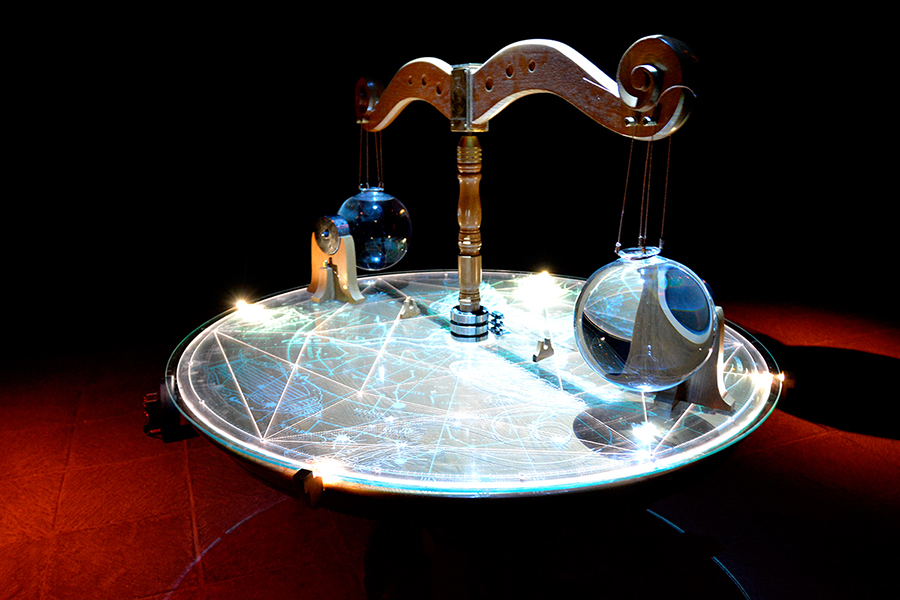
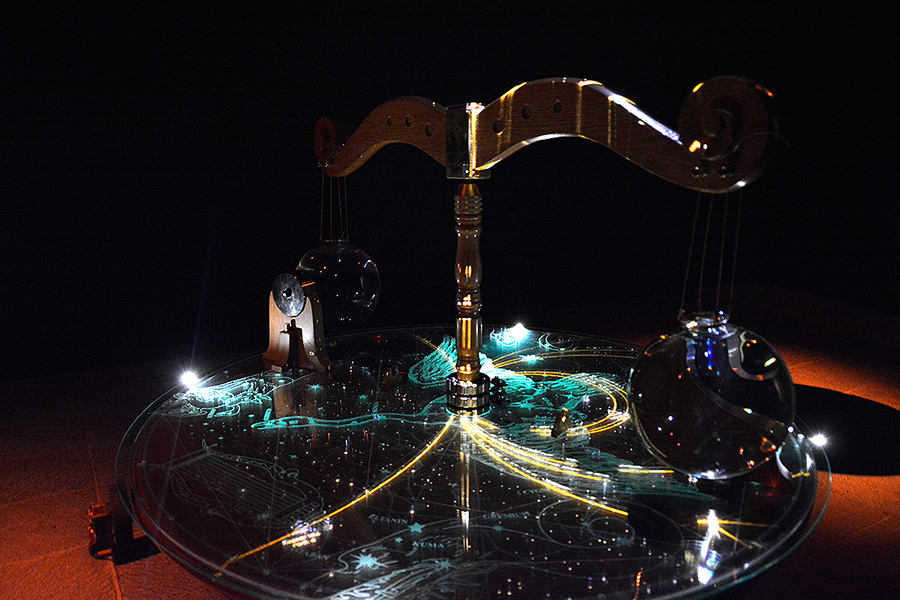
    The study of water, its properties, and behavior is an immense source of knowledge. It is the only element in nature that exists in three states simultaneously. Under this dynamic, the hydrosphere was formed, the origin of life, and the existence of the biosphere. The fundamental interactions of the universe produce its vital cycle. The electromagnetism of the solar star causes its gaseous state, and by atmospheric pressure, it rises, forming microdroplets and ice crystals, giving rise to clouds. As they accumulate and increase in size, they precipitate to the earth due to gravitational interaction. Spherical droplets reflect the cosmos and the beautiful imperfection of symmetry, as paradigms of integration of complex phenomena. The reflection of the macrocosm as a detonating holism of speculations about reality.

    Modern physics recognizes gravitational force as an interaction that permeates reality, like a cosmic tide that encompasses everything. The aquatic metaphor of movement and surface tension in water is essential as a poetic semantics of visualization for the behavior of these energies, beyond our spectrum of perception.

    The water molecule, composed of two hydrogen atoms and one oxygen atom, is bipolar and has imperfect symmetry due to the branching of covalent bonds between the atoms. In liquid state, each molecule establishes bonds with four other molecules, and on the surface of water, it does so with two or three molecules, generating surface tension due to the tendency of water to associate as a unit.

    When water is in free fall, surface tension gives it a spherical shape, which is the geometry with the smallest surface area per volume. The water molecule is diamagnetic and can be affected by external electromagnetic fields, being subtly repelled by these forces. Electromagnetism is fundamental in the many properties of this simple molecule, the most wonderful in the universe, the biological and consciousness builder.

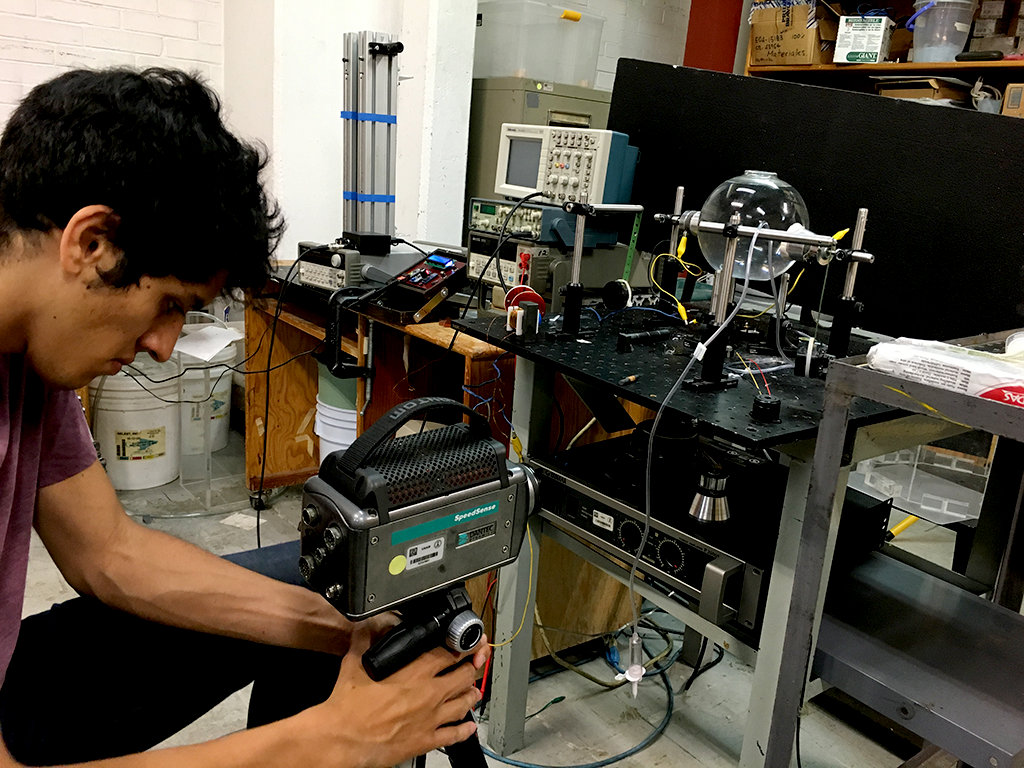
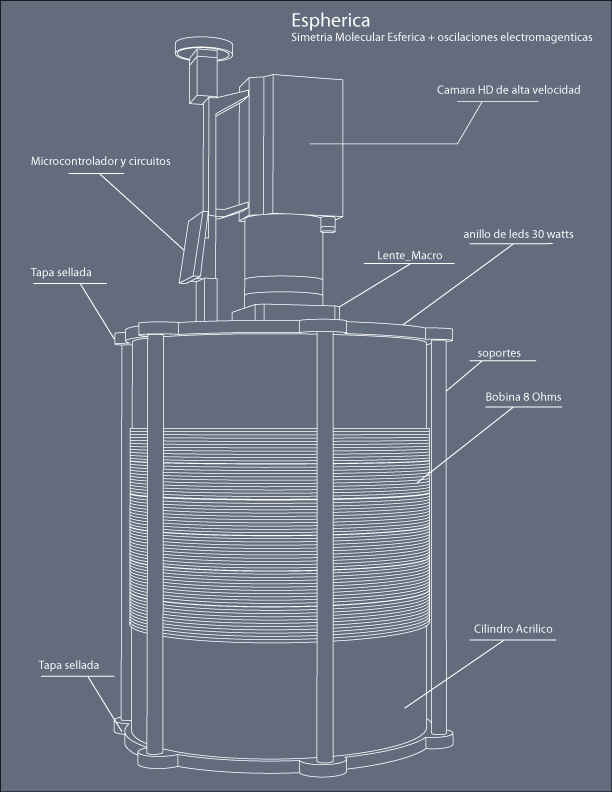
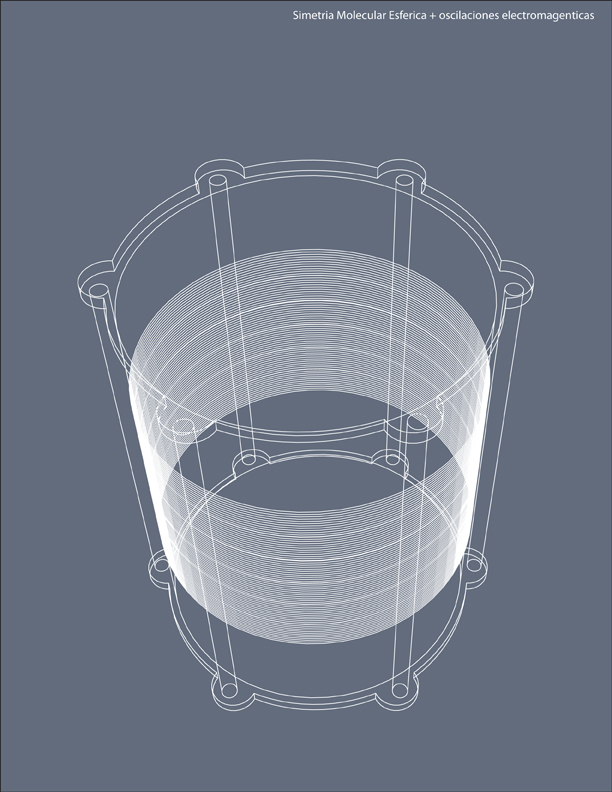
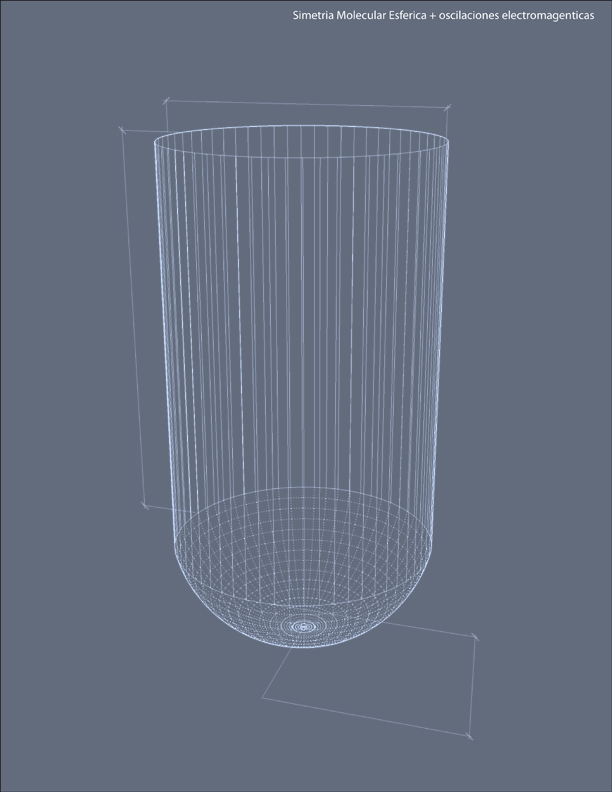
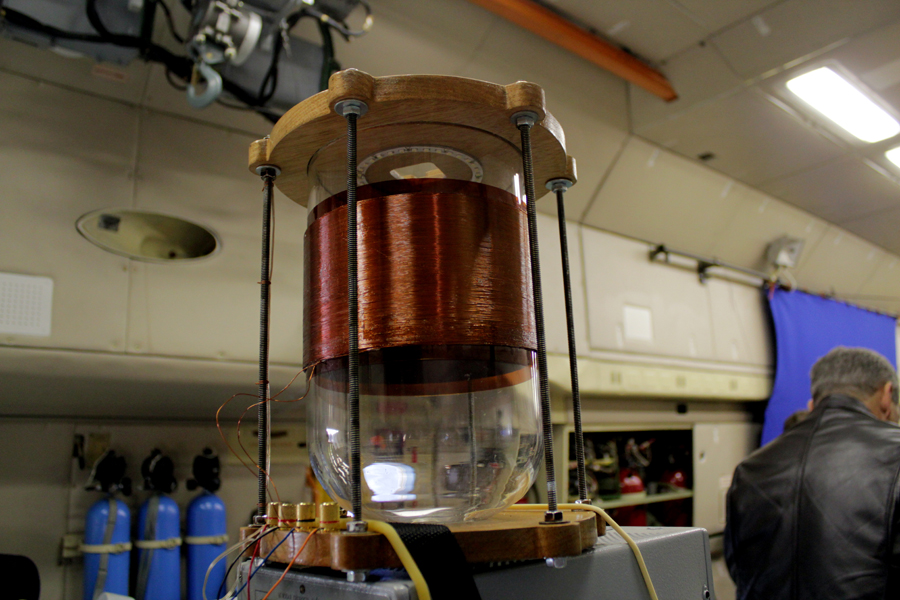
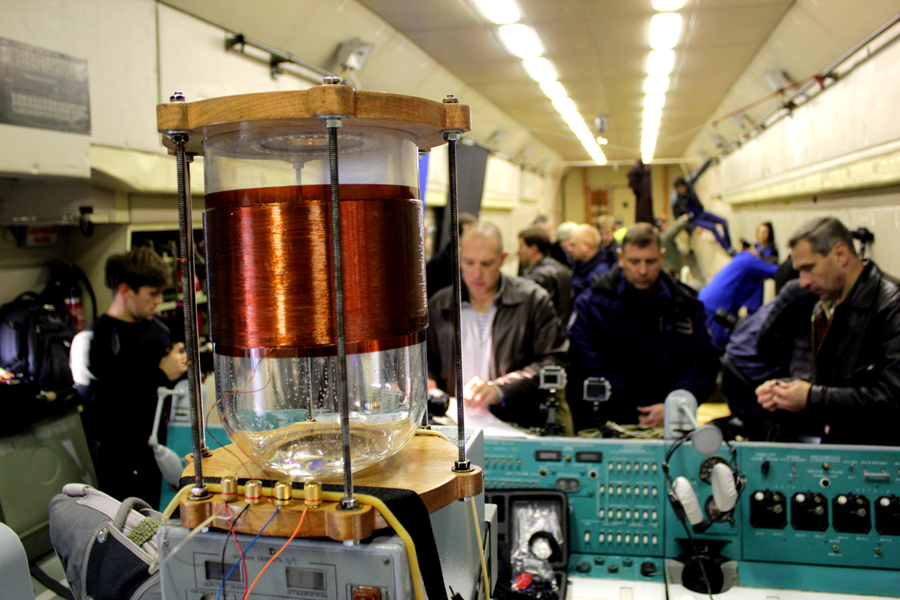
    The proposed artistic experiment is to observe and record the behavior of water in freefall, focusing on the formation of crystalline spheres of the molecule under the influence of oscillating electromagnetic fields. To do this, a glass cylinder containing a small amount of water will be used, surrounded by an enamelled copper wire coil. The coil will be energized with current at different frequencies, generating a toroidal electromagnetic field that will concentrate its force in the center of the cylinder.

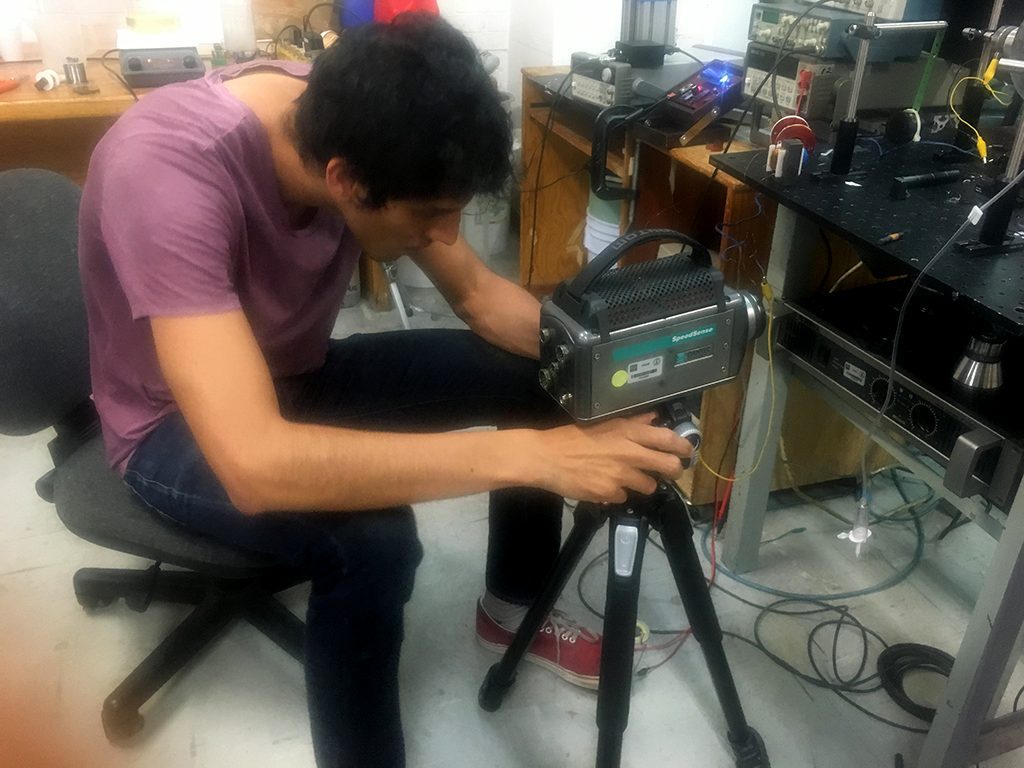
    To capture the experiment, a high-speed camera with a macro lens will be placed at the top of the cylinder, and a ring of ultra-bright LEDs will surround the camera lens to properly illuminate the environment. A microcontroller will be used to emit current frequencies to the coil and generate a variable electromagnetic field. In addition, the inside of the cylinder will be coated with a hydrophobic material so that the water does not adhere to the walls, facilitating its free integration into the spherical formation.

    This experiment will allow us to visually record how the water molecule tends towards perfection in its spherical shape under the influence of oscillatory electromagnetic fields, revealing the beauty and complexity of the properties of this molecule. The combination of science and art in this experiment will allow us to appreciate the interconnection between these two fields of knowledge.

    Spheres have amazed humans since ancient times. They have been a fundamental part of pre-science and the understanding of the celestial universe. They are used to name the different planetary strata, such as the geosphere, noosphere, biosphere, hydrosphere, and recently, the technosphere. In the universe, everything tends towards symmetry, but this is imperfect. Water molecules in the gaseous state, such as vapor, rise into the atmosphere to meet the ice crystals that fall due to gravity. In this encounter, an electrical differential is generated that, when accumulated, discharges as lightning to the earth. This happens about 50 times per second around the planet. This extremely high energy discharge generates an electromagnetic field that expands towards the ionosphere, bounces off it, and returns to the earth, generating an electromagnetic oscillation in the earth’s cavity. This oscillation is known as the Schumann resonance, which is in the range of extremely low frequencies, a frequency that could be considered the biological clock of a countless number of natural processes that are only just being discovered. Thinking of the water molecule as a generator of its own synchrony conditions, these frequencies will be emitted to it.

    The experiment consists of studying, through high-resolution video portraits, the behavior of water in freefall, observing the formation of spheres and analyzing their behavior influenced by the electromagnetic field. The camera’s frame rate will be synchronized with the frequency of the electromagnetic field, as will the LED lighting.

    This artistic experiment derives from a series of experimental pieces and speculative artistic hypotheses about reality, such as magnetoplankton, inductokhor, aquaplanetarium, spark-un-plug, sonoshock, aquaelectricarcplasma SIMS, among others, in which hypotheses are raised about water, energy, and perception.


    “Espherica” seeks to provide results and generate aesthetic, hypothetical, conceptual, and theoretical questions about the water molecule and its existence. Natural forces that affect its behavior are explored, and hypotheses are raised that can generate reflections on existence itself. Through the use of various disciplines of knowledge, the aim is to speculate about reality and generate new perspectives.


    • Bibliografia
    • Water in the Universe
    • Hanslmeier, Arnold 2011, XIV, 242 p.
    • Astrophysics and Space Science Library, Vol. 368
    • Searching for Water in the Universe
    • Encrenaz, Thรฉrรจse VIII, 196 p. 210 illus., 100 in color.
    • Jointly published with Praxis Publishing, UK
    • The Tao of physics
    • Fritjof Capra Jan 4, 2000 – Philosophy – 366
    • shambhala,
    • Water, Pure and Simple
    • Dr. Paolo Consigli MD May 6th 2008, 400 pages
    • Published by Watkins

    Agradecimientos :

    Nahum, Ale de la Puente, Miguel Alcubierre, Mauricio Alvarez ,Santiago Itzcoatl. La Metropoliana, Ivan Abreu, Beto Adame, Constanza Casamadrid , Ingmar GLez Krotzsch, Marcela Armas, Ivan puig, Fabiola Torres Alzaga, Tania candiani, JuanJose Diaz Infante, Space affairs, Maro Pebo, Israel Esdra, Azucena Lozada, Juan CArlos Vazquez ,

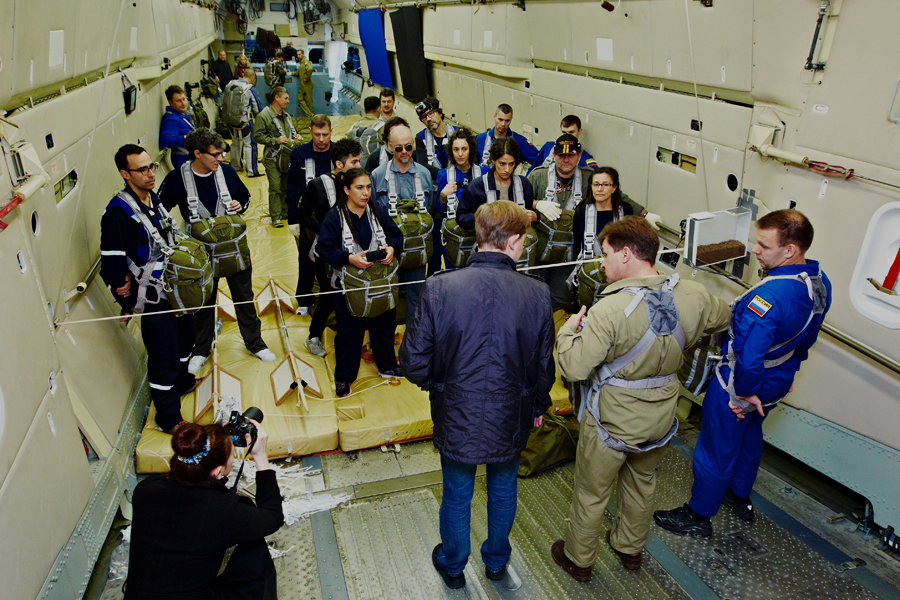
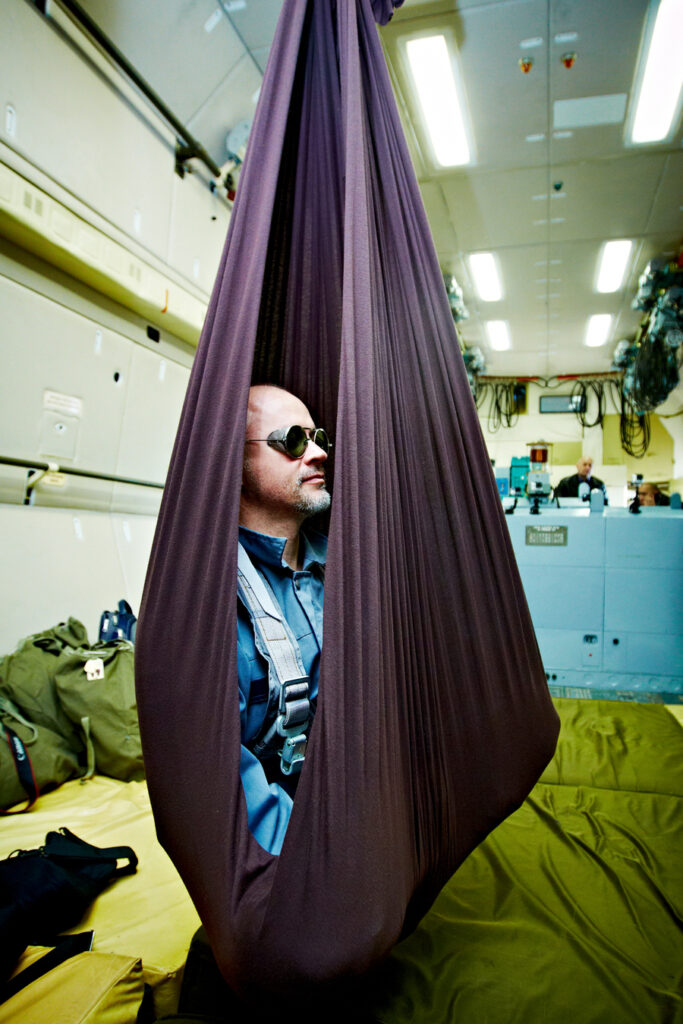
    The Ilyushin 76 MDK is a gravitation laboratory located at the Gagarin Training Center for Cosmonauts of ROSCOMOS in Russi
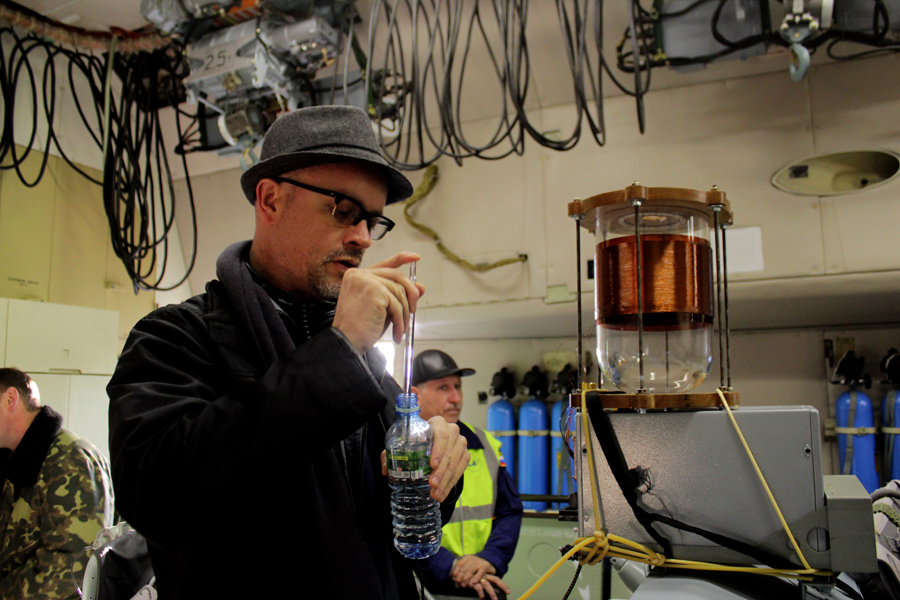
    With the ROSCOSMOS instructors receiving training before takeoff…
    Assembly of Espherica at the Command Center
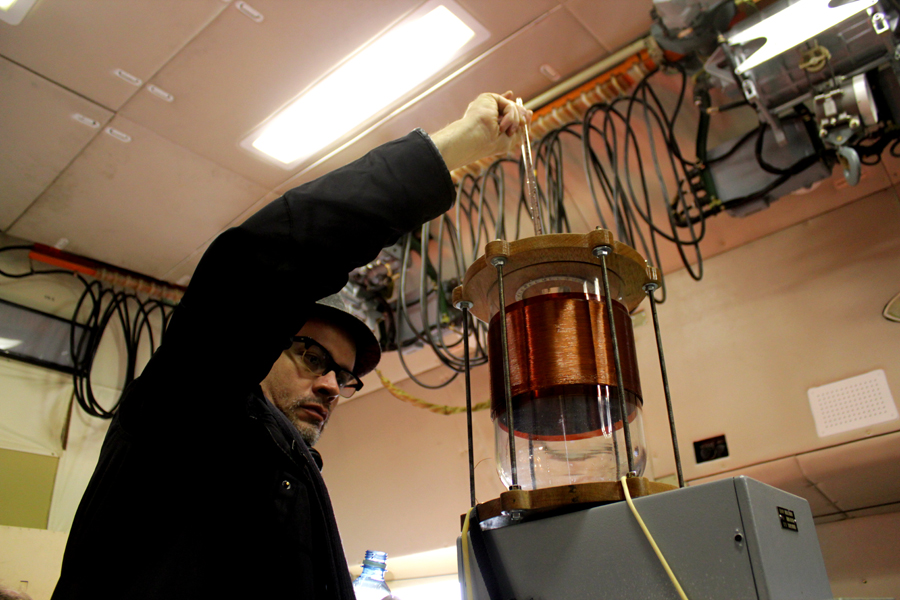
    General view of the cabin where the experiments are carried out.
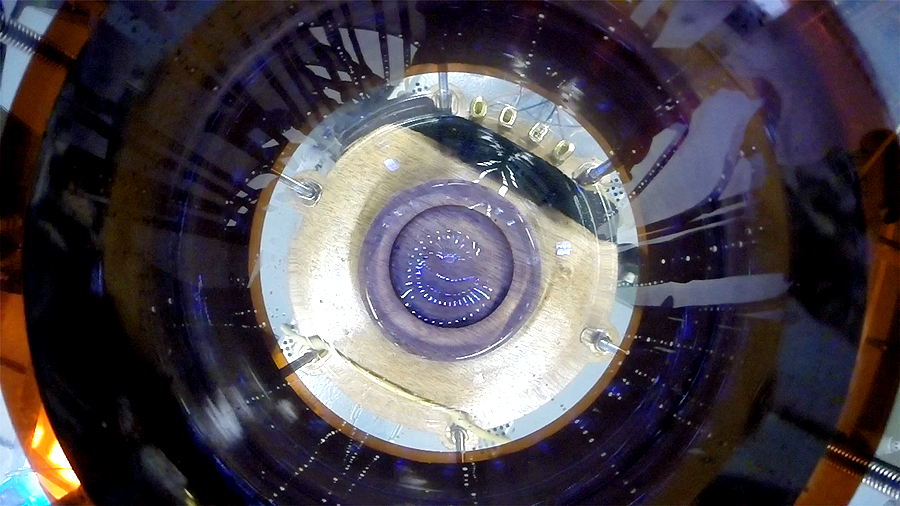
    Interior view of Espherica. Video capture.

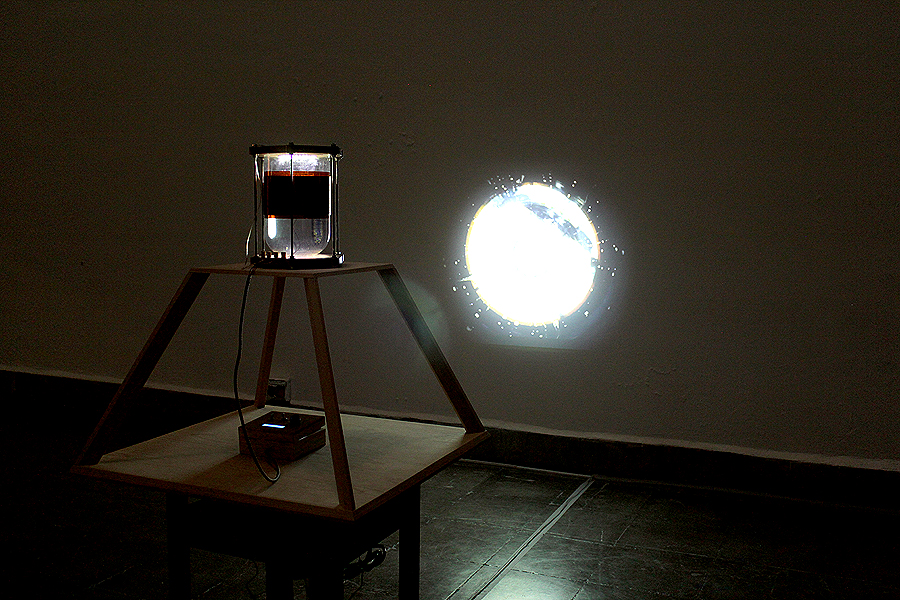
    Pieces mounted in the exhibition

    Assembly of the piece with the results at the Arte Alameda Laboratory.
    The cost of renting Phantom cameras is very high and we do not have the necessary resources. The experiment was resolved at this stage with a Go Pro camera recording at 120 frames per second. Since the artifact was fixed to a structure, it complicated the expected results.

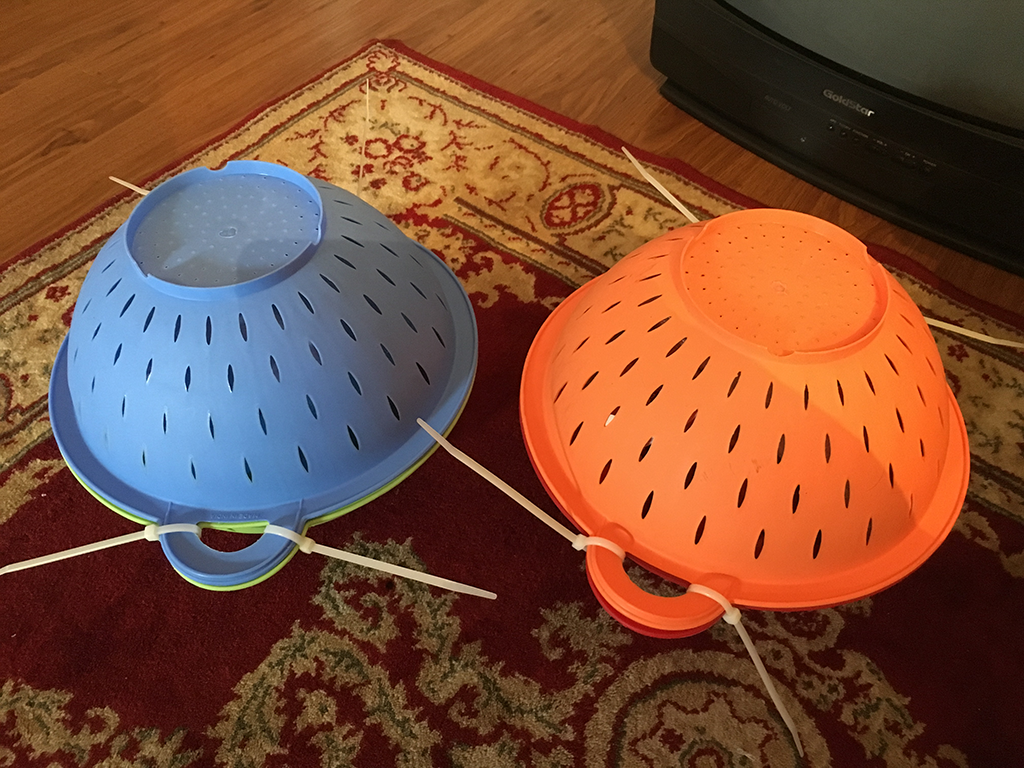
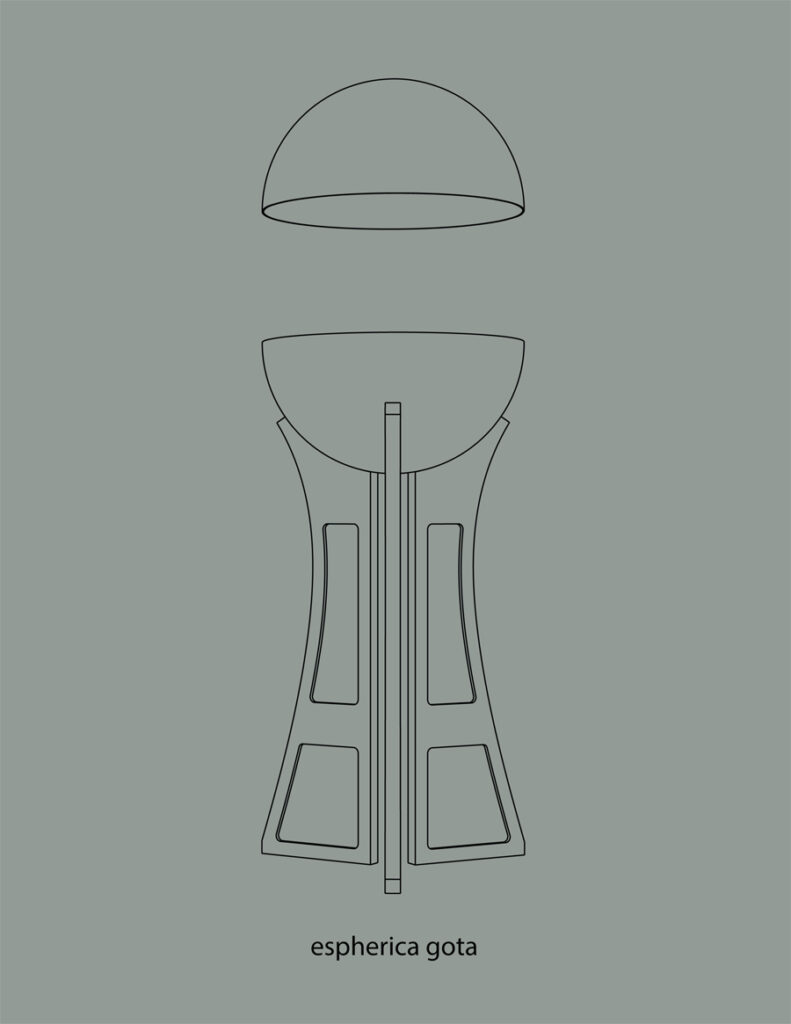
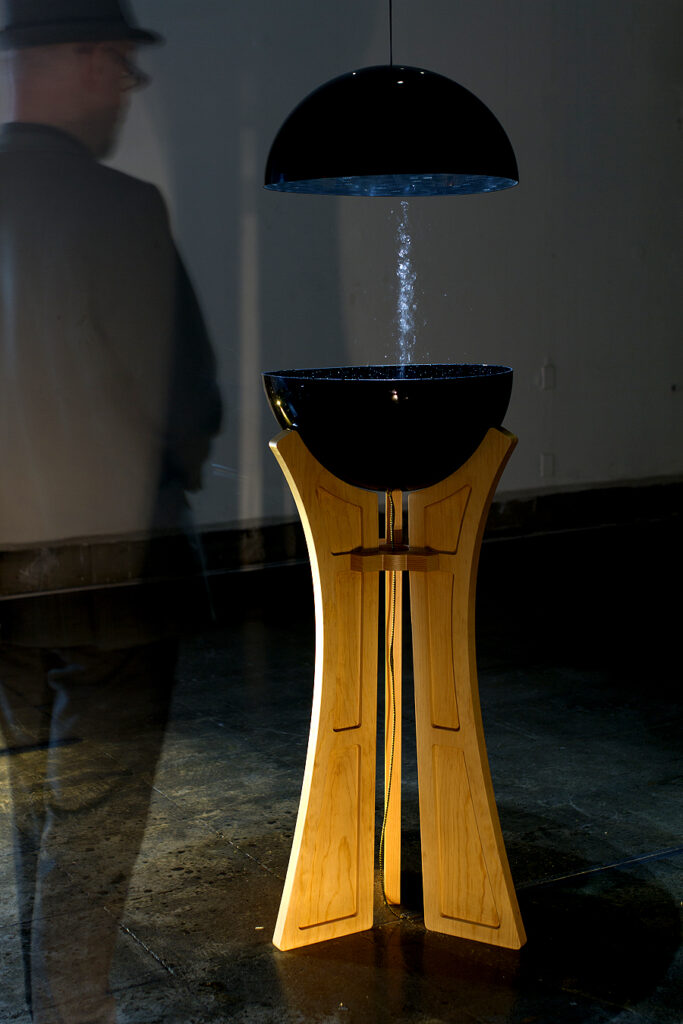
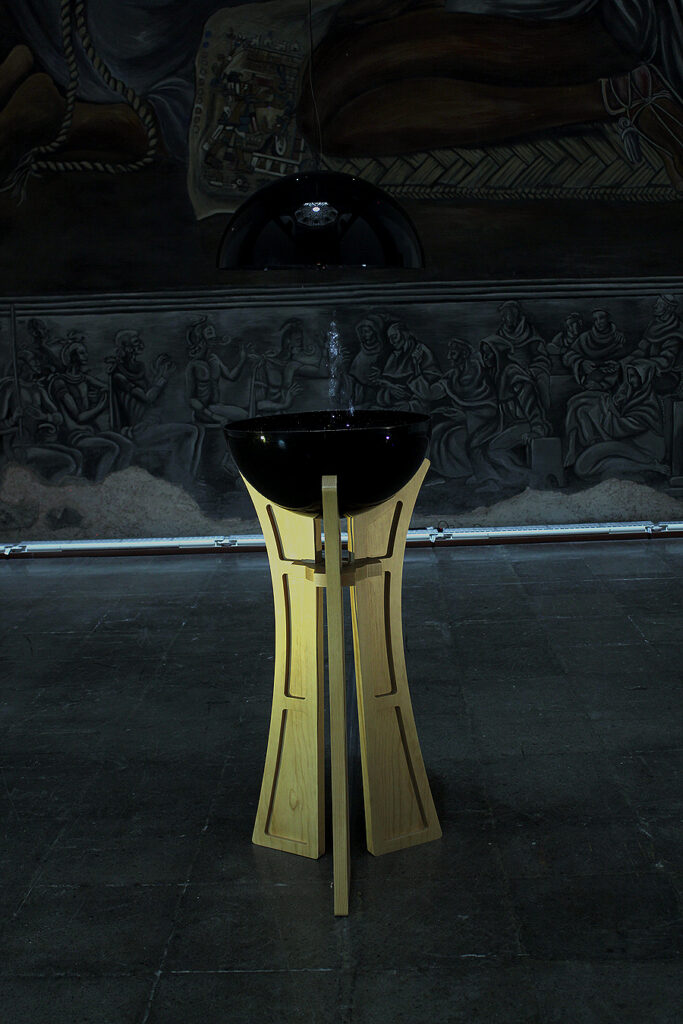
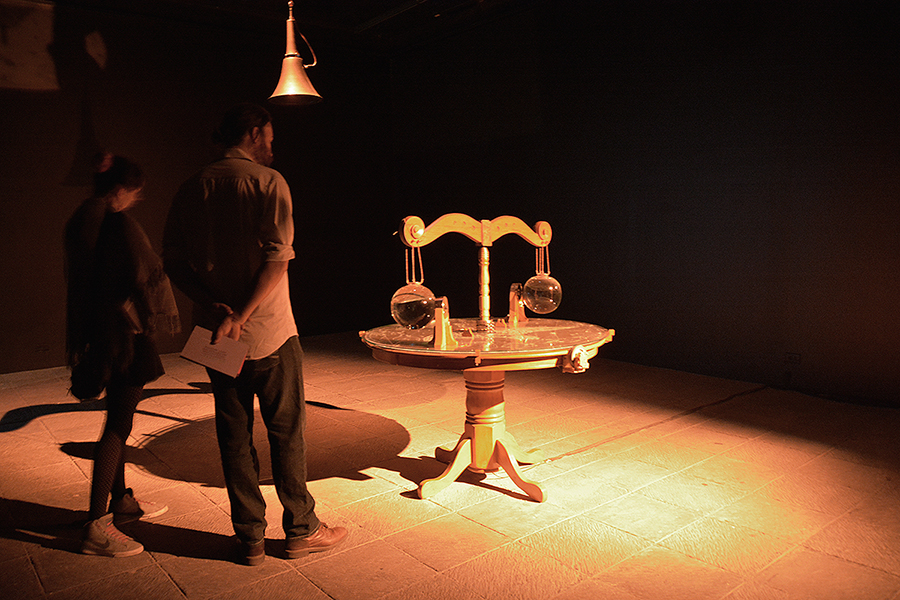
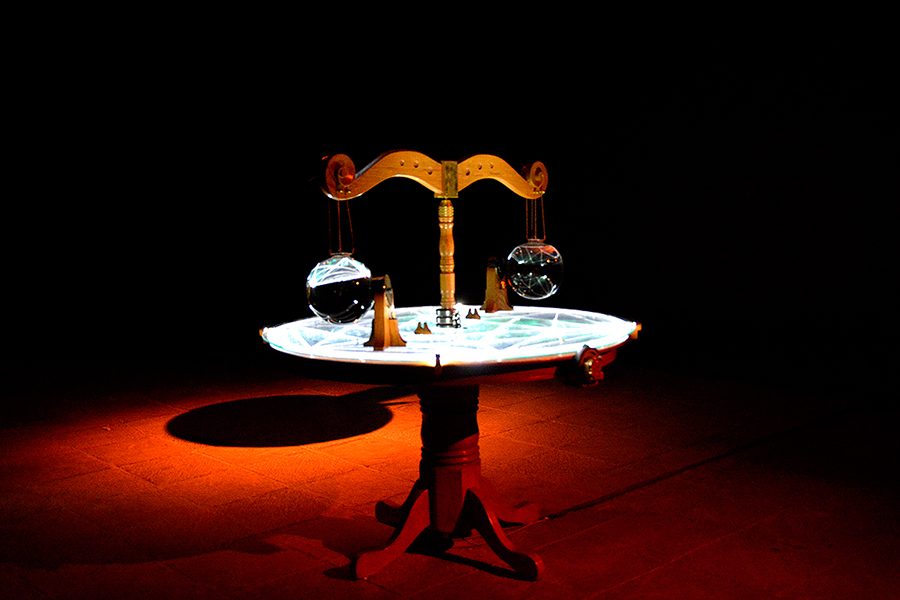
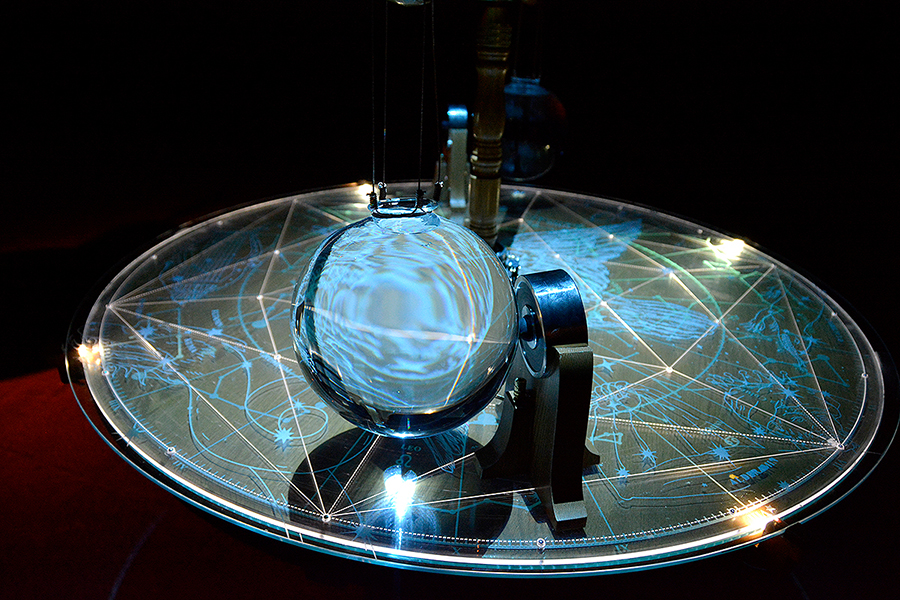
    Espherica Gota is an anti-gravity water droplet simulator composed of a wooden tripod structure, two half spheres made of black acrylic, a 24-volt brushless motor water pump, a microcontroller, relays, and electronic circuits.

    Water is projected in a vertical trajectory until it reaches the top, where it starts to fall due to gravity. It is a parabolic simulator that, through a strobe light hidden in the upper sphere, causes the phenomenon of retinal persistence. In this way, spectators can fix in their minds different stages of the behavior of water, observing how, for moments, it remains frozen in the air during the inflection of its movement in the face of gravity. Its transformative capacity and surface tension in the process of spherization can also be appreciated.

    The prism-like water molecule has optical properties similar to crystals, and observers can reflect on its surface, perceiving the microcosm and macrocosm in the forces that govern the universe.

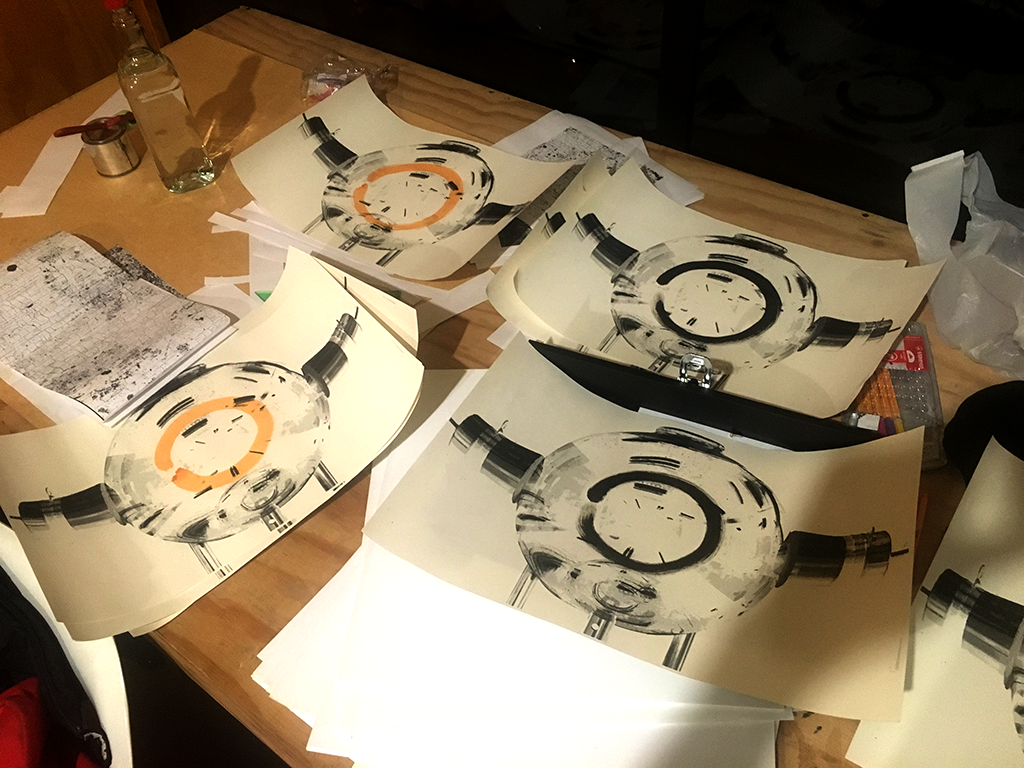
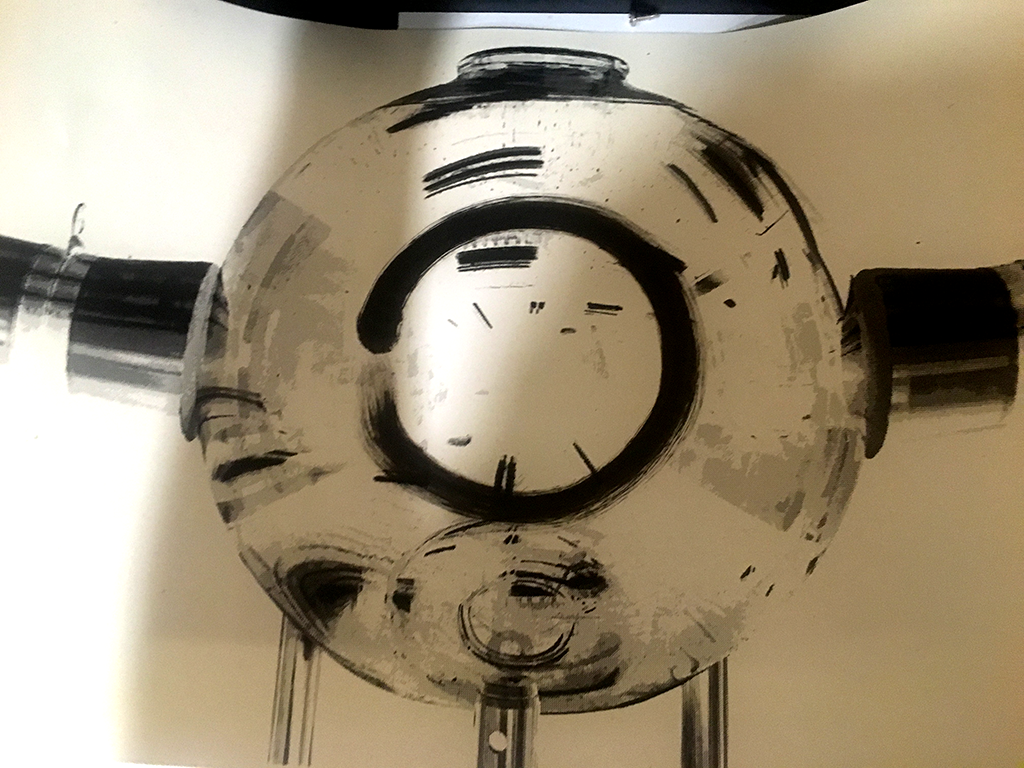
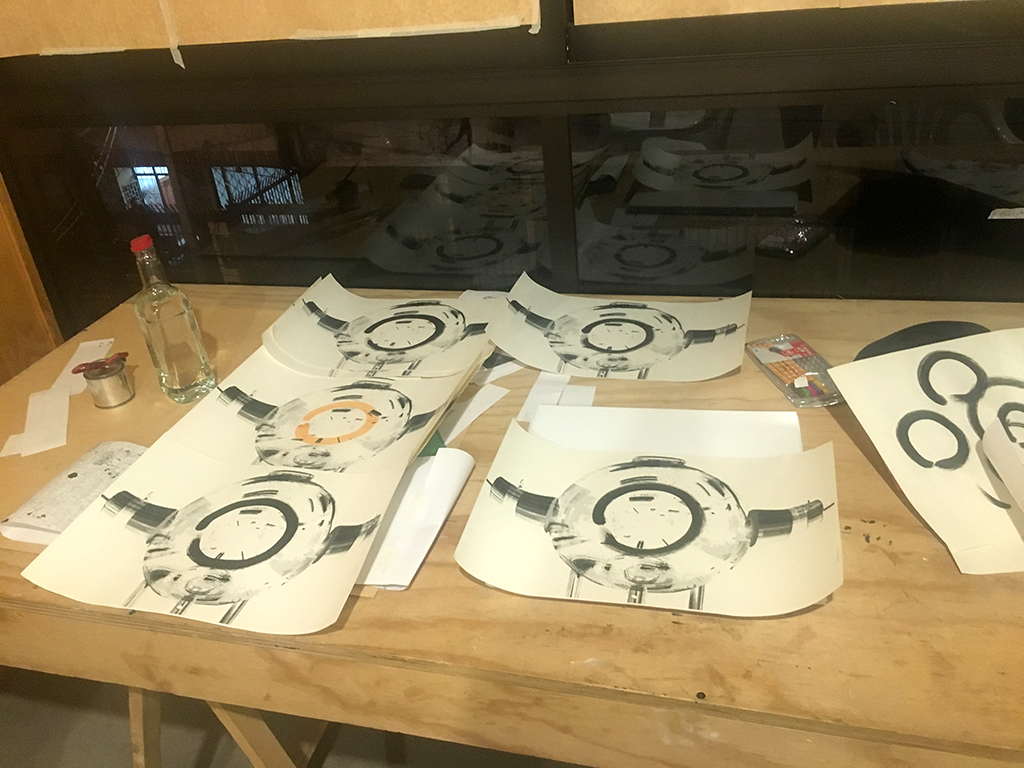
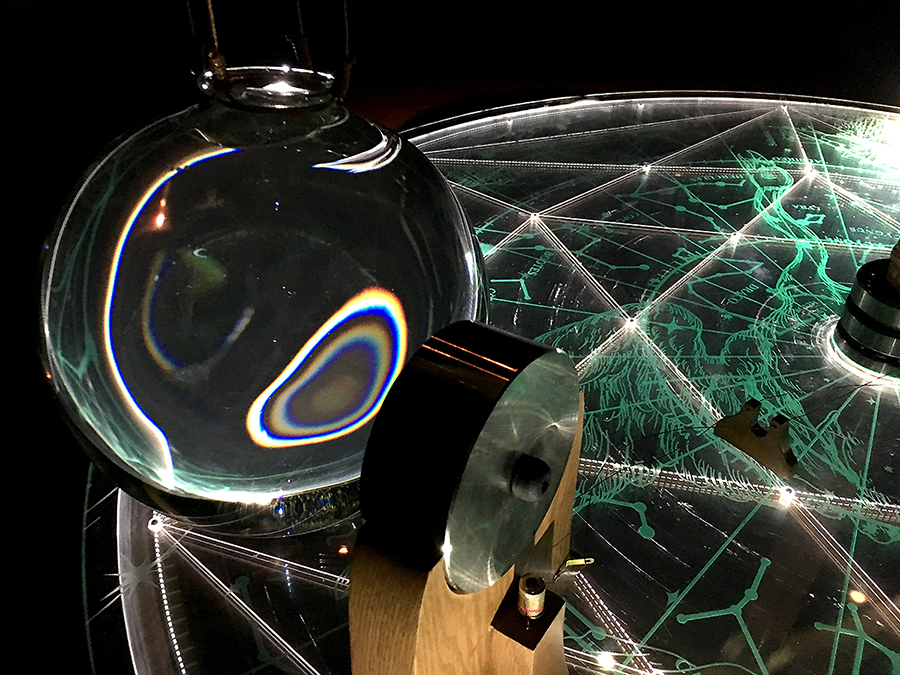
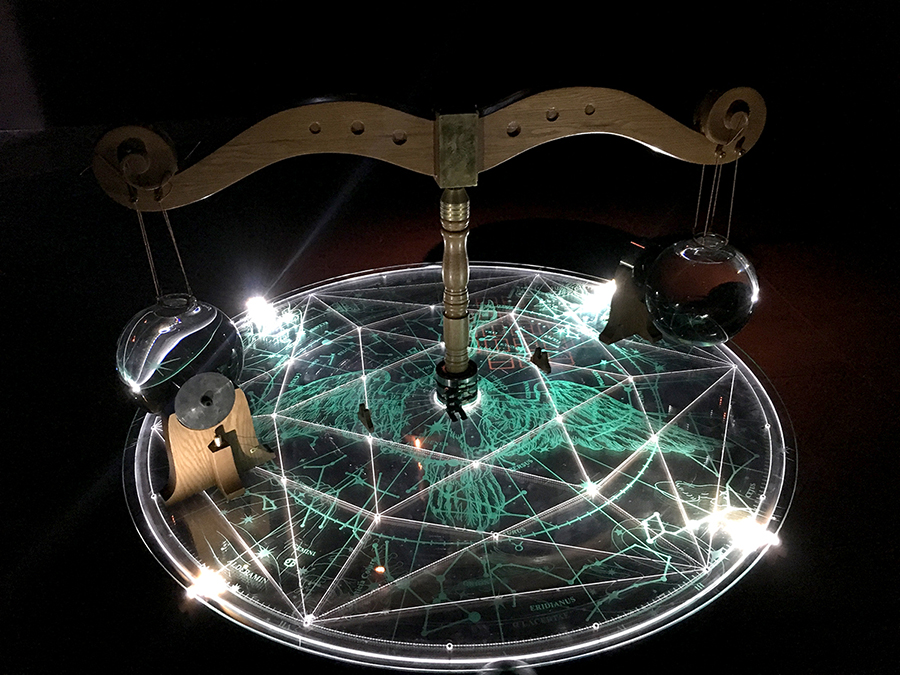
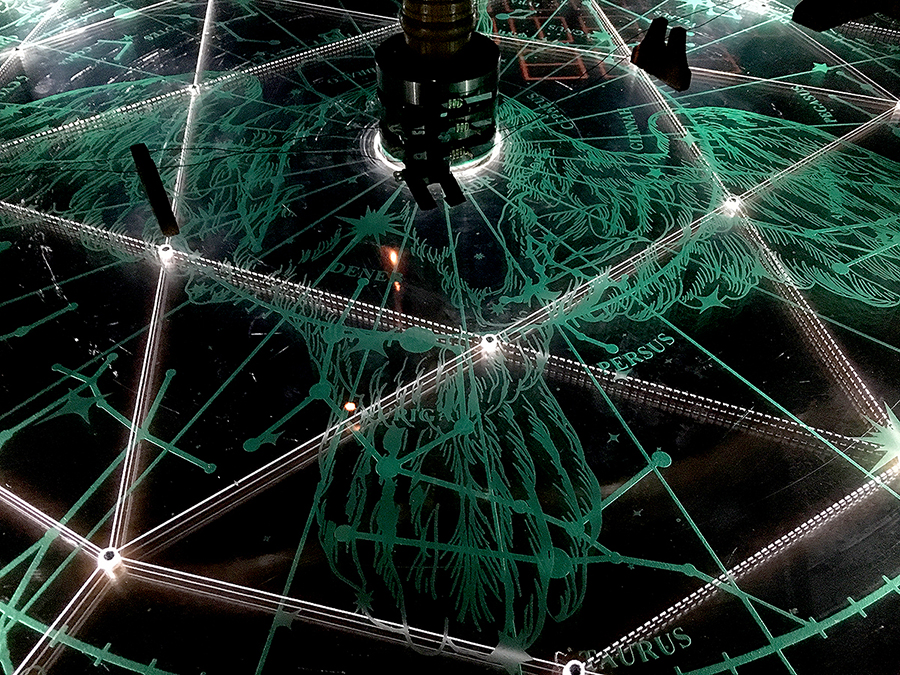
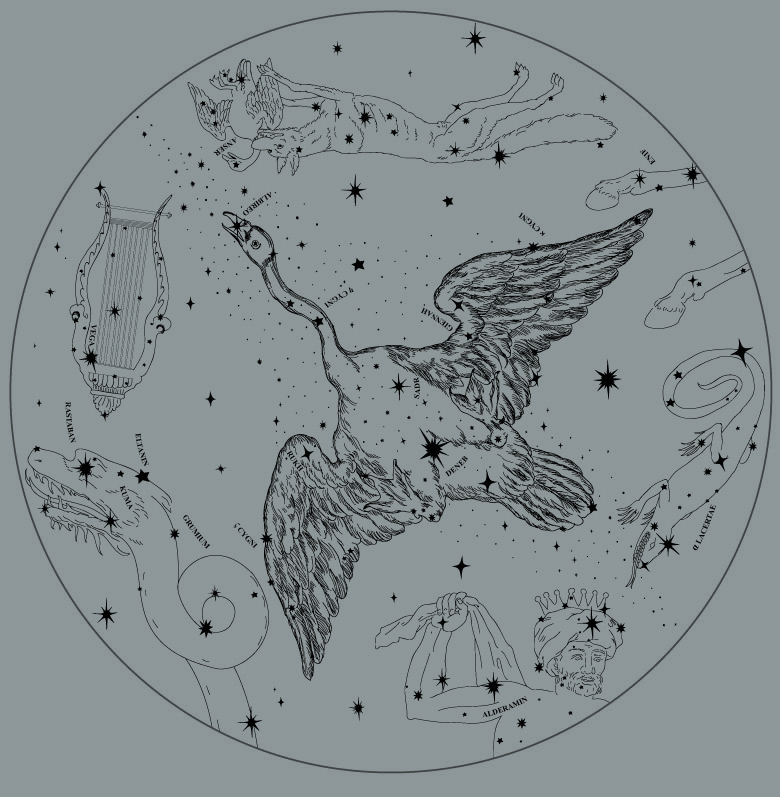
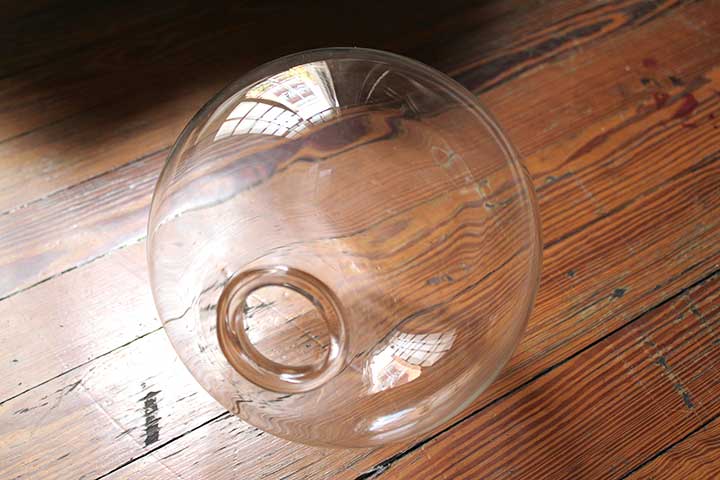
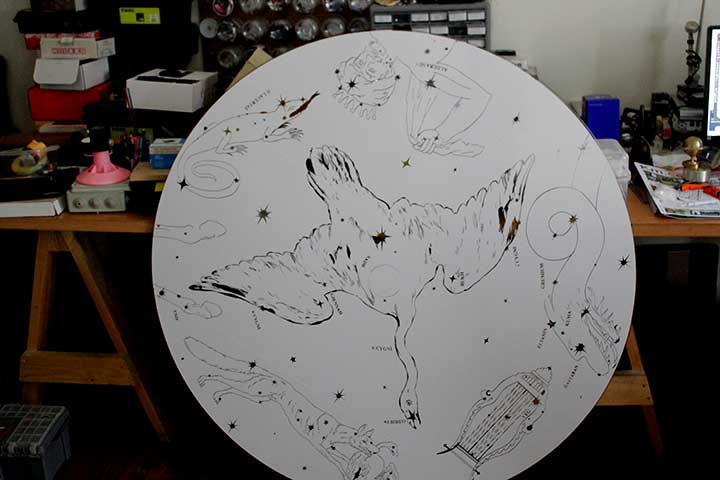
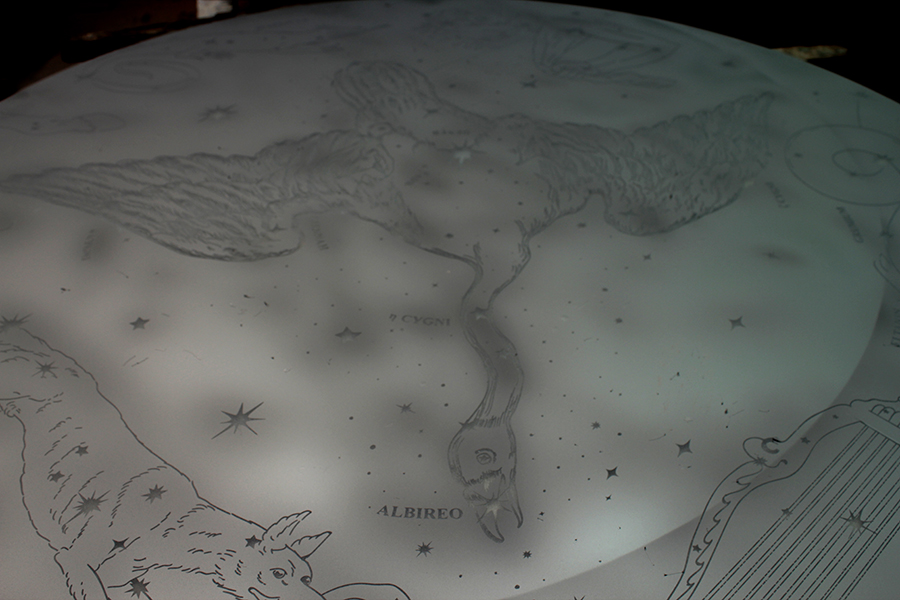
    Something very special happened with this piece. I received a call from the museum informing me that the strobe light wasn’t working. When I went to check it, I took out my phone and turned on its flashlight. I peered into the hanging half-sphere and, to my surprise, saw the night sky , the celestial sphere . Small droplets had splattered on the inside of the acrylic sphere and, as the water evaporated, they left star-like marks. It was a beautiful image in sync with several of my research themes.

    Proposals

    Anti-gravity Water Droplet Simulator (SAGGA)”.

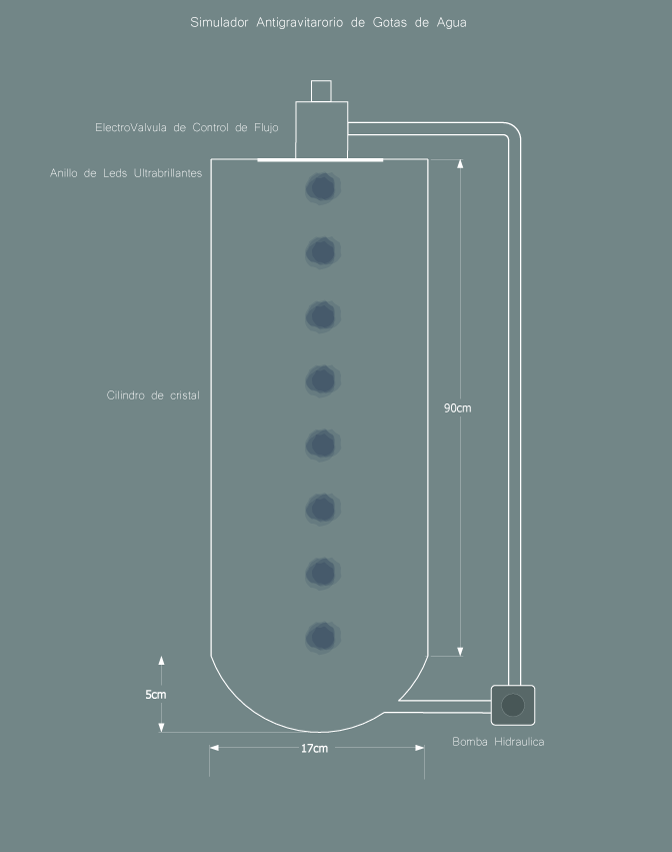
    An electrovalve will drop water droplets in a precise sequence, one after another, falling through the center of a glass cylinder. A system of stroboscopic LEDs will illuminate them, freezing them in mid-air for an instant. Due to retinal persistence, the mind will perceive a water droplet floating inside the cylinder. The droplets of water keep a sort of memory when falling, making the simulation appear as a single droplet when it is actually a succession of thousands of identical ones.

    The user will have control over two variables: the strobe frequency and the droplet frequency, allowing interaction with the droplet’s falling speed, making it rise, fall, or stabilize in one place, seemingly defying gravity.

    SAGGA is an experiment about perception of reality, time, and the search for equilibrium in symmetry and perfection.

    Espherica Shuman – Piston Gravitational Simulator

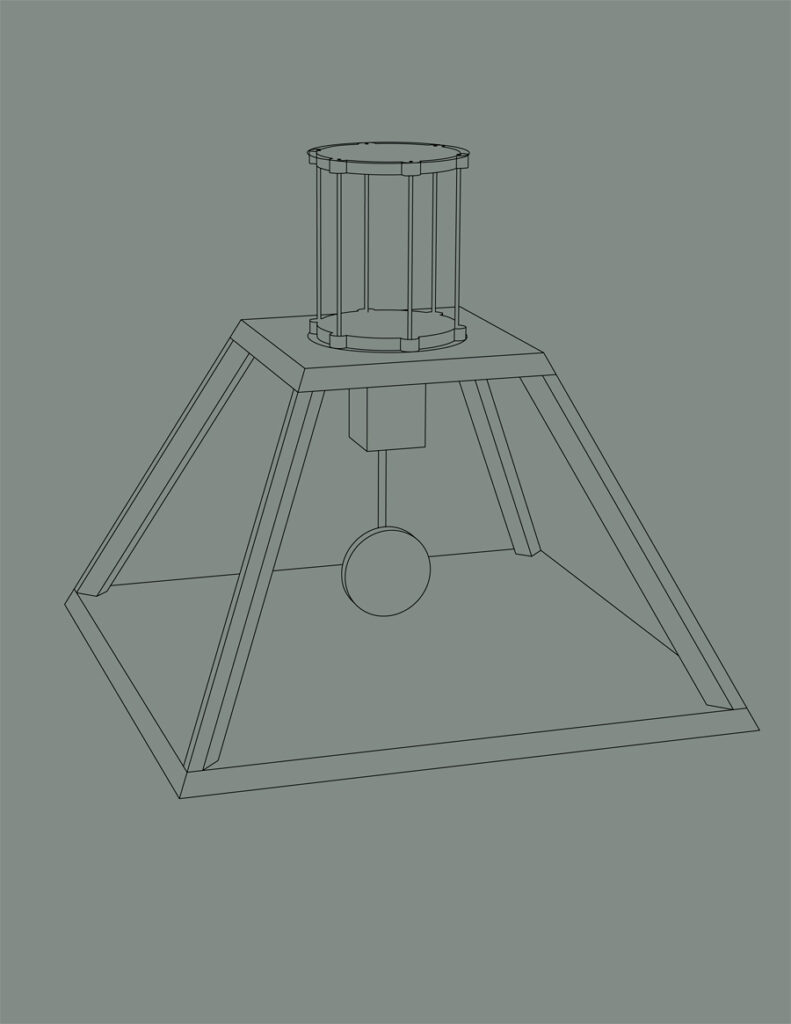
    This device consists of a wooden structure, a coil, an amplifier, a borosilicate cap, a microcontroller, LEDs, a motor, a gear, and a hydrophobic coating.

    The device will generate a vertical oscillatory motion, propelling the water and, at times, releasing it from the container’s pressure, allowing it to fall freely. A camera will capture the movement and behavior of the water molecules.

    1957: A close-up of Laika, the dog used to relay biomedical information in the Soviet ‘Sputnik II’ outer-space investigation programme. (Photo by Keystone/Getty Images)

    Invitation to experiment

    Two years ago, Ale de la Puente and Nahum Mantra summoned us to the Laboratorio Arte Alameda to explore the possibility of carrying out artistic experiments in zero gravity. This meeting was a very special moment, as we realized that we would have the unique opportunity to experiment with gravity in a real way. It was very motivating to think that all the thoughts I had had about this natural phenomenon could be synthesized into a concrete and current experience.

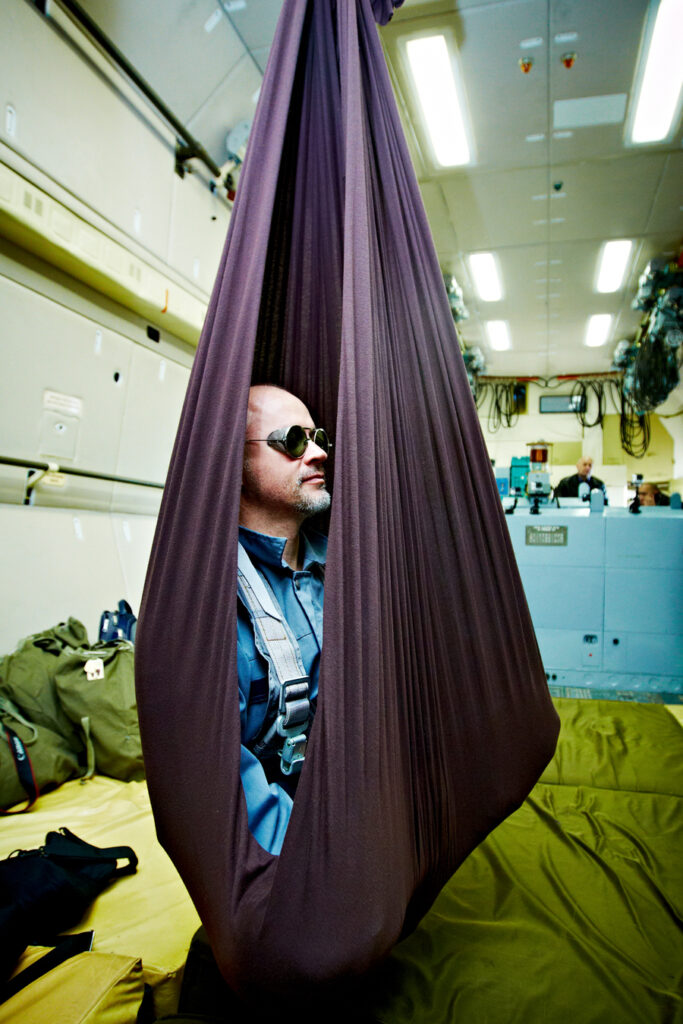
    I have been practicing meditation and lucid dreaming for several years. A large part of my artistic production is related to the perception of concrete, dreamlike, and digital environments. During these years, I have been in a constant personal search for anti-gravitational states in the practice of lucid dreaming. After the announcement that was made to us, I began to investigate more about gravitation and non-ordinary states of consciousness. I remembered reading about a recent practice of aerial yoga that was receiving a lot of attention, so I researched and set up a fabric hammock at home to practice this type of yoga. The hammock is an elastic fabric that hangs from a point on the ceiling by mountaineering ropes and is used to practice postures developed specifically for this system. The lotus position for meditation is very natural in the hammock, as the weight of the body is distributed evenly, which helps to keep the back straight, ideal for proper breathing. I began to develop a personal meditation model based on the pendular movement of my body in the hammock, a practice that I perform day by day as a series of experiments to reach non-ordinary states of consciousness. The mind constantly wanders and produces ideas, but in meditation, we seek to calm the mind. When I close my eyes, a continuous succession of thoughts, images, and ideas occur one after the other without stopping.

    In these meditations, I seek to concentrate on aspects and moments of impermanence. Through this practice, I seek to dissipate the mind and bring it to a Zen state. To do this, when meditating on the pendulum, I try to focus my mind on the subtle pendular movement of the hammock, with closed eyes and without taking any specific point of view into account. I try to perceive these movements as related to gravity since a pendulum swings under the movement of the Earth and the axis of gravity is located at the top. I try to feel that anchoring point and the gravitational attraction of the Earth, to be present and aware in that precise moment. Another moment of impermanence that I focus on is in breathing, the constant flow of energy exchange with nature. I try to perceive the moment when Prana enters or leaves my body, paying attention to the impermanence of the process of energy exchange with nature.

    In this meditation, I combine Syntoni.co, a system I developed to structure water molecules by electromagnetic fields. During the night, a coil induces special electromagnetic frequencies to a glass jar of water. When I wake up in the morning, before meditating, I drink this water while Syntoni.co emits this frequency as an audible tone thanks to a neodymium magnet that oscillates under the electromagnetic field. During the pendular meditation, I visualize the distribution of the water molecules in my body and simultaneously seek deep listening to the oscillatory frequency as sound, as well as the Doppler effect of sound due to the movement of the pendulum. I try to perceive all these moments simultaneously, in the here and now, with the intention of dissipating the mind from the constant flow of ideas.

    In this meditation, I seek to induce lucid dreaming while I am awake. That is, to enter directly into a state of dreamlike lucidity from consciousness. During the meditation, the images produced by the mind are opaque, dark, and lack solidity. However, on rare occasions, I have managed to transcend space and time. In an instant, the space of my mind literally lights up, dissipating the opacity of the images and giving way to a hyper-luminous sensitivity. This threshold of access to dream lucidity comes together with the simultaneous activation of other senses, which allows me to clearly perceive the dream environment and the possibilities of the mind in dream consciousness.

    On these occasions, I have found myself in bucolic landscapes of nature, such as meditating atop a mountain surrounded by pine trees, observing other mountains on the horizon, or on a white sand beach feeling the warmth of the sun and humidity on my skin. I have also floated adrift in the tide or experienced weightlessness, overcoming the force of gravity. These states are brief, but I continue to explore and practice in order to expand and amplify my perception.

    The book “Yoga Dreams” written by Tenzin Wangyal Rinpoche, analyzes the Bon and Buddhist traditions of Tibet in the practice of lucid dreaming. In these practices, being conscious during sleep is a process to continue meditation and pass through different spheres of consciousness.

    In my experimental research, the water molecule is fundamental. I construct artistic experiments as hypothetical systems, employing processes of inquisitive thinking of society, scientific and mystical hypotheses synthesized in personal and subjective searches posed as speculations about existence and reality.

    The possibility of observing the water molecule in free fall in a zero gravity environment has been in my subconscious for a long time. It has been a wonder to observe the experiments carried out on the space statio

    The research on the mysterious properties of the water molecule is linked to my meditative practice, focusing on the perception of the environment, especially in relation to gravity. I wonder, why are we able to dream that we defy gravity if we have never been in zero gravity? Why do those massive whitish shapes remain suspended in the sky when everything falls? Why do they suddenly fall like water or like spheres of ice? What causes the water cycle? What is the influence of the sun and the moon on the water molecule? Are they the only celestial bodies that generate influence on molecular behavior or is the water molecule capable of perceiving other celestial bodies?

    In addition, I question how the human body is composed. How many water molecules do we have and how often do we exchange them? Does inhabiting the hydrosphere mean that we live immersed in water? Do we play a part in the water molecule’s hydrological cycle? What role does the molecule’s ability to generate electromagnetic energy and stable oscillatory frequencies, and the diamagnetism of water, play in our body?

    All of this was a previous preparation for the current experience in the Roscosmos gravity laboratory. Living the actual experience of going from double gravity to zero gravity was a magnificent feeling of freedom and completeness. The experimental search for non-ordinary states of consciousness and perception moved from dream activity to the experience of concrete surroundings, shared perception, and collective recognition. I went from a personal subjectivity of my mind to an objective certainty produced by the physical forces of nature. In the state of weightlessness, I focused on observing the behavior of the molecule inside the artifact I built for this purpose. The instructors asked me to fix it onto some control instruments in the cabin.

    In my experience of transitioning from double gravity to zero gravity, I was able to observe a viscous behavior of water at the moment of inflection of the parabola. To improve the freedom of movement of the molecules, I placed a nano-technological hydrophobic material inside the artifact’s glass. However, due to the flight’s inertia, the water still adhered to the glass walls and, in my desperation, I shook the artifact to release it, resulting in the formation of water tentacles and spheres that were released. These experiments generated new questions and solutions for my research.

    Performing 10 parabolas in zero gravity was exhausting both physically and mentally. Upon returning, I lay on the mattresses that covered the floor and had a lucid and awake dream in which I floated in zero gravity and observed a very bright horizon. I placed water that sought to become a sphere and rippled in its viscosity. Inside the huge sphere, I put a little dog to swim and its head came out on top, a very beautiful image. However, when I opened my eyes, I found myself on the return plane. When I shared this experience with my friend Brian Mackern, he told me that Laika, the first living being in space, died of dehydration.

  • e_kebana

    ยท


    In Japanese Zen Buddhism, the practice of contemplation occurs in any activity that is performed: one meditates while sitting, walking, eating, at all times. Aesthetics are fundamental and significant as philosophy and practice, with a focus on personal and artistic development.

    Within the various practices of contemplation, floral or plant arrangement is fundamental, as it recognizes nature in its pure expression of beauty and allows for the contemplation of its aesthetics without discriminating, appreciating life and decay. This ancient Zen art is called ikebana, which means “floral arrangement”.

    For ikebana, the term “flower” is more of a concept or idea that encompasses everything that has an affinity with plants and the essence of the arrangement itself. Any branch, leaf, flower, root, stem, or moss can be used. Ikebana is not only the arrangement itself, but also the entire process that led to its creation, in meditative silence working with impermanence and the essence of nature to find the path or way of self-realization.

    Each act in the arrangement and its variations comes from a tradition or school, and each element has a meaning that delves into the search for peace, harmony, and understanding. Nature, like the seasons, is constantly changing and its beauty extends to death, where decay becomes an aesthetic pleasure and holds meaning. The vases and other elements in the arrangement are fundamental and are meant to establish a symbolic dialogue among all the elements.


    In our proposal of arrangements, we introduce the electronic element both at an aesthetic and functional level. Metaphors of electronics relate to energetic flows that resemble those of water, in their ability to conduct and transform.

    Historically, electricity has been related to water due to its symbolic charge and similarity in activity processes, such as current generation and the way they flow. This relationship becomes evident in our arrangements, where the combination of electronic and natural elements creates a dialogue between technology and nature.

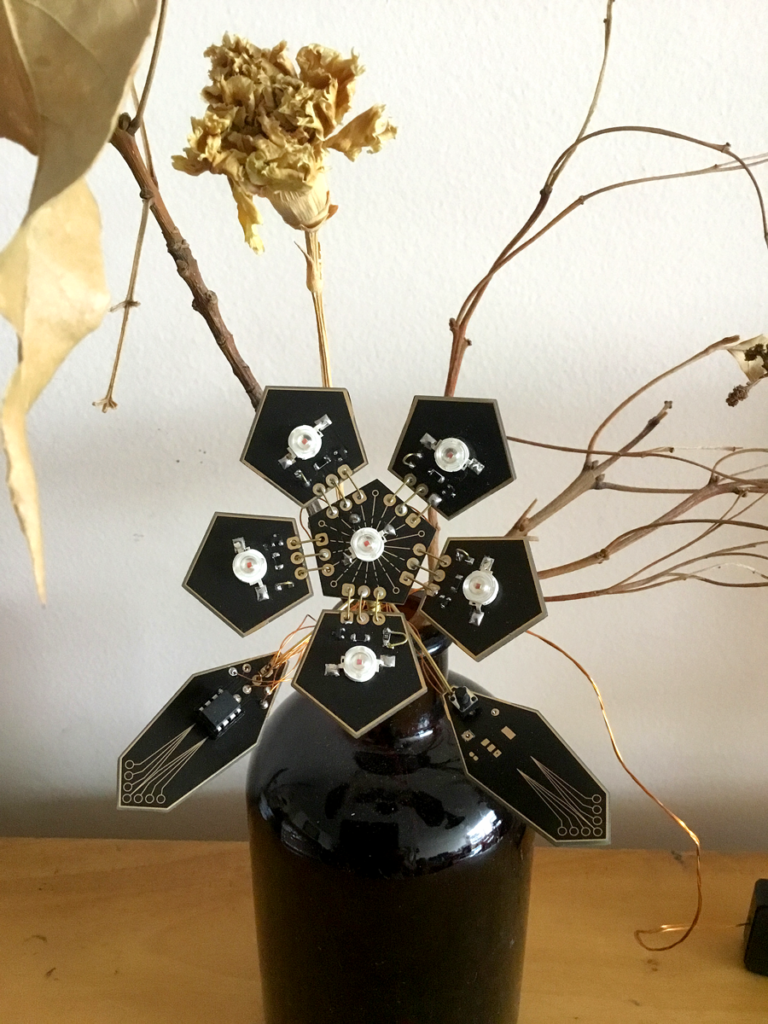
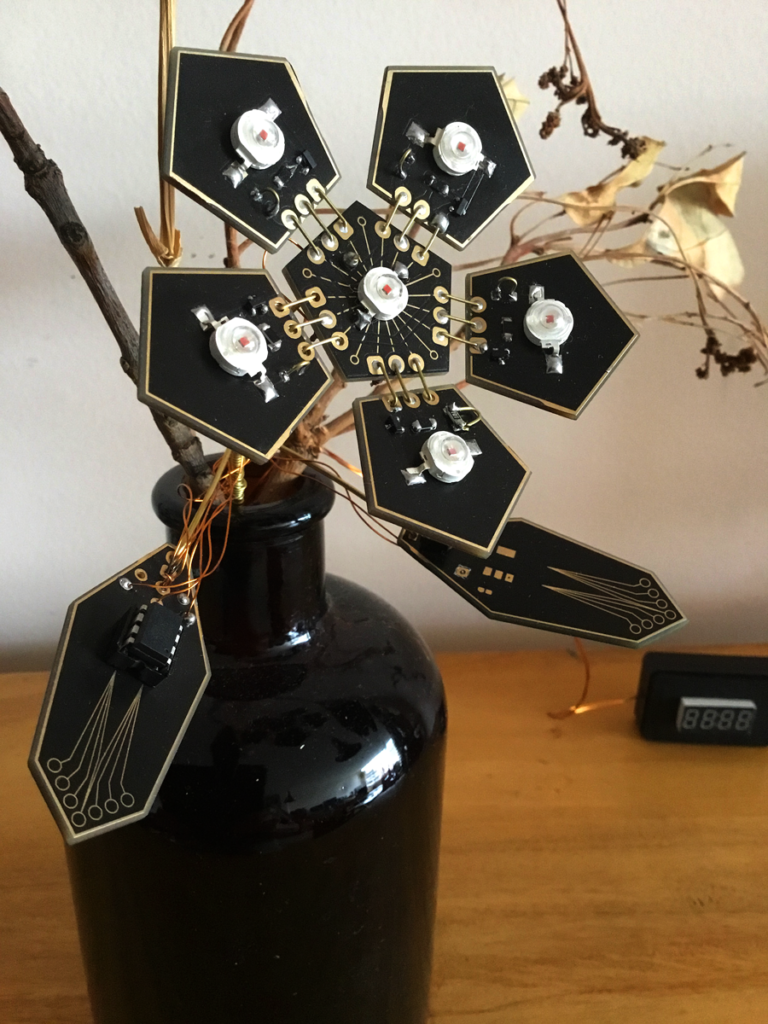
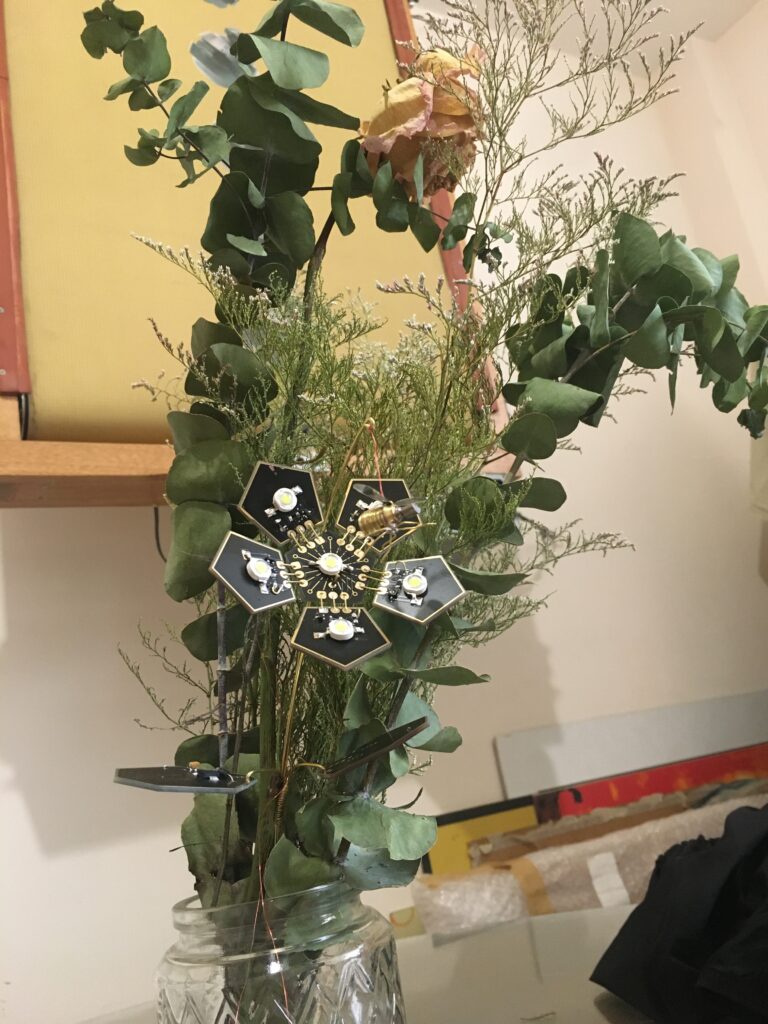
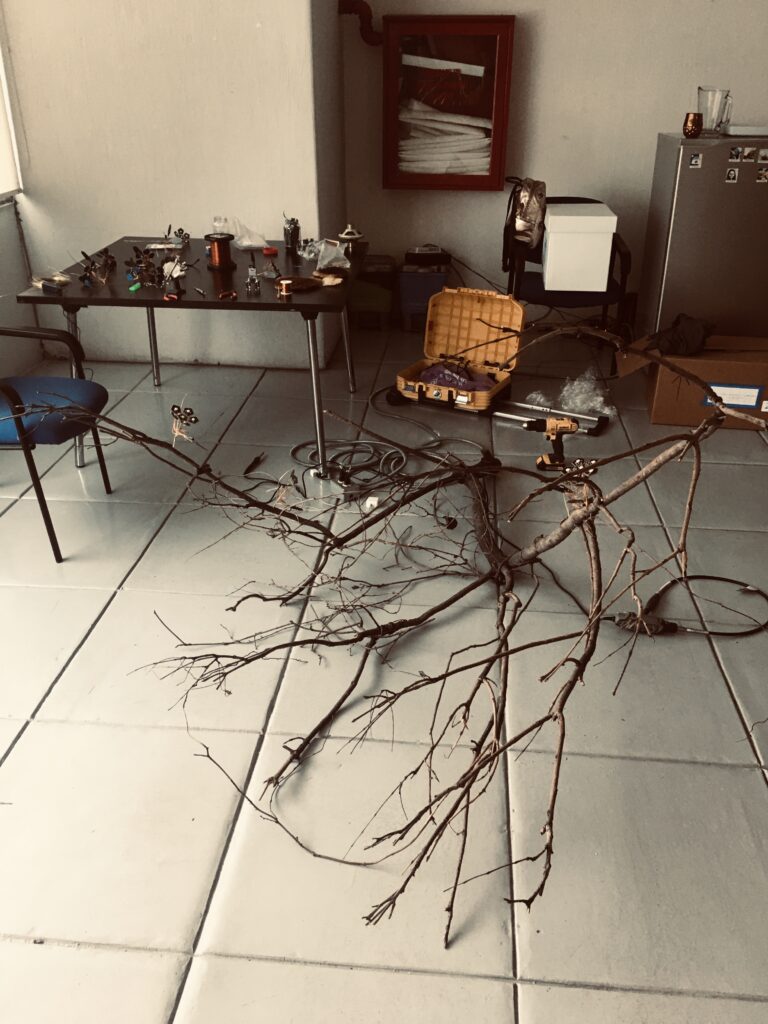
    The e_kebana are arrangements that explore new forms of expression and relationship with the natural world through the combination of electronic and dry natural elements. This fusion gives rise to a dialogue between active energy flow processes and dry floral elements that symbolize the impermanence of nature, life, and death.

    Through the combination of electronic flowers and natural dried elements, a contrast effect is created between the natural and the simulated, inviting us to question the dichotomies between the organic and the artificial. In this sense, e_kebana can be considered a kind of hybrid ontology that leads us to rethink the traditional limits of nature and technology.

    By mimicking in a process of aesthetic and symbolic contemplation, e_kebana allows us to appreciate the complexity and beauty of the interaction between technology and nature. In this way, our arrangements invite us to reflect on our relationship with the environment and the role that technology can play in our interaction with the natural world.

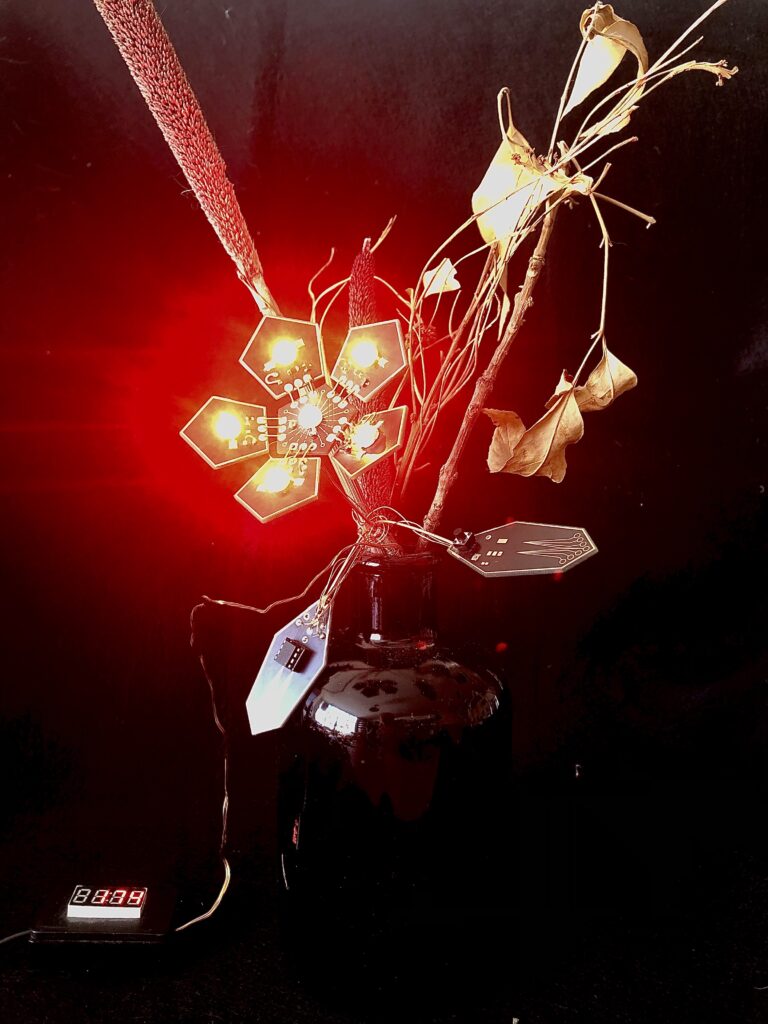
    Additionally, e_kebana arrangements are both luminous and therapeutic, promoting contemplation and relaxation through active bio-photomodulation with meditative frequencies.

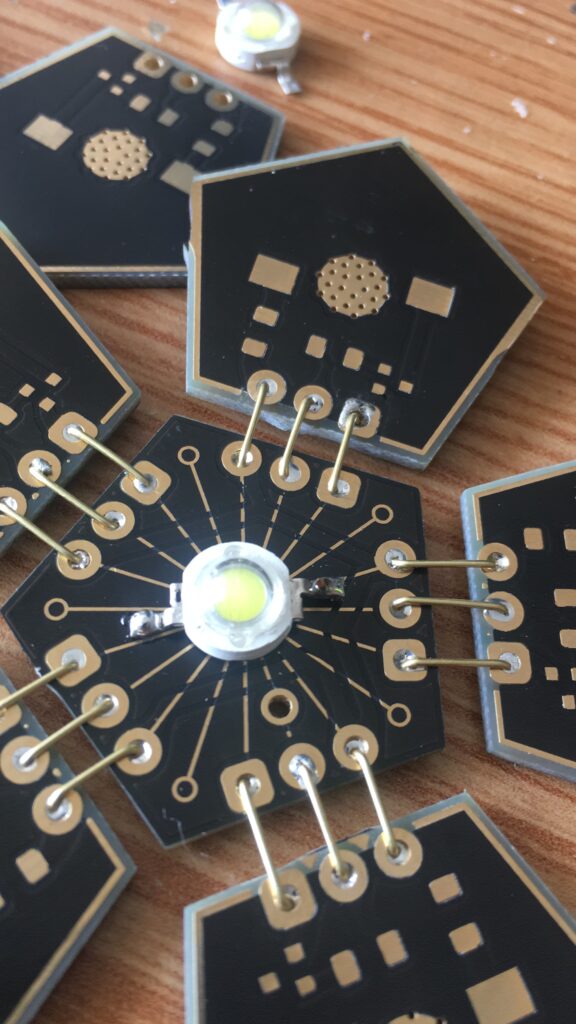
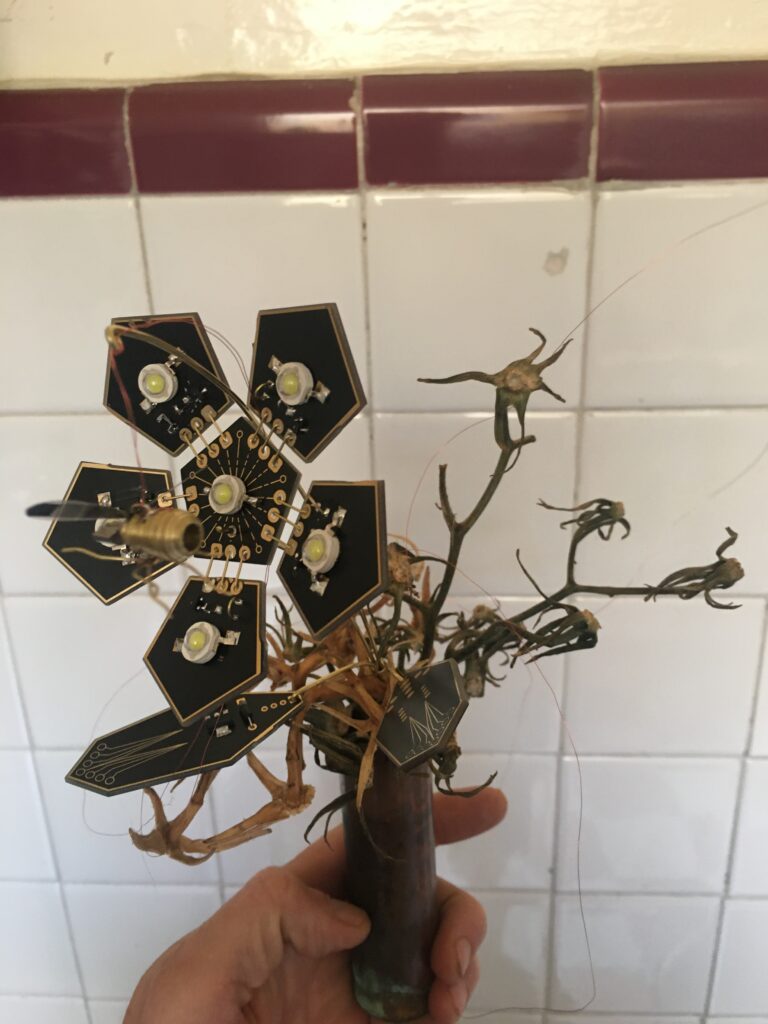
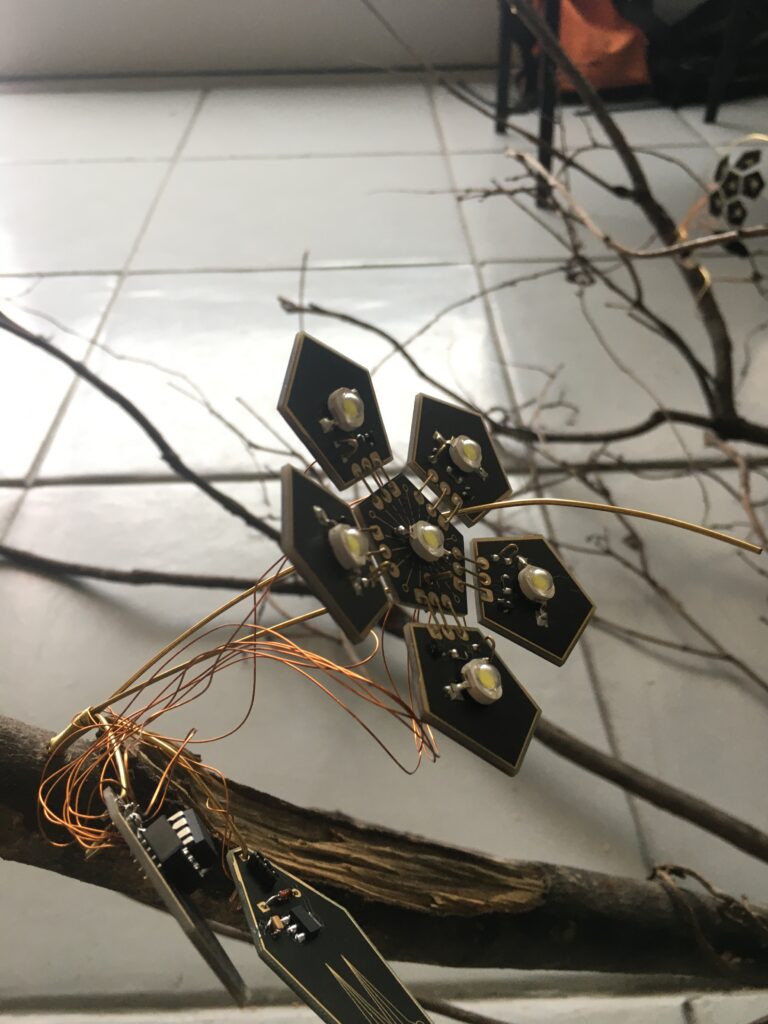
    E_kebana or electronic ikebana are a combination of modular electronic circuits, PCBs, and brass wire, with the morphology of a five-petal flower that alludes to Fibonacci mathematics present in nature. The petals are equipped with high-power 640nm red light spectrum LEDs and are interconnected to make them modular. One of the leaves contains a programmed microcontroller to control the light frequency of each petal, while the other leaf has a button to select a specific frequency. The chosen frequencies are in the audible range but are light-based, and the LEDs flash at high speeds to produce an aesthetic and symbolic effect in contemplating the arrangement.

    Neurohacking and biohacking: Bio-photomodulation is a biological process that is activated by the specific use of a spectrum of light, in this case, red light. The light spectrum is not only visible to the sense of sight, but the organism perceives it in various ways. The mitochondria, a fundamental cellular organelle in human metabolism, is the power plant of cells, as it is responsible for the production of ATP energy.

    Red and infrared light in the range of 600 to 800 nm generates more efficient activity of mitochondria in human cells, resulting in a number of reported health benefits in various studies. This therapy has been used continuously and effectively for decades, but it is only now that the cellular processes involved are starting to be understood. In the future, bio-photomodulation and other similar technologies may be used more widely as tools for human enhancement, which raises interesting ethical and philosophical questions about the limits and consequences of technological modification of human beings.

    By modulating mitochondrial activity using red light, energy production in brain and neuronal cells can be improved, resulting in an improvement in cognitive function and learning ability. In addition, it has also been shown that bio-photomodulation can help in reducing pain, inflammation, and stress, making it a valuable tool for managing health and well-being.


    In the context of speculative realism, we can say that contemplative meditation, aided by technologies such as e-kebana, allows us to delve into a more intimate relationship with reality and with our own being. Light, as a form of subtle energy, has the ability to modulate and transform both metabolic and mental activity in our cells, suggesting a deep and mysterious connection between the material and the spiritual.

    Through contemplation and interaction with the frequencies emitted by the petals of the e-kebana, we can access different states of consciousness and focus our attention on specific intentions that help us achieve greater harmony and balance in our body and mind. This practice allows us to experience reality in a more full and conscious way, and helps us understand that we are an integral part of an interconnected and dynamic universe.


    This video demonstrates the use of light to transmit frequencies. In front of the flower, there is a miniature photo cell that transforms the frequency of light into sound through an amplifier. By pressing the button, pre-programmed frequencies are changed. When the light is obstructed with a hand, it does not transduce into sound.

    “Thinner than water”

    The revelation comes from research led by Andrei Sommer of the University of Ulm (Germany). Sommer’s team’s work is now focused on water inside the cell. Normally, the layer of water next to any solid object has a high surface tension, making it viscous. “It’s like molasses,” says Sommer.

    His team discovered that when surface layers of water are illuminated with red light, the distance between each water molecule increases, making the liquid more “slippery”.

    Mitochondria feed on an enzyme attached to their membranes. This enzyme rotates like a molecular turbine, and being surrounded by more liquid water should rotate more easily, generating more ATP.

    As it is difficult to measure water inside a living cell, the team measured the effect of near-infrared light on thin layers of water by examining the friction of a diamond probe as it pushed through the water and towards a metal block.

    Illuminating the water reduced the force needed to push the probe by 72%.

    “It’s very significant,” says Horst-Dieter Fรถrsterling of the University of Marburg in Germany. “It’s the first explanation of how light might work.”

    https://www.nature.com/articles/srep12029

    ‘Beauty: Antidote and Poison’

    The first version of e_kebana was commissioned by Daniel Liebshon for the museography of Alexander McQueen’s exhibition ‘Beauty: Antidote and Poison’ at the Zapopan Art Museum. 

    The installation alludes to the life/death binary present in McQueen’s work, and is a kinetic, luminous, and sound work that functions as a shadow theater. 

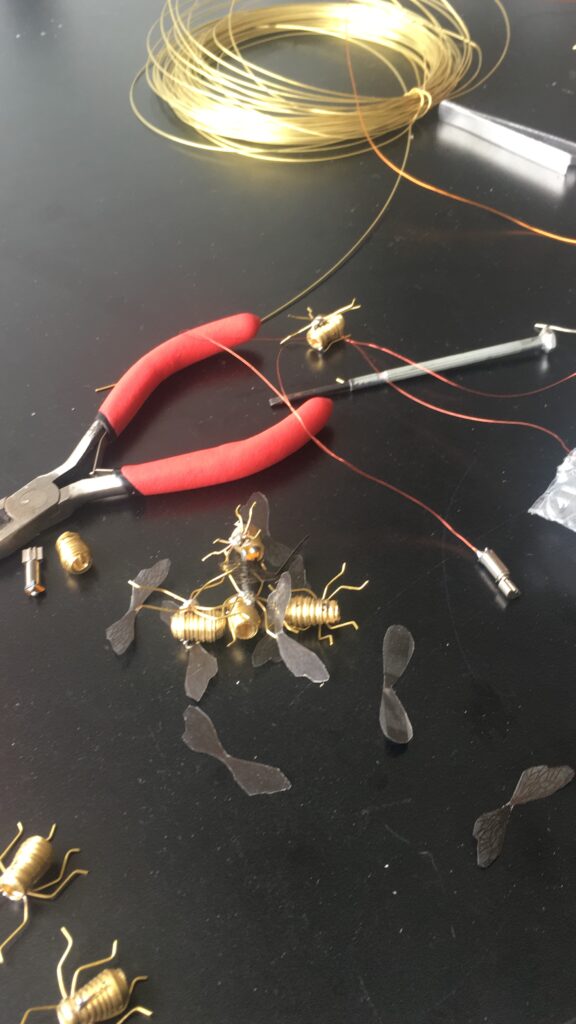
    While ikebana is a Japanese floral arrangements that often use dry vegetation, this installation employed a jacaranda branch in which flowers constructed with purpose-designed electronic circuits were integrated. Each flower, pentagonal in shape with five petals in accordance with Fibonacci’s morphology, has a power LED in each petal. The leaves, in turn, include an Attiny microcontroller programmed with an algorithm that randomly triggers each of the LEDs. In front of the flower’s corolla is a mechatronic bee that flutters hypnotized by the light, whose shadow is projected on the walls vibrating in flashes. A mannequin holds one of the flowers in its hand.

    The e_kebana work alludes to the aesthetics of death that endure over time, to the symbiosis of insects with flowers in the act of pollination, the synchrony of processes, and to the simulation of the living that emerges from the dead in the poetics of energy flow. The jacaranda died due to a parasitic organism, a creeper. The electronic flowers entwine in the dry branches like magnet cable orchids that flow with energy to feed them, the aesthetics of life in its energetic collapse in a speculative symbiosis.


    Production

  • Pendulo

    ยท

    Pendulo #Salz21 home of innovation https://www.salz21.at/en/

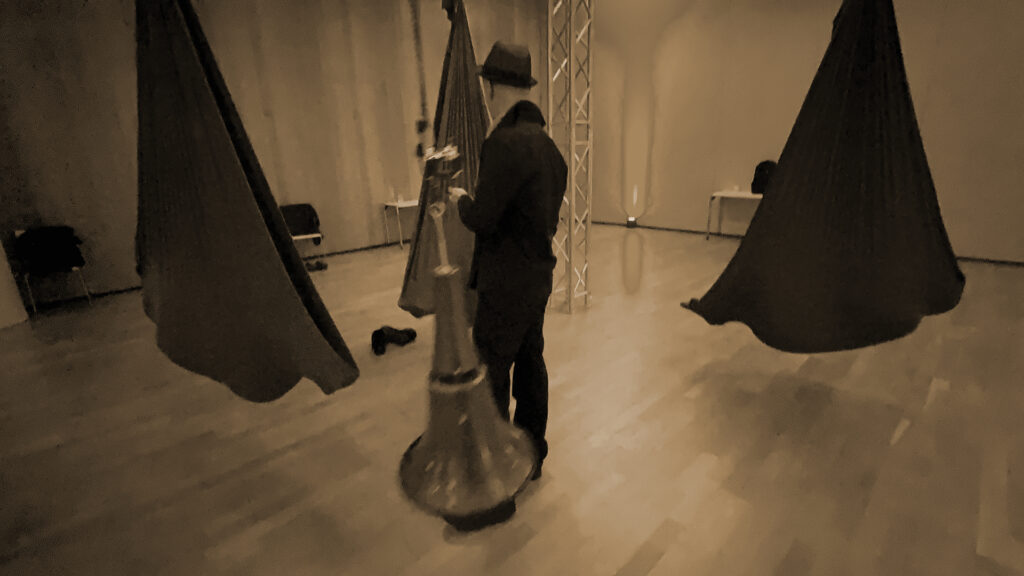
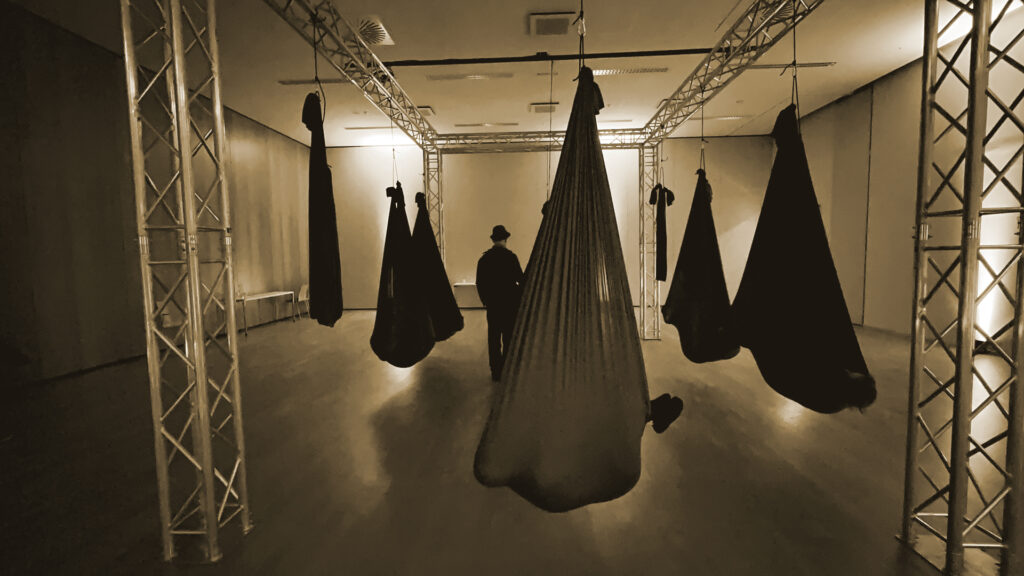
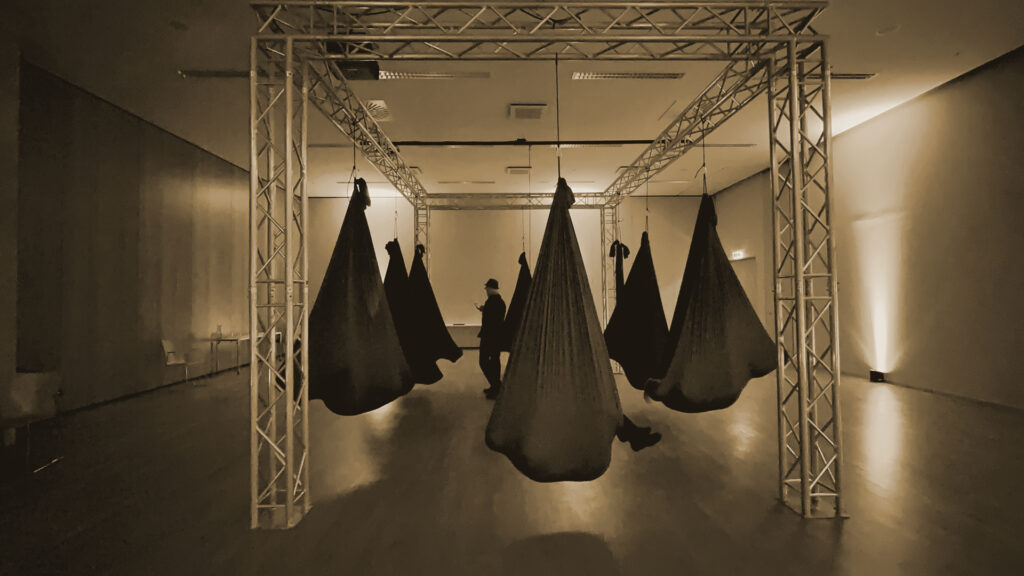
    The main intention of the experimental protocol in oscillatory meditations is to achieve states of lucid hypnagogia, a state of consciousness where one experiences vivid sensory phenomena and hypnagogic hallucinations while maintaining a degree of self-awareness and clarity of mind.
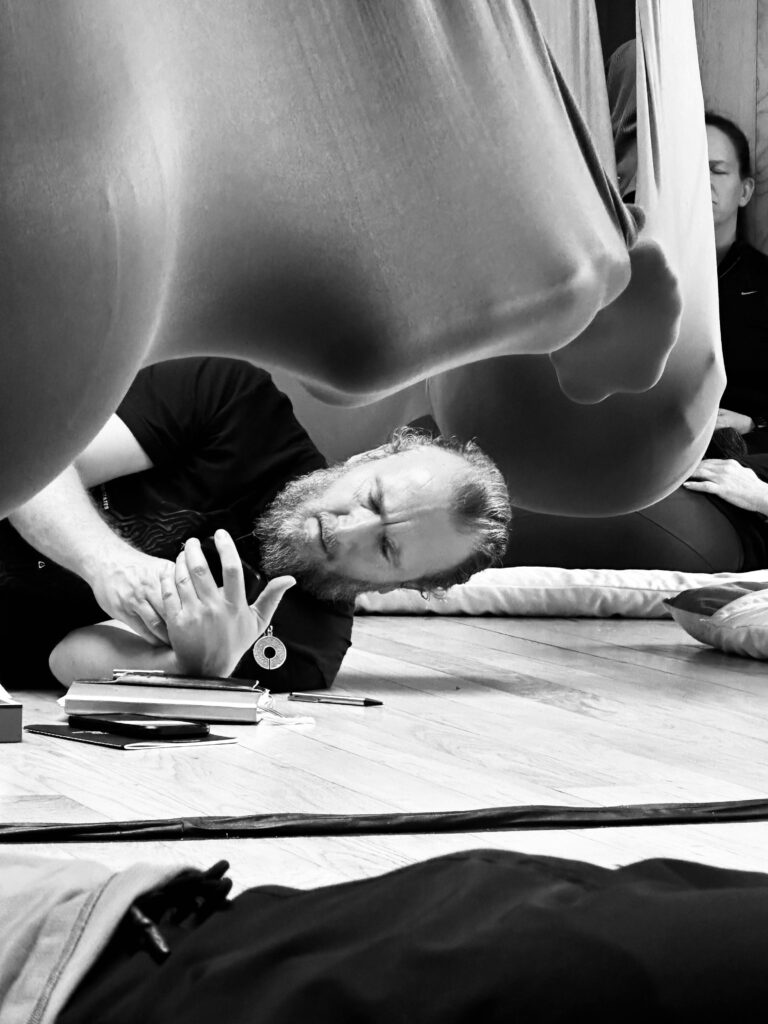
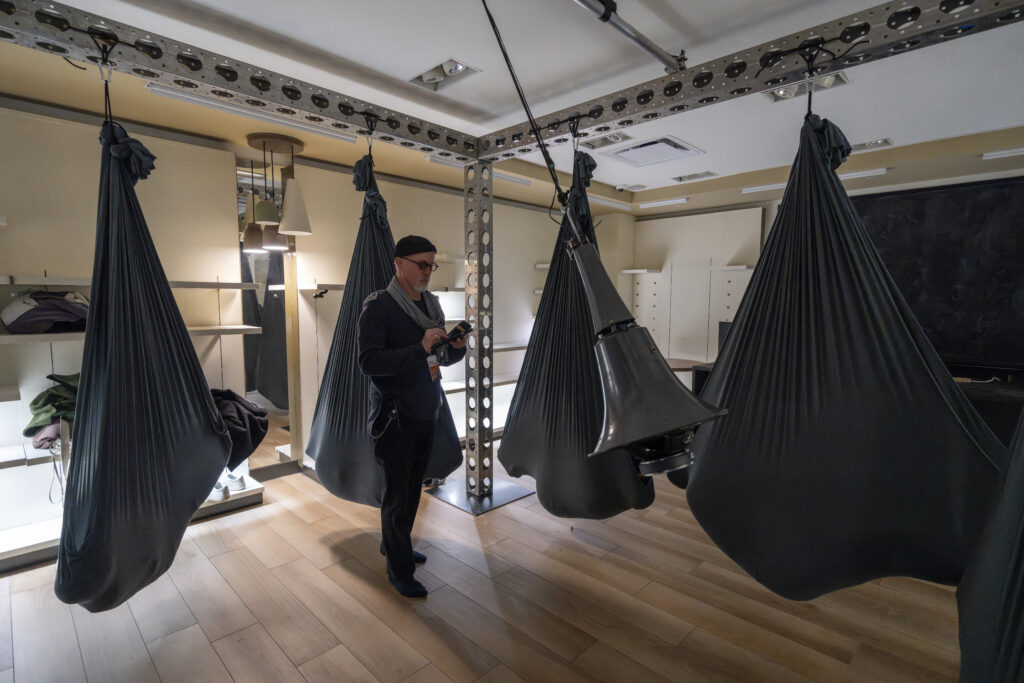
    In oscillatory meditations, achieving this state is done through the use of a cloth hammock that moves gently like a pendulum, creating a feeling of weightlessness and encouraging the meditator to let go of physical tension and mental distractions. Focusing on the sensation of oscillation and allowing the mind to wander can induce a state of lucid hypnagogia.
    Oscillatory meditations use gravity and the pendulum movement as a means to contemplate impermanence, emphasizing the transience and fluidity of existence.

    During meditation, it is common for the mind to be distracted by opaque and vague thoughts, ideas, and images, making the practice difficult. By focusing on the breath, sound, and in this method, gravity, the aim is not to pay attention to these mental images and thoughts, but rather to observe them, recognize their quality, and return to the present moment.

    The pendulum becomes a technological tool that allows for mindful attention to gravity, one of the most present and recognizable forces of nature, but often ignored. Albert Einstein’s theory of relativity shows us that gravity is not just a force that attracts objects, but also the curvature of space and time due to mass and energy. This curvature affects everything that exists in the universe, from subatomic particles to entire galaxies. Gravity unifies the universe into a single entity, where everything is connected and in constant interaction. In this context, the practice of pendulum meditation seeks to help us focus on gravity as a force present within ourselves and everything around us, and thereby develop a greater awareness of our interconnectedness with the universe.

    During meditation, by focusing on the present moment and perceiving the subtlety of gravity, as well as contemplating the impermanence of the moment, we can let go of thoughts and mental projections. When we access the hypnagogic state, one of these mental projections transforms, and the image becomes clearer, more vivid, and more detailed, and we become immersed in this environment with all our senses. The practice aims to help us have this experience lucidly, recognize it, and continue the experience in contemplation.

    In lucid dreams, by extending our perception of time, gravity ceases to be one of the fundamental forces of the material universe, allowing us to levitate, fly, and experience other realities in a lucid manner. The practice of pendular meditation aims to help us reach hypnagogia and detach from the material reality while remaining aware of it and learning to integrate expanded states of consciousness.

    The Ilyushin 76 MDK , Gravity laboratory Gagarin center, for training cosmonauts ROSCOMOS

    In 2013, Ale de la Puente and Nahum Mantra brought together a group of artists at the Laboratorio Arte Alameda to discuss the possibility of traveling to Roscosmos, the Russian space agency, to perform artistic experiments in zero gravity. This meeting was a very special moment. Understanding that we would have a unique opportunity to experiment with gravity was very motivating. So many thoughts and questions I had about this phenomenon of nature could be synthesized into a current and real experience.

    I have been practicing meditation and lucid dreaming for several years. Much of my net-art production is related to the perception of the concrete, oneiric, and digital realms based on hypotheses of speculative realism.

    During these years, a constant personal search in the practice of lucid dream states has been to detach myself from gravity and float. If our existence is subject to this super force, why can’t we detach ourselves from it in dreams? Can this happen in deep meditations?

    From the announcement they made to us, I began to investigate more about gravity and non-ordinary states of consciousness. I remembered reading about an aerial Yoga practice that was beginning to boom in New York. I researched this modality of Yoga and set up a cloth hammock at home to practice in. The hammock is made of stretchy fabric that hangs from a point on the ceiling by climbing ropes, and is used to practice postures developed especially for this system. I began to develop an alternative model of meditation based on the pendulum movement of the body in the hammock.

    I developed this practice for two years, and it was part of the experiments I performed in the gravity laboratory of the Russian space agency. Meditating in zero gravity was a set of scientific, mystical, and artistic methods used to speculate on reality.

    The collective work of this experience was part of the exhibition “The Gravity of Matters,” which opened in 2015 at the Laboratorio Arte Alameda and toured several countries.

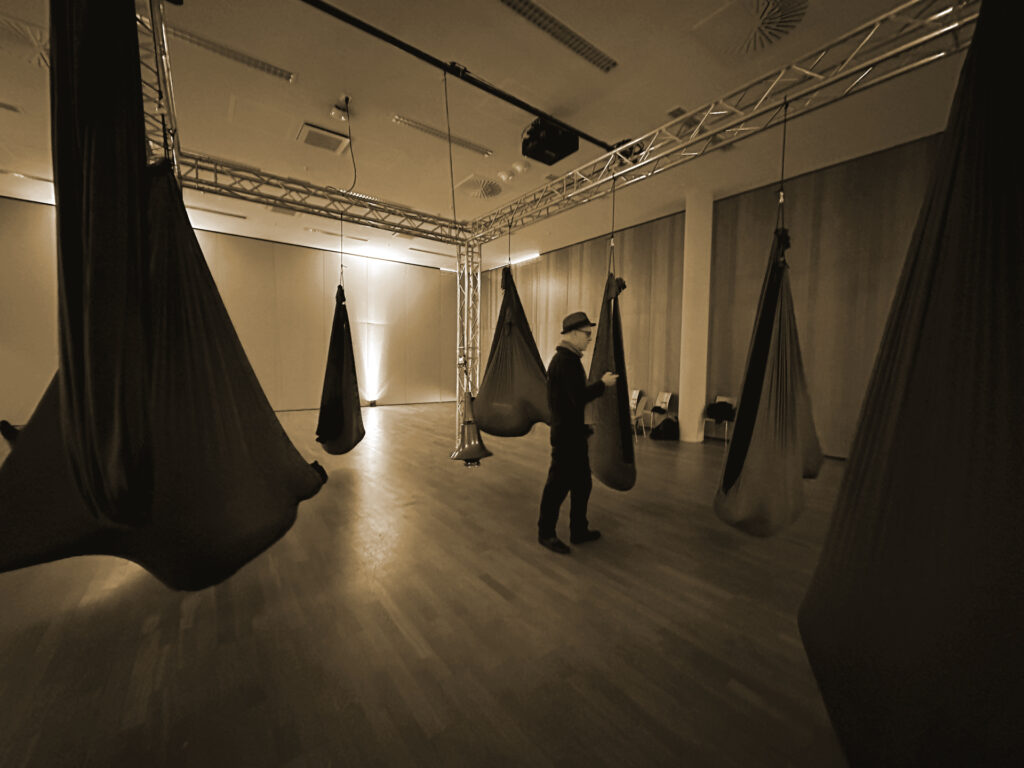
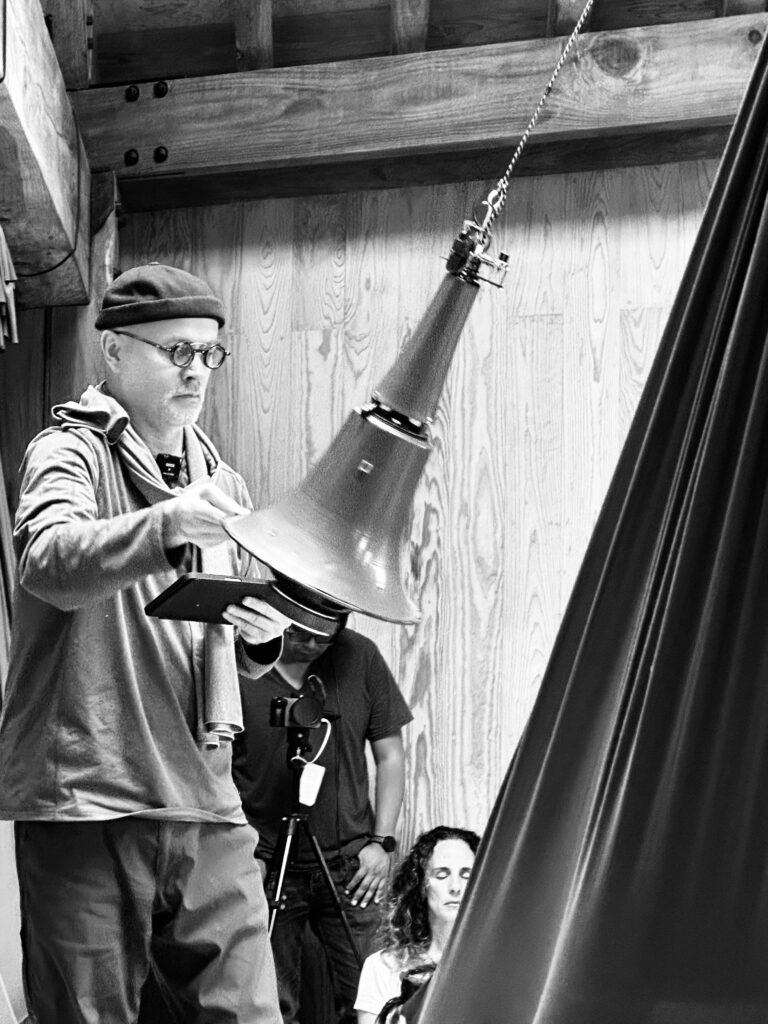
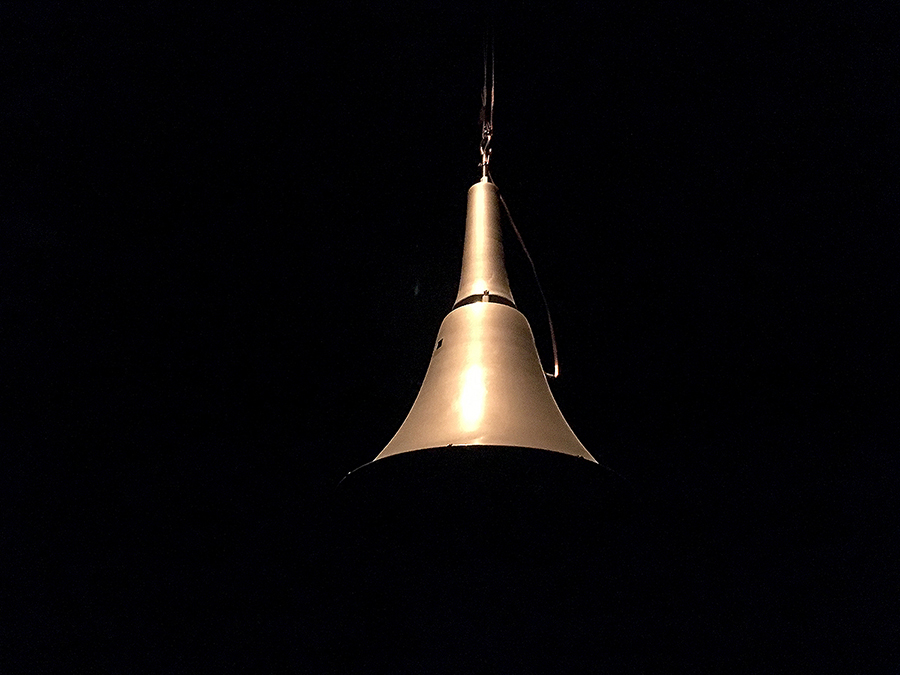
    Pendular Sound Artifact

    A pendulum instrument has been built, a sound artifact with an amplified horn and a microcontroller that measures in real-time the variables of an accelerometer and gyroscope sensor. These variables are used to change the pitch of the reading of a wavetable. As the artifact oscillates in pendulum movement, on the one hand, the Doppler effect enters, which is related to the movement of the sound source, and on the other, the variations in pitch can be understood as a metaphor for the curvature of space and time.

    An illusion about perception of listening is to understand the passage of time through the pitch of sounds, whether they accelerate or slow down. In meditation, listening is essential to be in the here and now. For sound to exist, there must be transformation; in a static universe, sound does not exist. Sound is pure transformation, sinusoidal waves. It is the most direct reference to the passage of time and exists as such in the moment of consciousness.

    In this meditation, as the body oscillates gently, the sound and its origin become enveloping, they are everywhere and nowhere at the same time.

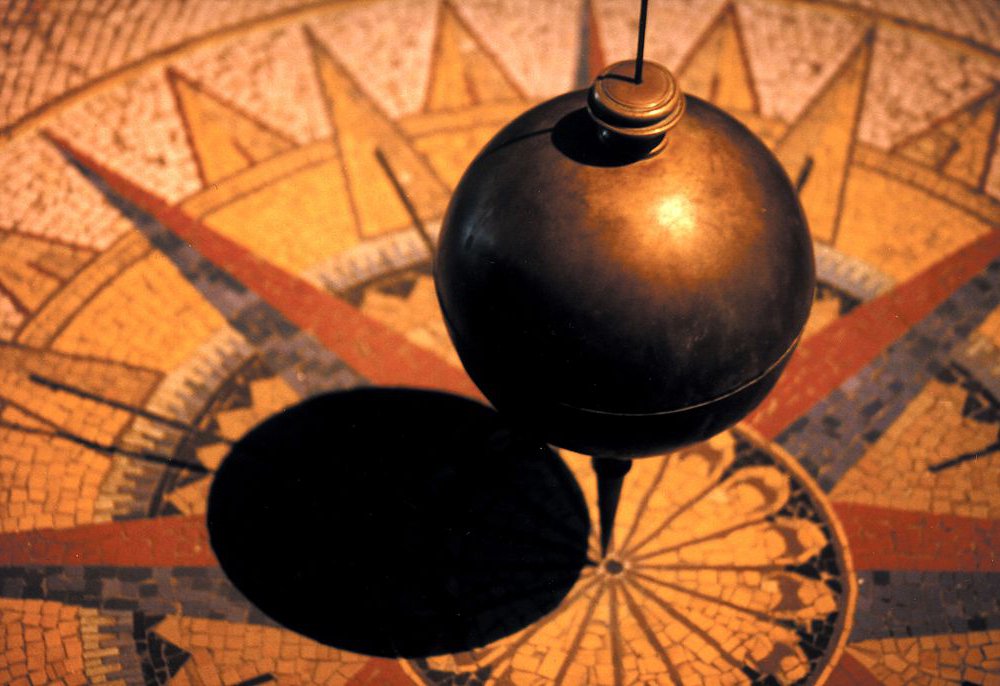
    The pendulum is the simplest instrument to understand the most complex problems of nature, for centuries it has been a useful tool for various fields of knowledge, the isochronic property of its movement is a simple but fundamental system of nature, it unites the rhythm of time with the existence of matter. Its study spans centuries. From classical to quantum physics it is fundamental to the understanding of nature. 

    The study of the pendulum established the laws of the free fall of objects by Galileo Galilei, forming a fundamental part of the mathematics he performed, it helped establish Newton’s laws of conservation of energy, and with its use established the gravitational constant and allowed him to determine the speed of sound.   

    The motion of the pendulum can also be described in terms of Einstein’s special relativity, this theory states that time and space are two aspects of the same entity known as space-time. According to special relativity, time is dilated in areas with high energies or high velocities, which means that time passes more slowly in these areas, space-time is considered a unified entity in which time and space are interrelated. This means that time can deform or curve due to the presence of mass or energy. The motion of the pendulum is a good metaphor to understand the curvature of space-time and how it can deform due to gravity.

    In cosmology, the oscillation of the pendulum is closely related to the motion of celestial bodies; it is an example of periodic motion, i.e. a motion that repeats at regular intervals of time. Influenced by the gravitational force, its oscillatory motion allowed it to recognize the rotation of the earth as it was attracted by gravity. 

    In the same way, for millennia, using mystical methodologies and subjective experimental protocols, the pendulum has been a fundamental tool for reaching non-ordinary states of consciousness. The subtlety of its oscillations has been employed as a system of hypnotism and as a paranormal tool to assist the perceptual systems of the consciousness, bringing awareness to the subtle phenomena of reality. Space-time unifies matter, everything is interconnected and in constant interaction, the frequencies of nature exist in the process of consciousness, sound exists when we listen, light when we observe and gravity only when we fall or only pay attention to it in those accidental circumstances.
    Inducing lucid hypnagogia during meditation in a pendulum hammock while attending to the cosmos and gravity can be a powerful way to explore the unconscious mind and gain insight into the interconnectedness of all things. Hypnagogia is a state of consciousness that occurs when the body is falling asleep and the mind is in a transitional state between wakefulness and sleep. During hypnagogia, one may experience mental phenomena such as visual imagery, sounds, and bodily sensations. Lucid hypnagogia refers to a state of hypnagogia in which the individual is aware that they are in a dream-like state and can manipulate and control the dream.

    The movement of the pendulum can be used as a metaphor for the interconnectedness of all things and the interplay between time and space. The pendulum swings back and forth, connecting the past and the present, just as the cosmos connects all parts of the universe through the force of gravity. The movement of the pendulum can also be seen as a representation of the cycle of life, with the pendulum swinging from birth to death and back again.

    Incorporating the concept of the pendulum and cosmology into meditation can deepen the experience and help the individual tap into the unconscious mind. The pendulum hammock provides a soothing and comfortable environment for meditation, allowing the body to relax in a protective cocoon and the mind to let go of thoughts and worries. By focusing on the movement of the hammock and the influence of gravity  and the sensation of the soft fabric against the skin, the individual can enter a state of deep relaxation and become more receptive to the unconscious mind.

    Stephen Laberge develop the WILD technique ( wakeup induced Lucid dream )  to be conscious in the instant we start to dream, this instance is hypnagogia, when we are meditation imaginary and troughs are constant, the technique is not to attend this thoughts by focusing on impermanence  , must of this imaginary is opaque , during meditation this images in the moment of hypnagogia became hyper real, the resolution and light quality drastically change, this is the cue to stay lucid in the dream state, to recognize this change , and continue the meditation in this place, also the force of gravity change, you can levitate at will.  

    Hyperhumanism showcase curated by Carl Hayden Smith featuring artists 220 and Arcangelo Constantini

    SALZ21 HOME OF INNOVATION

    Overall theme of the showcase:

    Humans are not evolutionarily equipped to deal with the level of complexity that the rapid rise in disruptive technology is creating. โ€˜Design or be designedโ€™ is the new mantra. Instead of outsourcing our human becoming to the machine and becoming Transhuman how do we use techniques and technologies to help us become more human? This is the basis of Hyperhumanism. How can we use technologies to visualise and understand not only the inner worlds of our own bodies but also the complexities of the wider environment. Using the concepts of Hyperhumanism rather than Transhumanism as the basis of our technological designs, we can enable an eco-social feedback loop for regenerative behaviour change.

    More info:
    https://museumofconsciousness.space

    https://www.cyberdelicsociety.com
    https://www.ravensbourne.ac.uk/people-and-stories/meet-team/carl-smith

    Exhibition 2: Lucid Hypnagogia experience: Pendulum by Arcangelo Constantini

    Hypnagogia is a state of consciousness that traditionally occurs when the mind is in a transitional state between wakefulness and sleep. During hypnagogia, it is common to experience enhanced creative abilities, and access to mental phenomena such as visions, sounds, and unusual bodily sensations. Incorporating the concept of the โ€˜pendulum hammockโ€™ allows us to achieve this state of lucid Hypnagogia within a very short duration of time. The pendulum hammock provides a soothing and comfortable environment for meditation, allowing the body and mind to relax in a protective cocoon. By focusing on the movement of the hammock and the influence of gravity and the sensation of the soft fabric against the skin, the individual can enter a state of deep relaxation and become more receptive to the unconscious mind unlocking their creative potential.

    The main intention of the experimental protocol in oscillatory meditations is to achieve states of lucid hypnagogia, a state of consciousness where one experiences vivid sensory phenomena and hypnagogic hallucinations while maintaining a degree of self-awareness and clarity of mind. In oscillatory meditations, achieving this state is done through the use of a cloth hammock that moves gently like a pendulum, creating a feeling of weightlessness and encouraging the meditator to let go of physical tension and mental distractions. Focusing on the sensation of oscillation and allowing the mind to wander can induce a state of lucid hypnagogia. Oscillatory meditations use gravity and the pendulum movement as a means to contemplate impermanence, emphasizing the transience and fluidity of existence.

    REGENERA(TE) 2025 Museo de la Conciencia / Valle Paralelo

    The sound experience of The Museum of Consciousness (TheMOC) is a scientific research project that explores how sound can cultivate altered states of consciousness.

    Somos Micelio , in partnership with TheMOC, bringing this experience to Mexico for the first time, where sound, art, science, and spirituality converge in the heart of nature.

    TheMoc . Carl H. Smith

    https://www.themoc.org

    Somos Micelio: Antonio

    https://www.somosmicelio.com/

    Curator : Arcangelo Constantini

    The primary intention of the experimental protocol in oscillatory meditations is to achieve states of lucid hypnagogiaโ€”a state of consciousness in which vivid sensory phenomena and hypnagogic hallucinations are experienced while maintaining a degree of self-awareness and mental clarity.

    In oscillatory meditations, achieving this state is accomplished through the use of a fabric hammock that sways gently like a pendulum, creating a sensation of weightlessness and encouraging the meditator to release physical tension and mental distractions. The Big Bang marked the transition from silence to absolute noise, generating a primordial sonic chaos from which cosmic order emerged. The expansion of the universe filtered that initial noise until it became the faint murmur that still persists as Cosmic Background Radiation. Within this framework, gravityโ€”the dynamic curvature of spacetimeโ€”organizes matter and determines the trajectory of all existence.

    This project materializes that logic through a pendulum instrument that acts as a gravity transducer. Equipped with a speaker, an ESP32, and inertial sensors, it translates the pendulumโ€™s oscillations into tonal modulations based on wavetable synthesis. The movement generates several perceptual phenomena simultaneously. The Doppler effect shifts the pitch according to the pendulumโ€™s speed, creating the sensation of a sound approaching or receding in space, as if the listener were immersed within a curved acoustic field. This is complemented by internal pitch variations, modulated by acceleration and the micro-changes in the swing, which produce a subtle compression or expansion of audible time.

    Art Souterrain , Montreal Quebec 2026

    Curator Ariane Plante

    Pendulo (2014 to present โ€“ โ€‹โ€‹ongoing)
    Fabric pendulums, loudspeaker, accelerometer (30 min)

    Pendulo is a performative sound experience for twelve people at a time. Invited to settle into a hammock shaped like a pendulum, the audience is guided for thirty minutes through a meditation inspired by oscillatory meditations. Originally, these meditations aimed to achieve a liminal state of consciousness in which the boundary between reality and hallucinations blurs.

    The artist grounds this experience in a reflection on the origins of the cosmos and the physical and sonic phenomena that result from them. From the noise produced by the chaos of the Big Bang to the cosmic microwave background radiation, its last echo, gravity structures all matter and curves spacetime. Using an instrument of his own making, which he manipulates live, Constantini translates this force into sound, making it felt in the body. Oscillating above the ground, carried by the gentle sway and a sensation of weightlessness, the audience perceives the sound approaching, receding, undulating, rising and falling, as if the acoustic space around them obeyed the laws of the universe, inviting them to merge with it.

    The presence of Arcร ngelo Constantini and the production of this work were made possible thanks to the invaluable collaboration of the Mexican Cultural Institute . We warmly thank Remigio Valdรฉs de Hoyos for his support, as well as Art Souterrain for their commitment.

    Curator Ariane Plante

  • Espectro

    ยท

    “Spectrum” is a term with a wide range of diverse uses; essentially, it is the analysis of energy flow in all its meanings, the frequency, oscillation, and dispersion of electromagnetic fields across all ranges, from visible light to infrared, gamma rays, and so on. Hertz was the scientist who first confirmed that an electromagnetic field propagates through space, leading human knowledge to the invention of long-distance communication systems by Nikola Tesla. Tesla wrote an article titled “The Future of Wireless Art” to speculate on the creative and existential possibilities in the use of the spectrum.

    The constant technological development led to the transmission of analog television signals using a band of the electromagnetic spectrum to propagate; this band recently ceased to be used with the analog shutdown to take advantage of these spectrum resources for digital data transmission.

    Technology is constantly evolving; equipment quickly becomes obsolete, and advances and cost reductions have democratized communication.

    The spectral also touches on the supernatural and the mystique of subtle energies, energies that are currently immeasurable, causing classical physics to question their existence.

    Edison, Marconi, Tesla, and other great inventors experimented with technologies that could capture frequencies of the spectrum beyond life: an entire field of study has focused on analyzing electromagnetic signals in search of this tangible communication. Psychophony is the deep listening to electromagnetic signals to find traces of tangible communication; these experimental investigations have raised a number of hypotheses seeking to define the phenomenon of electronic voice.

    The installation is a close-up shot of a candle flame placed in front of a monitor tuned to white noise from the television; the signal from this shot is rebroadcast in a closed circuit to a wall of monitors. An old teleprompter is transmitting the video signal to a monitor; in a loop, the text of Plato’s “The Allegory of the Cave” appears printed on acetate, a translucent material; it passes very close to the camera, obscuring the video signal with unintelligible shadows; several sound circuits oscillate at the frequency of the video signal, using suction cup-attached photo cells to the monitor, generating a variable oscillation similar to white noise.

    calibrando Espectro y explorando Psicofonรญas TVUNAM. Feria Internacional del Libro del Palacio de Minerรญa

    Espectro TvUnam Palacio de mineria 2016
  • AquaPlanetarium

    ยท

    Proyecto realizado a travรฉs del Programa de Apoyo a la Producciรณn e Investigaciรณn en Arte y Medios 2014 del Centro Multimedia del Centro Nacional de las Artes.

    colaboradores : Santiago Itzcoatl Modelado / CNC, Constanza Casamadrid : Grafica, Mauricio Alvarez: Montaje, 220 : programaciรณn

    To visualize the behavior of celestial bodies and analyze the hypotheses posed about their trajectories, astronomers have constructed various planetary models. Archimedes was the first to build a primitive planetarium that could predict the movement of planets. Using diverse technologies and materials inherent to their times, scientists like Kepler, Newton, or Picardi crafted these beautiful instruments, now treasured as part of science and art in the understanding of the forces governing the universe.

    The advancement of planetariums did not halt with entirely mechanical systems; on the contrary, they evolved towards the use of optics and light to project the cosmos onto vast domes. This transition marked the beginning of a new architecture that emerged around these intricate systems, leading to the construction of specialized enclosures and domes. This shift not only expanded observational possibilities but also transformed the experience, merging science, technology, and art in the comprehension of the forces that govern our universe.

    AquaPlanetarium is grounded in the kinetic, mechanical, and electrical principles of science and research. Its purpose is to establish models linking art and technology in order to conceive a visualizing mechanism for an extremely relevant cosmic phenomenon: the nature and behavior of water in the universe.

    In this setup, two glass spheres filled with water are suspended, separated, and balanced at the ends of a pendulum. The pendulum, in turn, is freely and stably placed on a central post within a wooden structure with a circular base. Resting on this base is a glass disc engraved with a celestial planisphere. Wooden bases holding powerful electromagnets are positioned at both ends of the disc.

    This glass disc rotates at a slow and constant speed, while one of the electromagnets emits electromagnetic frequencies toward one of the spheres. Due to the diamagnetic property of water molecules, electrons in the atoms of the spheres tend to align opposite to the induced electromagnetic field. This phenomenon drives the rotation of the spheres through the force of the electromagnetic field.

    The electromagnetic field emits specific frequencies obtained from the radioelectric spectrum captured by the Kepler space telescope. These frequencies correspond to the spectrum of a particular star in the Cygnus constellation known as Kepler 22b. Thanks to precise calculations, astronomers discovered the existence of a planet in the habitable zone of this star, with the potential for atmosphere, water, and life.

    Through this artistic experiment, the aim is to propose speculative hypotheses about existence linked to the mysterious molecule of water.

    Water, an exceptional molecule, constitutes the most abundant substance on planet Earth. It is the origin of organic life and makes up 99 percent of the molecules in the human body. Thanks to its presence, humanity has achieved consciousness, leading us to recognize the omnipresence of this molecule in the universe: in distant stars, in nearby planets, and in our own Sun. Water emerges as a cosmic constant that persists as a mystery, challenging us to build hypotheses and conduct experiments to understand all the processes that its presence triggers.

    The cosmos has been one of the greatest mysteries for humanity, both for physicists and mystics. Celestial bodies have shaped and challenged our understanding of consciousness as we try to place humans and the planetary species in the vast universe. By observing, studying, and analyzing the stars, we have projected ourselves into their constellations, sensing their presence and influence on our psyche. This process has led to a constant expansion of knowledge, transitioning from astrology to astronomy, from intuition and mysticism to methodologies, protocols, and mathematical calculations.

    The roots of knowledge, like a vortex, had a common origin, then diverged to reunite as a binding knowledge. This artistic experiment contributes to the exploration of the relationship between water, consciousness, and the cosmos, offering a unique perspective that invites reflection and continuous questioning of our understanding of the universe and ourselves.

    Thanks to the development of the space race, scientific instruments were successfully placed in planetary orbit to observe and study the cosmos with greater precision. One of these notable instruments is NASA’s Infrared Space Observatory (ISO), through which physicists conduct spectroscopic analyses on celestial bodies to detect the presence of water. This observatory has confirmed the existence of the simple molecule composed of two hydrogen atoms and one oxygen atom in both its solid and gaseous states throughout the universe.

    Astronomer Louis Frank maintains the theory that Earth is constantly bombarded by tiny ice comets that, upon entering the atmosphere, evaporate. Astrophysical studies have confirmed the molecule’s formation in the physical and chemical reactions of stars, highlighting its significance in the formation of galaxies and planetary systems.

    Electromagnetism, another fundamental force of the universe, has played a crucial role in the evolution of our technology. Michael Faraday unified electric and magnetic fields and, through experiments, discovered the diamagnetic property of water and other substances. Molecular magnetism studies continually seek to understand the structure of the water molecule and its relationship with other molecules. Aspects such as the structure between its atoms, hydrogen covalent bonds, electron spin, and electromagentic forces are explored. These studies have led to the proposal of new binding hypotheses regarding the structure and mysterious function of this fundamental molecule in the universe.
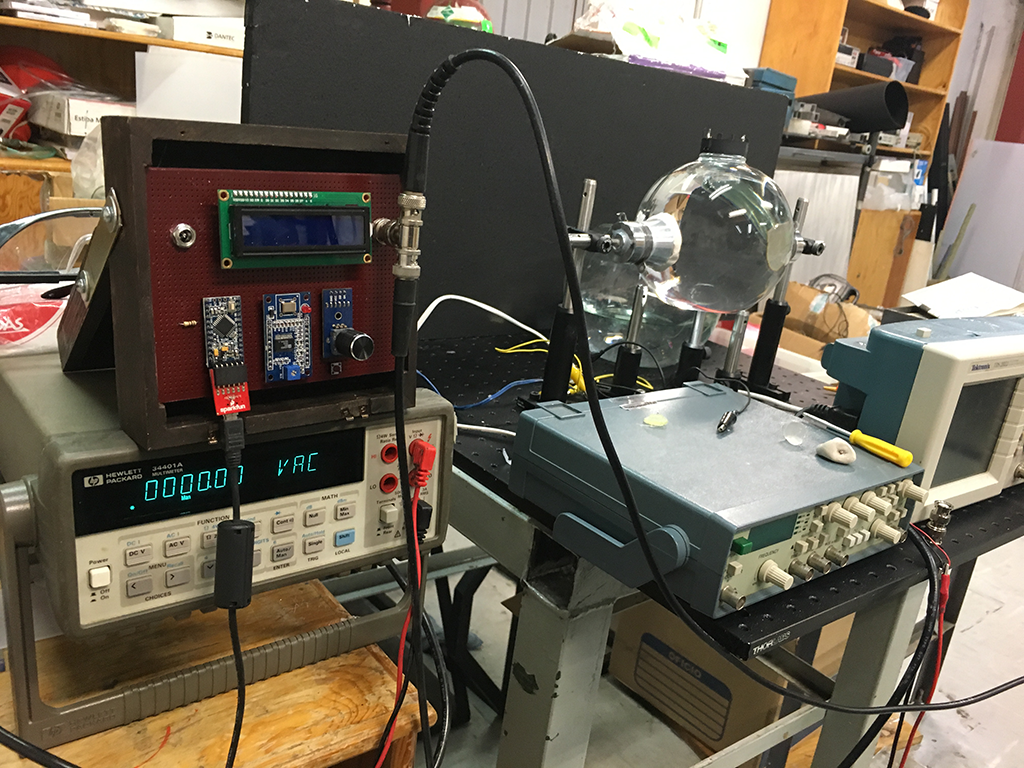
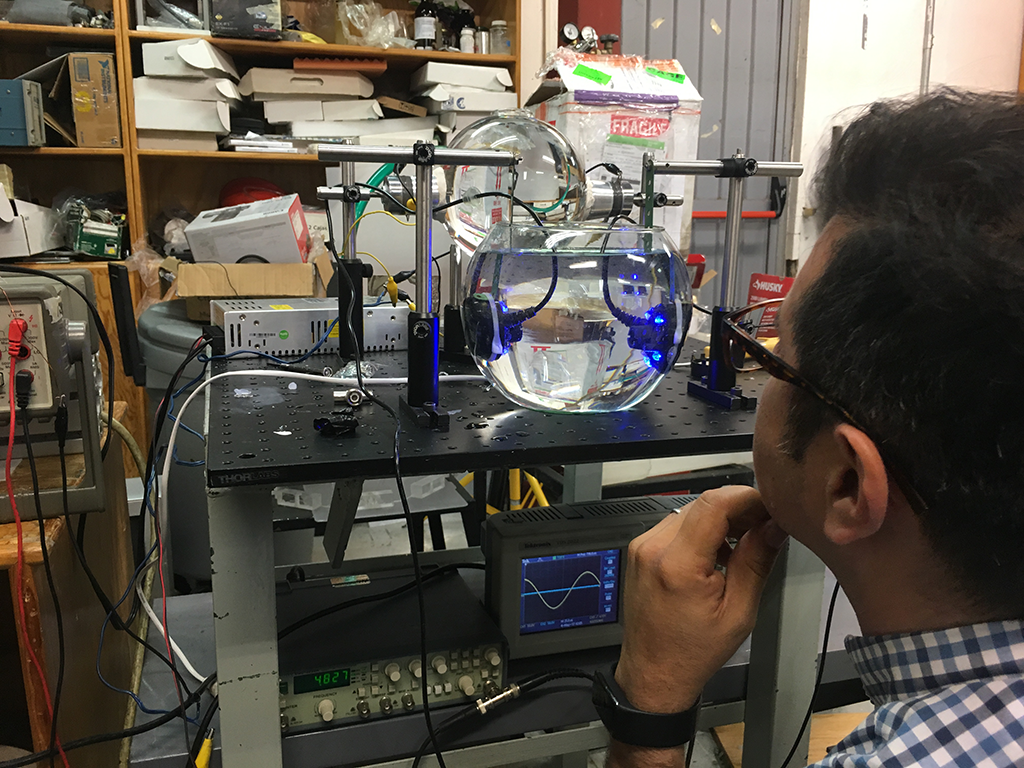
    To comprehend nature and existence, countless theological, philosophical, and scientific hypotheses have been proposed. Modern physics, in its study of subatomic particles, quantum models, and dimensional structures, constantly confronts epistemological axioms posed by Eastern mystical philosophies. Empirical intuition is an inherent part of human consciousness.
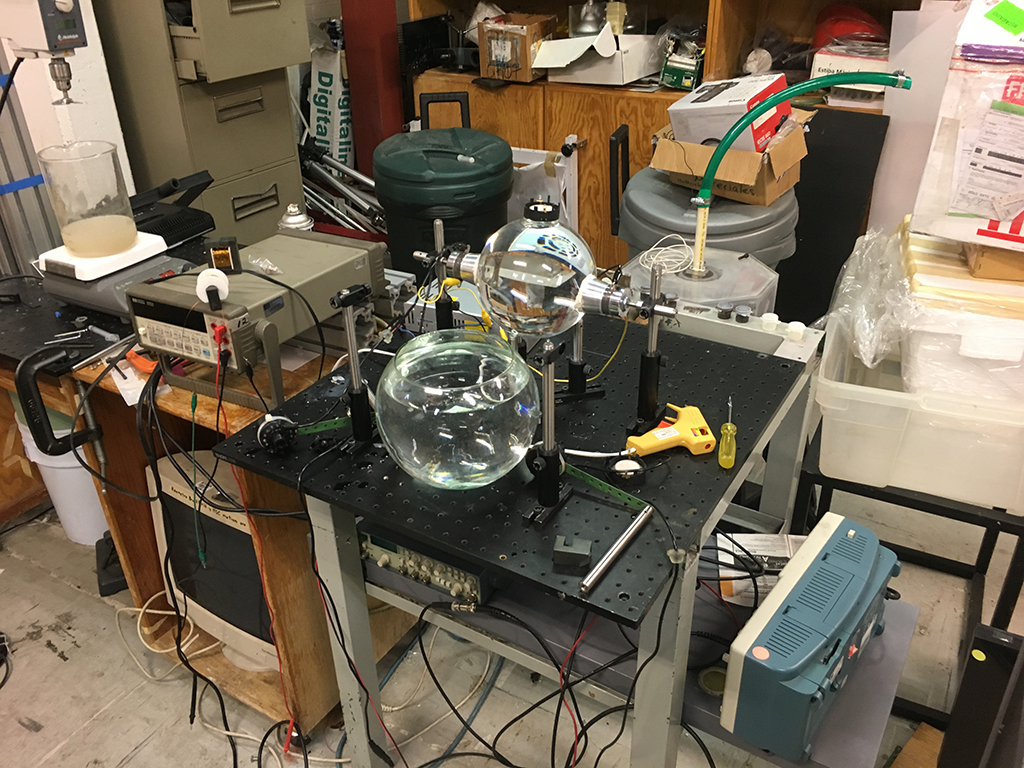
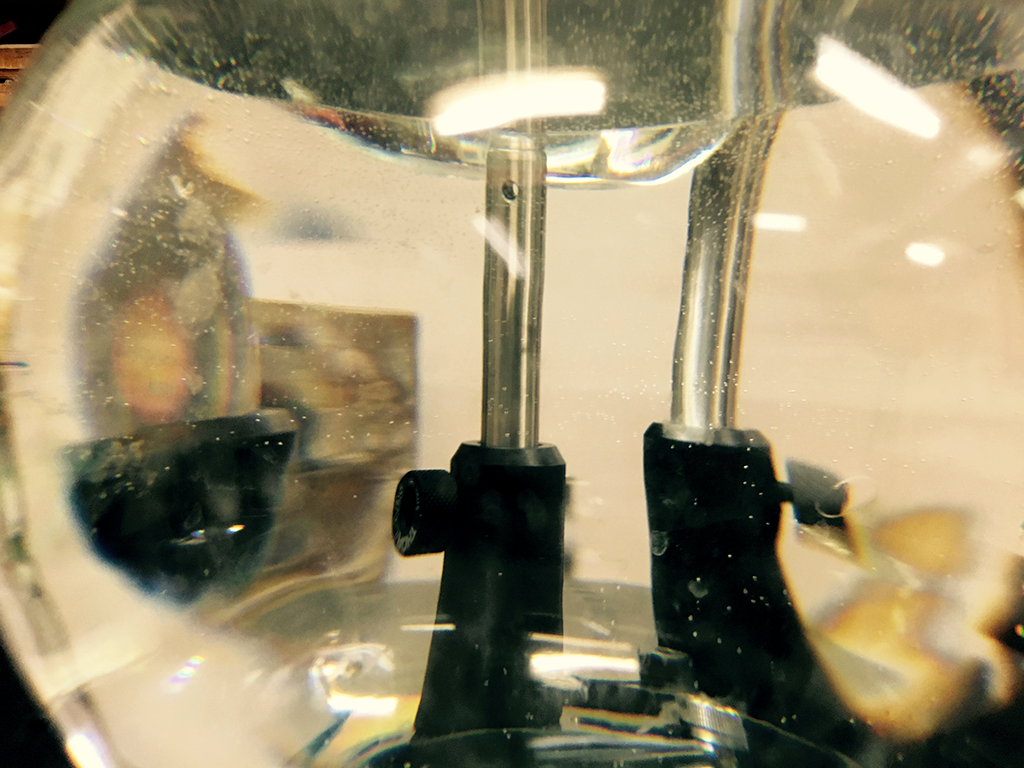
    The pre-Socratic Greek thinkers were interested in understanding the essence or “physis” of all things. Thales of Miletus, recognized as the first philosopher in Western history, is known for his studies on water and magnetic fields. He asserted that each particle is a god, an idea resonating in more contemporary concepts like the Higgs boson, which theoretical physicists have dubbed “the God particle.” Throughout history, countless thinkers, scholars of science, philosophy, and the spiritual realm, through perceptual, analytical, and scientific processes, have recognized the forces and energy inherent in the water molecule.

    Neurosciences intersect with astrophysics, psychology, magnetochemistry, philosophy, holistic sciences, as well as mystical philosophies, to understand human consciousness based on the water molecule. This multidisciplinary approach reflects the complexity and interconnectedness of various fields of knowledge in the effort to unravel the mysteries of existence and consciousness.

    The water on our planet is directly influenced by various extraterrestrial energy sources. The thermal energy from the Sun’s photons heats the air, generating waves in the oceans and causing the evaporation of water. This constant transformation process of the water molecule is essential for its cycle.

    The gravitational force from the Moon plays a crucial role in tides and various biological processes synchronized with its cycles. This force affects both plankton and the human body and mind. Gravitational and electromagnetic forces strongly influence the structure of the water molecule, impacting all living organisms.

    Giorgio Piccardi studied these cyclical influences from the cosmos and discovered that the anomalous behavior of the water molecule followed a cyclical periodicity due to the helical translation of the solar system in the Milky Way. This frequency has complicated the study of the molecule, as each experiment conducted to study its chemical reactions could fail or not occur as expected. However, Piccardi observed that when the chemical solutions from the experiments were placed isolated in a copper container, the chemical reactions developed exactly as predicted by the theory. These containers act as a Faraday cage, isolating the molecules from electromagnetic fields, both natural and those artificially produced by humanity. This discovery highlights the sensitivity of the water molecule to cosmic and electromagnetic influences, emphasizing its vital role in Earth’s natural processes.

    To refer to the different layers of planet Earth, the Greek word “sphaira” is used, meaning sphere. Our planet is a sphere constituted by various spheres: the geosphere, forming the Earth’s crust with the minerals that compose it; the biosphere, which is the system formed by the collection of living beings of organic nature; the noosphere, a theory that addresses the planetary phase where intelligence occurs; the technosphere, the evolution of that intelligence including electronic and computational systems, eventually creating a stratospheric layer of artificial satellites; the hydrosphere, a system constituted by the water molecule in its subterranean, surface, and atmospheric forms; and the electromagnetosphere, an electromagnetic system surrounding the planet with a primary magnetic field and an important frequency known as the Schumann resonance, oscillating at 7.83 Hz and directly linked to the lightning and thunder that occur every second on the planet.

    One theory suggests that these phenomena occur due to friction between water vapor molecules ascending and ice crystals descending, generating a separation of electric charges that accumulate and, upon releasing their energy potential, transform into an electromagnetic field that expands and becomes trapped between the Earth’s surface and the stratosphere. This phenomenon creates an oscillatory energy pulse perceived by life, and the water molecule is fundamental in producing the energy with which life synchronizes.

    Suspended water molecules tend to form spheres due to atomic bonds, resulting in the surface tension of water as its force tendency is towards the interior of the liquid. Although the water molecule is bipolar but not symmetrical, the spherical shape it adopts through the union of its molecules in zero gravity is the closest to symmetry.

    Astronomers are discovering various solar systems with planets, both gas giants and solid ones, where there may possibly be liquid water and symbiosis of life. Planet hunters have various tools for their calculations and observations, utilizing the study of oscillations in the electromagnetic fields of stars and seeking patterns in fluctuations in the infrared band to discover these exoplanets since they cannot be observed by traditional optical methods.

    Aquaplanetarium proposes a model structure similar to those used in the past to visualize the cosmos, drawing inspiration from kinetic planetary models employed by figures such as Copernicus, Galileo, Newton, and Piccardi. These models represented the celestial spheres known as planets, allowing for mathematical analysis and visualization of their trajectories and cycles. The construction of the proposed planetarium prototype aims to link cognitive and intuitive stages and moments in the exploration of water, the cosmos, and consciousness, leveraging past knowledge to project into the future.

    In this project, the electromagnetic frequencies emitted to the spheres are directly related to recently discovered stars or planets. Cosmic oscillations are transmitted to the vibrational molecule, interfering with its covalent bond structure, seeking to establish cosmic routes and bridges of molecular links. These frequencies are processed by open-source hardware and software systems.

    The construction of Aquaplanetarium employs processes from different historical stages of technological development, such as electro-magnetized coils, to visualize electromagnetic processes in the water molecule as kinetic processes, establishing a connection with stars light-years away.

    Through natural forces and processes, this structure aims to initiate a dialogue about the molecular connection of water and electromagnetism in the universe. Its goal is to link these forces as generators of human consciousness and planetary consciousness, exploring the interrelation between matter, energy, and consciousness in the cosmic context.

    CENART 2014

    CENART 2014

    CENART 2014

    CENART 2014

    CENART 2014

    CENART 2014

    CENART 2014

    CENART 2014

    CENART 2014

    CENART 2014

    CENART 2014

    CENART 2014

    CENART 2014

    CENART 2014

    CENART 2014

    CENART 2014

    PRODUCTION

    Planetarios: Arquimides,Picardi

    Kepler’s Solar System Model: An artistic contribution in which he proposed that the distance relationships of the six known planets in his time could be understood in terms of the five Platonic solids. It illustrated a planetary machine in which each Platonic solid fits between each pair of planetary spheres. This proposal was presented in 1596 in his book “Mysterium Cosmographicum.”

    Winding Different Types of Electromagnets with enameled magnetic wire and steel cores

    hemispheres

    The diamagnetic experiment with two grapes and neodymium magnets is a simple and interesting demonstration of diamagnetic properties. Diamagnetism is a property of certain materials that causes them to be repelled by magnetic fields, and it is a very weak effect compared to other magnetic properties.

    In our pursuit of refining the experiment, we introduce an enhancement by incorporating crystal bowls filled with water. This modification aims to explore the interplay between the magnetic forces and the fluid dynamics within the context of our investigation.

    Kepler is a space observatory launched by NASA to locate planets orbiting stars. It was named in honor of the Renaissance astronomer Johannes Kepler and launched on March 7, 2009. By November 2014, Kepler, along with subsequent observations, had located and confirmed 995 exoplanets in more than 400 stellar systems, with an additional 3,217 candidate planets yet to be confirmed. In November 2013, astronomers reported, based on Kepler mission data, that there could be 400 billion Earth-sized planets orbiting sun-like stars and red dwarfs, solely in the Milky Way.

    The main instrument of the Kepler Observatory is a photometer that continuously monitors the 150,000 primary and brightest stars within its fixed field of view. This data is transmitted to Earth for analysis. The focal point of the spacecraft’s camera consists of 42 CCDs, each with 2200×1024 pixels, making it the largest camera placed in space at the time. This array processes at a resolution of 95 megapixels, and the CCDs are read every 6 seconds to limit saturation. The field of view is fixed, maintained by the satellite.

    Kepler is orbiting the Sun, avoiding obstructions, gravitational perturbations, and torques inherent to Earth’s orbit. The photometer’s field of view points towards the northern constellations Cygnus, Libra, and Draco, which are far from the ecliptic plane. Thus, sunlight never reaches the photometer as the observatory orbits our Sun. This direction also aligns with the solar system’s movement towards the center of the galaxy. The observed stars are at the same distance from the galaxy’s center as the solar system and are close to the galactic plane. This is crucial, considering that the galactic position is linked to habitability, as suggested by the Rare Earth hypothesis.

    The “Kepler Field of View” is the fixed point in the galaxy where the telescope is oriented. It is located between the constellations of Cygnus, Lyra, and Draco. This is achieved by orbiting the Sun and not the Earth. The FOV must be away from the ecliptic plane so that the brightness of the Sun does not disturb the exposure of the sensors, allowing the continuous monitoring of the stars. In the FOV, the rectangles show the exact position of each of the sensors, with 21 double structures, resulting in a total of 42 CCDs.

    Kepler Science Center

    The data collected by the photometer is recorded in orbit, establishing a direct link with the observatory and downloaded to NASA’s Space Science Division. All scientific data undergoes processing and calibration through the Kepler Science Pipeline, a software and algorithm development that analyzes astronomical data and prepares it for further study. This information is available online and can be downloaded to contribute to the observation, analysis of data, and collaborative search for planetary candidates.

    Cygnus (the Swan) is a constellation in the northern hemisphere that cuts across the Milky Way. The arrangement of its main stars sometimes leads to it being known as the Northern Cross, in contrast to the southern constellation of the Southern Cross. Deneb, the brightest star in the constellation, occupies one of the vertices of the so-called Summer Triangle. It is one of the brightest stars in the Milky Way and is the prototype of a group of variables named after it.
    The official name of the constellation is Cygnus, and its genitive is Cygni. Therefore, the two mentioned stars are denoted as Alpha Cygni (Deneb) and Beta Cygni (Albireo); the abbreviation is Cyg, so they can also be written as ฮฑ Cyg and ฮฒ Cyg, respectively. Both stars represent the tail and beak of the bird, which is depicted in flight. Interestingly, the swan’s tail (Deneb) corresponds to the head of the cross, and vice versa, Albireo is in the head of the bird but is the foot of the cross. Three other stars, Gamma, Delta, and Epsilon, complete the cross asterism, with the first at the intersection and the others forming the ends of the crossbar, also representing the wings of the bird flying south.

    Kepler-22b is the first exoplanet (extrasolar planet) discovered in the so-called habitable zone (the region around a star where a planet could have water). For this reason, hypothetically, it could have the necessary conditions to support life, such as the presence of water and suitable temperature and atmosphere. It was discovered by the Kepler space telescope. The planet is located six hundred light-years away from Earth, has 2.4 times its radius, and orbits its star (Kepler-22) in 289 days.

    The discovery was announced on December 5, 2011, by the young Venezuelan astronomer Nelson Rivero from the Universidad Nacional Experimental de Guayana (UNEG). The planet was originally discovered on the third day of Kepler’s scientific operations in mid-2010. The third transit was detected at the end of 2010. Additional information was provided by the Spitzer Space Telescope and ground-based observations. The planet’s radius is approximately 2 times that of Earth, located 600 light-years from Earth, and orbits the G-type star Kepler 22.

    Currently, the composition of its mass and surface is unknown. If its density were similar to that of Earth (5.515 g/cmยณ), its mass would be equivalent to 13.8 Earths, and the surface gravity would be 2.4 times greater than ours. If Kepler-22b had the density of water (1 g/cmยณ), its mass would be 2.5 times that of Earth, and its gravity would be 0.43 times ours. The planet could fall into the category of planets known as super-Earths, depending on its final mass.

    The distance from Kepler-22b to its parent star is 15% less than the distance from Earth to the Sun, but the luminosity (light emission) of Kepler-22b’s star is 25% lower than that of the Sun. The combination of a shorter distance to the star and lower intensity of emitted rays suggests that, if the planet lacks an atmosphere (an unlikely case), the surface temperature will be around -11 ยฐC. If it has an atmosphere similar to Earth, the planet’s average temperature would be about 27 ยฐC. If the atmosphere causes a greenhouse effect similar to Earth’s magnitude, the planet’s surface temperature would be 22ยฐC. Kepler-22b, with twice the size of Earth, is considerably larger and may have a different composition. For example, the new planet may not be a super-Earth but might resemble Neptune, primarily an ocean with a small rocky core. However, Natalie Batalha, one of the scientists on the project, speculated, “This doesn’t go beyond the possibility that life could exist in an (ocean) planet.”

    First layer: 120 cm diameter crystal engraved with a celestial map of the northern hemisphere.

    Third Layer: 126 cm diameter crystal engraved with the Cygnus Constellation, The Swan.

    producciรณn de las esferas en cristal soplado.

    Caja Musical Planetaria , Vals del Aniversario , Constelaciones Zodiacales ,Japon
    pruebas lasser
    pruebas con electroimanes y esferas de critsal
    Imanes de Neodimiun

    esfera de borosilicato de cristal

    electroiman 1200n 12 volts , 8 ohms

    Modelado 3D de la structure

    preparado de los Cristales para el grabado de las imagenes.

  • Hysterisis Hystericus

    ยท

    “Hysteresis” is the magnetic memory property of certain materials. When a magnetic field is in proximity to a ferromagnetic material, its magnetic dipoles align to the orientation of the induced field. When the field is removed, some of the atomic alignment remains as a remnant, and the material becomes magnetized indefinitely. This mnemonic property of materials has been used for decades to store information on magnetic tapes, credit cards, or hard disks, as well as the basis for the construction of magnets that move the world as a fundamental part of energy generation.

    Hysteria. For the Greeks, แฝ‘ฯƒฯ„ฮญฯฮฑ (hystera) meant “uterus,” a term that was used for many centuries to refer to a series of psychological conditions that caused abnormal behavior, supposedly caused by an external influence on the female womb. Today, it is recognized as a multiplicity of symptoms that are not limited to the female gender. The uterus is considered a space of gestation where consciousnesses that will inhabit the earth arise. Stanislaw Groff, in his book “The Holotropic Universe,” mentions four states of consciousness during gestation, and the expulsion from the womb is symbolized as death prior to birth.

    A glass flask is placed on top of a powerful electromagnet constructed with a transformer. Between the glass and the electromagnet, there is a piezoelectric disk. By introducing a small neodymium magnet into the vessel, it strikes the glass, immediately producing a flow of electrons in the piezoelectric disk. This flow is amplified by an electronic circuit and the signal is emitted to the electromagnet which, by saturation, creates a variable electromagnetic field. This variable field interferes with the magnetic polarity of the magnet, pushing it strongly and causing it to collide again with the glass, generating new flows of electrons and creating a loop of random behavior in the magnet that constantly jumps and bounces. Two magnetic ceramic spheres are placed on the outside of the flask. By manipulating them, the field they emit intervenes in the magnet’s behavior, modifying its behavior and creating new forms of sound. With an induction coil at the tip of a gooseneck, changes in electromagnetic fields are perceived and transformed into electrons that are channeled into sound processes and amplified. Additionally, a camera films the entire process.

    Hysteresis Hystericus is a sound action derived from the Magnetoplankton project, an experiment on artificial life that explores deterministic theories in the cybernetic notion of cause and effect. It is constructed from feedback loops and the amplification of the piezoelectric effect to provoke electromagnetic induction. The project also explores the diamagnetic links of the water molecule as a communicative model of artificial life, the influence of the observer on the behavior of observed systems, electromagnetic induction as a model of transduction, and the parallelism between ferromagnetics and diamagnetics as information storage systems, alluding to historical hypotheses about the memory of water.

    • TX-Mx tour
    • 05-10-14 : Denton macaroni island / With / V:H >S.S.B.T > BABY BLOOD > FILTH
    • 06-10-14 : Austin Museum of Human Achievement With Rick Reed > SSBT
    • 05-10-14 : Dallas AvantGarden / with Chris Cogburn / Steve Jansen > Damon Smith / Sandy Ewen > Richard Ramirez
    • thanks : Chris Cogburn
    • Moscu
    • SA)) m0st _11 : Ground with Sergey Filatov > Marcela Armas > Oleg Makarov
    • thanks , Sergey KAsich / Alexei Shulguin
    • 07-11-14 Ciencia-Ficciรณn-Ciencia V2.0. Instituto de Ciencias Nucleares, Mexico
    • 08-11-14 Taller CONACYT TAG Mexico
    • 23-27.02.15 MusicMakers HackLab Laboratorio Arte Alameda gracias Leslie & Paloma
    • 07.03.15 Arte En Orbita, Centro de Arte Contemporaneo de Quito, Ecuador , Thanks Pedro Soler , Fabiane Borges
    • 02.03,2016 MUSIC MAKERS HACK LAB , SEGUNDO DIA DE MAQUINAS , LABORATORIO ARTE ALAMEDA
    • Tlaxcala
    • 02-03.11.15 VA 1er. Encuentro de Mรบsica Experimental y Arte Sonoro. Tlaxcala 2015
    • 06-10.11.15 VISIONES SONORAS XI Festival Internacional de Mรบsica y Nuevas Tecnologรญas
    • Santiago Chile
    • Concierto MAC , Museo de Arte Contemporรกneo Santiago de Chile 2016
    Ciencia-Ficciรณn-Ciencia V2.0. Instituto de Ciencias Nucleares, Mexico
    Hysteresis Hystericus Concierto MAC , Museo de Arte Contemporรกneo Santiago de Chile Anilla Cultural .
    MusicMakers HackLab Labortorio Arte Alameda
    1er Encuentro de Mรบsica Experimental y Arte Sonoro (Tlaxcala, 2015).
    Inauguracion Arte En Orbita, Centro de Arte Contemporaneo de Quito, Ecuador
    Austin Museum of Human Achievement With Rick Reed > SSBT
    Visiones Sonoras XI Morelia Michoacan
  • inductoKhor

    ยท

    Energy is a concept that has evolved throughout history. Originally, it was understood as a mystical and spiritual force that moved everything in the universe. However, as science advanced, new types of energy related to physics and chemistry were discovered.

    Spiritual energy refers to a life force that is present in all living beings and that, according to some beliefs, can be controlled and directed through practices such as meditation, prayer, and mantras. It is believed that this energy can be used to improve health, increase consciousness, and connect with the universe.

    On the other hand, physical energy refers to the ability of a system to do work, measured in joules or watts. This energy can be transformed from one form to another, such as electrical, thermal, mechanical, etc. It can be obtained from natural sources such as the sun, wind, water, or through artificial processes such as electric generators.

    Although spiritual and physical energy may be different in nature, they can also be related and have a mutual impact on the human body and mind. Mantric machines, for example, combine elements of both energies by using physical movement to generate electrical energy while focusing on spiritual energy through mantras and meditation.

    Inducto Khor is a system of inductive machines that generate physical and spiritual energy which manifest spatially as sound oscillations, emanating from electromagnetic induction and the release of hydrogen and oxygen from water molecules. Tibetan Buddhism developed a meditative practice of compassion using mantras that are recited while turning cylinders called Mani Khor. These are hand-carved on the outside with the Sanskrit mantra “Om Mane Padme Hum”, and inside they contain a rolled parchment where the same mantra is written thousands of times.

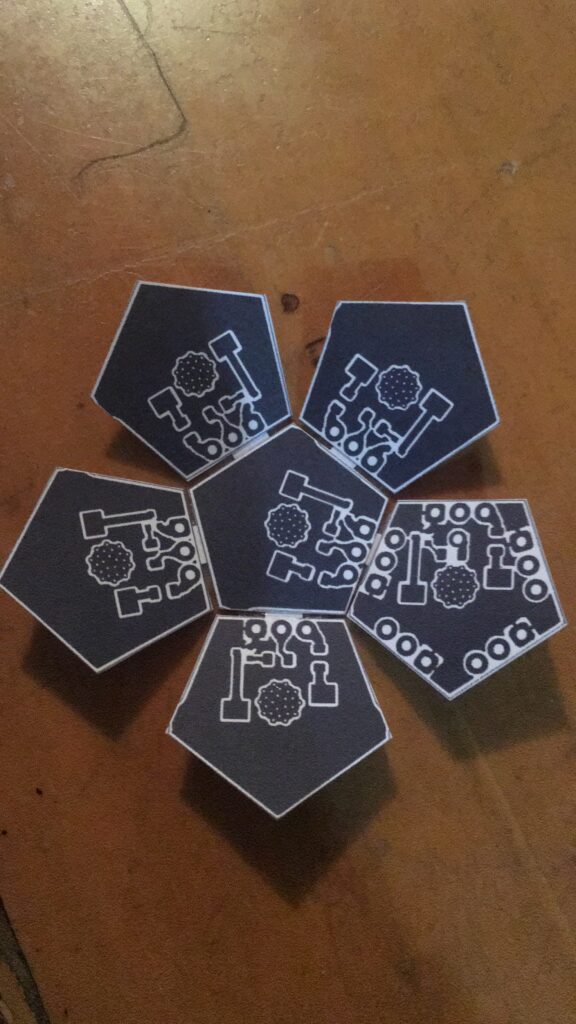
    By turning the cylinder, the practitioner amplifies their desire for compassion through this action. The concept of Khor is a physical manifestation of the idea of “turning the wheel of dharma,” which describes the Buddha’s conception of compassion in the social induction of his perception, namely, compassion for other beings to stop suffering.
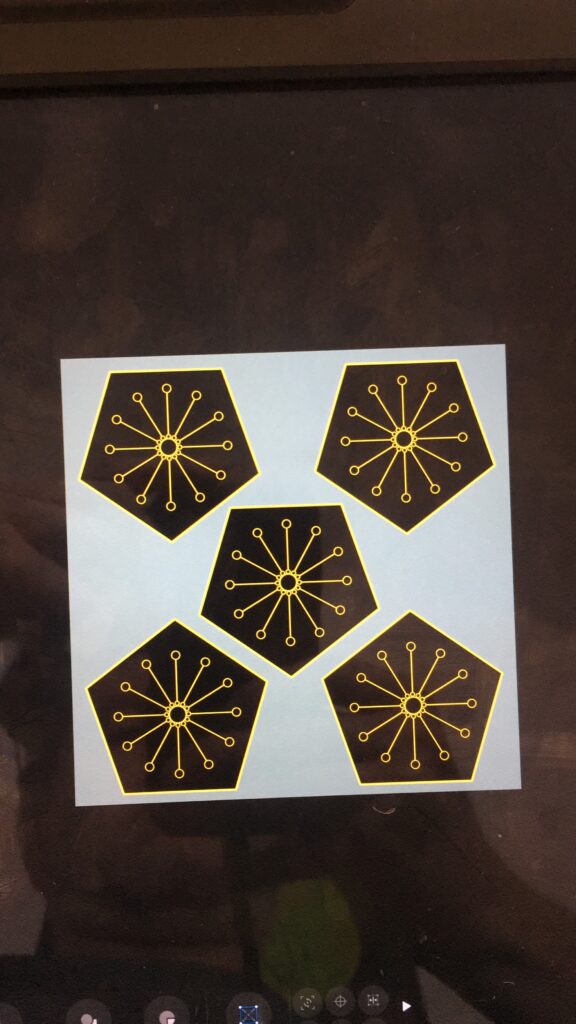
    Inducto Khor is a system of five inductive machines surrounding a central sixth one. Each machine is composed of a crystal cylinder placed inside a wooden base with a triangular shape that is held by a triangular structure. Inside this cylinder is a “Joe cell”, which is an alternative energy system composed of a series of 5 concentric cylinders of non-magnetic stainless steel submerged in water.

    By turning a crank, the practitioner drives the rotation of the cylinder thanks to a series of gears. A central gear with the mantra “om mane padme hum” cut into its exterior supports and rotates the crystal cylinder. This gear in turn drives three small gears placed at each corner of the triangle. These gears are connected to alternate motors which, when rotated thanks to the principle of induction, generate electrical energy. These motors are part of a subsystem whose function is to provide energy to other subsystems.

    One of them generates energy for a sound amplifier that feeds back on itself by emitting the sound oscillation of the wave generated by the induction. The volume and tone vary according to the rotation. The energy from another motor/gear is used to power the “j-cell”, which is a kind of electrostatic inductor capacitor. This polarizes and ionizes water molecules, releasing hydrogen and oxygen atoms through electrolysis. The hydrogen is channeled into a cell that transforms it into electrical energy. The energy from the third motor/gear is stored in an ultracapacitor.

    The five Inducto Khor machines, being interconnected yet independent, allow the practitioner to carry out a successive process of transformation of mechanical energy to electrical energy and vice versa. This generated energy is used to nurture perception processes. The gears, while producing sound, generate energy from the sound amplified by the electromagnetism. Additionally, thanks to the rotation of water in the crystal cylinders, vortices are generated that molecularly separate the water by the physical energy of the practitioner, releasing atoms that re-form covalent bonds and transform back into water, releasing electrical energy in the process. This accumulated collective energy is used to activate the central khor, which will begin to rotate, amplifying the mantra Om Mani Padme Hum.

    This system of inductive machines, which is activated by individual and collective interaction, provides physical and spiritual energy in a process that evokes the need for social interaction for the common good. By feeding back through energetic, sonorous, electric, collective, and spiritual induction, prayers for a social reform based on a balanced understanding of peace and sustainable linking of energy and social processes in nature are amplified. This system combines practical perceptions and both scientific and mystical methods. On the one hand, there is the spiritual aspect of the khor in the amplification of mantras, specifically the “Om Mane Padme Hum”, which represents a desire for compassion for humanity and nature. On the other hand, there is electromagnetic induction as a process for generating clean and sustainable energy for social, environmental, and peace benefits.

    induktokhor es una obra comicionada para la muestra ” SINERGIA” Laboratorio Arte Alameda

    arcangel constantini 2008

    curaduria

    Karla Jasso

    apoyo ,

    santiago itzcoatl , planos . construcciรณn

    mauricio alvarez construcciรณn

    miguel mendoza construcciรณn

    amor munoz soporte construcciรณn

    leopoldo cecilio , carpinterรญa

    luis Perez , herrerรญa

    Dr Natan Zachs , ing mario alvarez ( San-Son ) Metales

    Dr. Solorza Feria Omar CINESTAV